How to teach a dog to lie down quickly usually comes down to two things, clear timing and setting the dog up to win instead of wrestling for control. If your dog pops back up, grabs the treat, or gets distracted, it’s not “stubbornness” most of the time, it’s a training setup problem.
The good news, “down” is one of the easiest cues to make reliable because lying down is naturally calming, it can help with greetings, doorways, vet visits, and impulse control. The tricky part is getting the first few reps clean, so your dog understands what earns the reward.
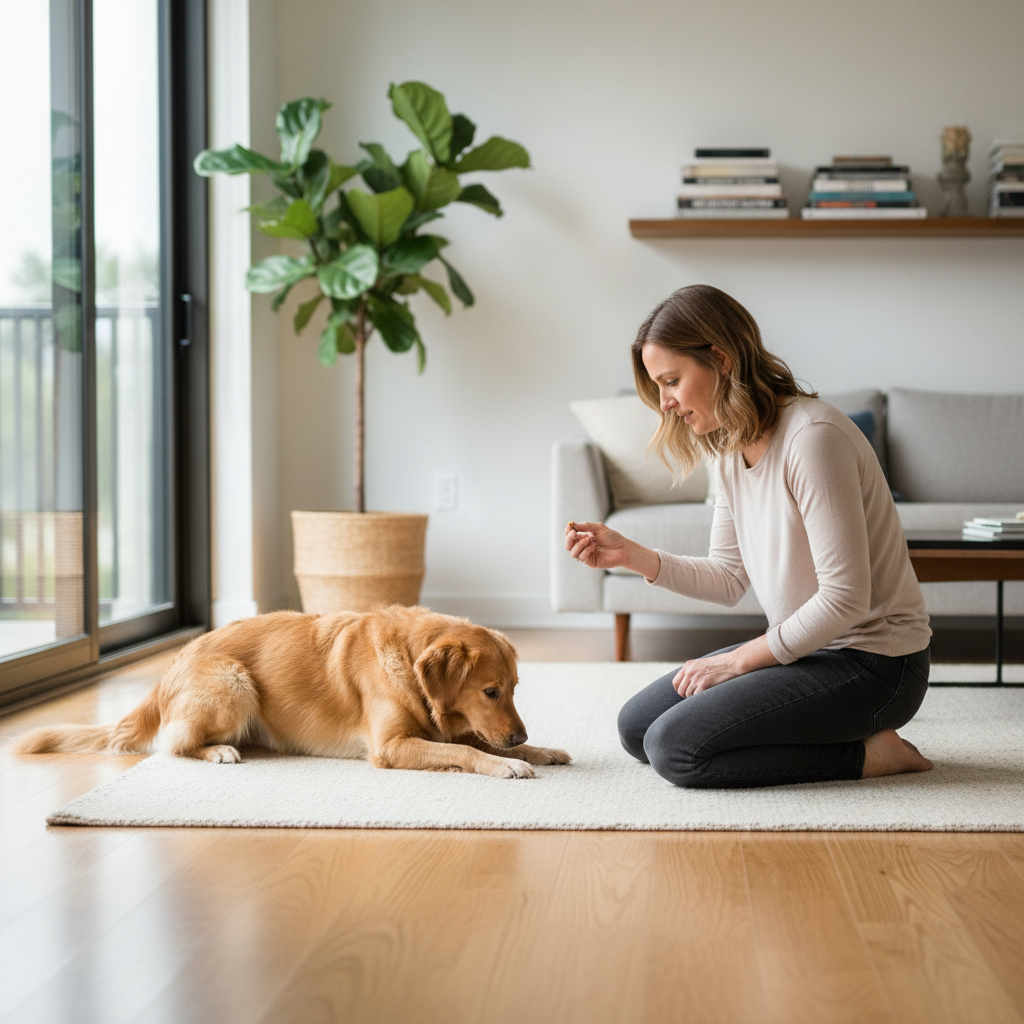
This guide gives you a few different paths depending on your dog, lure-based for beginners, a capture method for dogs who hate hands near their face, and troubleshooting for the classic “down… then instantly bounce up” problem. You’ll also get a quick table to choose the best approach.
What “Lie Down” Really Means in Training
In most pet training contexts, a “down” means your dog’s elbows and belly move to the floor and stay there until released. That “stay there” part is where many people accidentally skip ahead, then wonder why it only works when a treat is visible.
Also worth saying out loud, you can teach down as a relaxed settle, or as a crisp position change. Both are valid, you just reinforce slightly differently. If your goal is calm behavior in the house, you’ll reward longer duration and slower breathing, not speedy drops.
Pick the Best Method: Lure, Capture, or Shaping
There isn’t one magical method for every dog. Some dogs follow food like a magnet, others get frustrated and start pawing or mouthing. Use the option that keeps your dog calm and successful.
| Method | Best for | What you do | Common snag |
|---|---|---|---|
| Lure | Food-motivated beginners | Guide nose down with treat, mark, reward | Dog jumps up to grab treat |
| Capture | Shy dogs or dogs who dislike luring | Mark when dog lies down naturally, then reward | Takes patience to “catch” reps |
| Shaping | Smart, clicker-savvy dogs | Reward small steps toward down | Easy to progress too fast |
Quick decision: if your dog follows treats smoothly, start with a lure. If your dog gets grabby, try capture. If you like clicker training and your dog enjoys puzzles, shaping can be fast and clean.
Before You Start: Set Up for a Fast Win
Most slow “down” training happens because the environment is too hard or the reward is too boring. Fix the setup and the behavior comes much faster.
- Train on a non-slip surface like a rug or yoga mat, slippery floors often make dogs avoid lowering.
- Use small, soft treats so your dog can swallow fast and reset without breaking focus.
- Keep sessions short, think 1–3 minutes, stop while your dog still wants more.
- Pick the right moment, a slightly tired dog learns “down” faster than a dog vibrating with excitement.
According to the American Veterinary Society of Animal Behavior (AVSAB), reward-based training supports good welfare and helps reduce fear and aggression risk compared with punishment-based approaches. For “down,” that matters because pushing a dog into position can create avoidance or defensive reactions in some dogs.
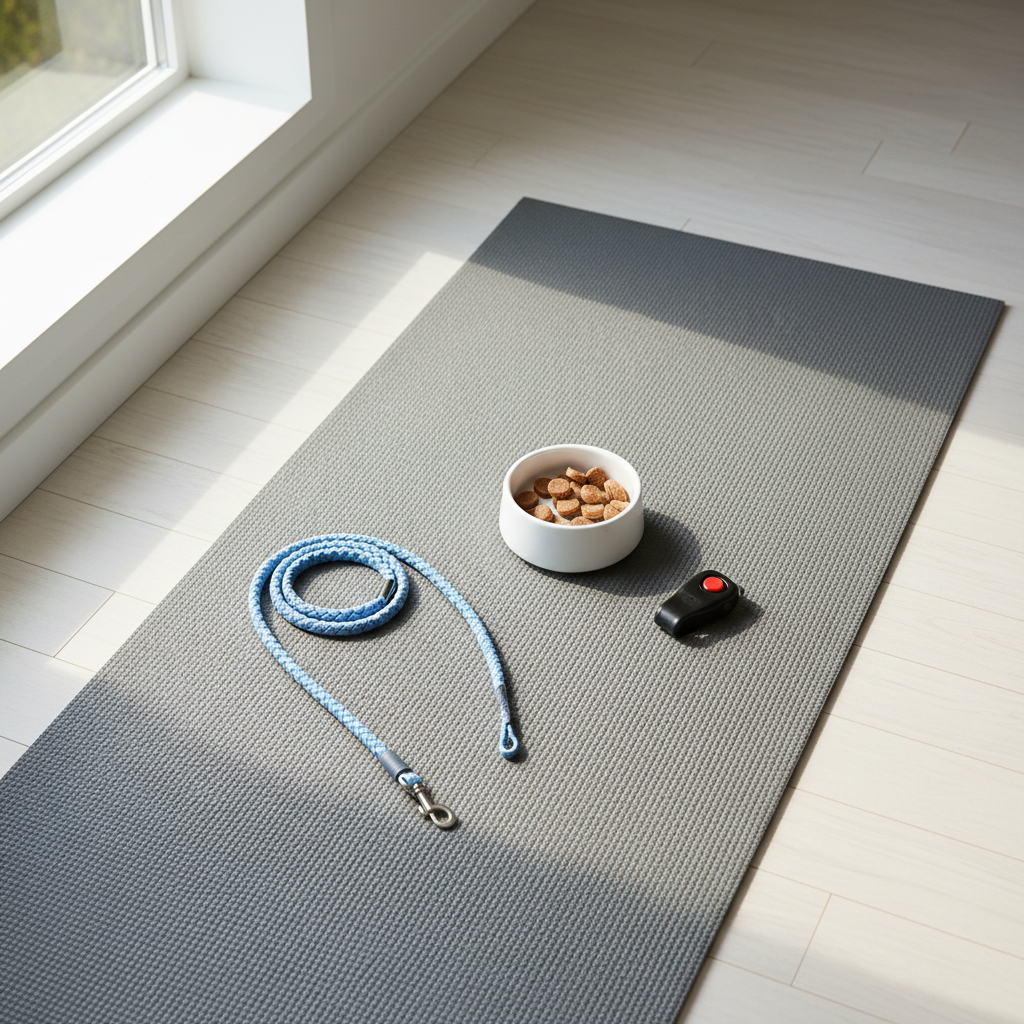
One more small thing: have a release word ready, like “OK” or “Free.” It’s the difference between “lie down” and “lie down and guess when you can move.”
Step-by-Step: Lure a Dog Into a Down (Fastest Beginner Method)
If you want speed and clarity, luring is usually the most direct way to teach the first few reps. Your job is to move the treat in a path that makes lying down the easiest option.
1) Start from a sit or a stand
Many dogs find down easiest from a sit. If your dog offers sit naturally, begin there. If sit creates tension, start from a stand.
2) Lure straight down, then slightly forward
Hold the treat at your dog’s nose, then move it slowly toward the floor. Once their head drops, move the treat a little forward along the floor so their elbows follow down instead of backing up.
- If your dog backs up, your hand is probably too far away.
- If your dog jumps up, your hand is probably too high or moving too fast.
3) Mark the moment elbows hit the floor
Use a clicker or a short marker word like “Yes.” Timing matters more than enthusiasm here. Mark when the down happens, then give the treat.
4) Feed in position for 1–2 seconds
To prevent the “down-pop-up” habit, deliver a second treat while your dog is still lying down. You’re quietly teaching duration without a separate “stay” yet.
5) Add the cue after the motion looks predictable
Don’t say “down” while you’re still guessing whether the lure will work. Wait until the movement happens smoothly, then say the cue right before your hand starts the lure.
Make It Reliable: Duration, Release Word, and Proofing
Many people can get a dog to lie down in the kitchen on day one, then it falls apart outside. That’s normal. Dogs don’t generalize well, you have to teach “down” in more than one context.
- Duration: reward calm seconds, not just the drop. Build from 1 second to 3, then 5, then 10.
- Release: say “OK” and toss a treat away so your dog stands up on purpose, not randomly.
- Distance: take one small step back, return, reward. If your dog breaks, you increased difficulty too much.
- Distractions: add “easy distractions” first, like a family member walking by, before you try parks.
Here’s a simple rule that keeps progress steady, increase only one thing at a time: duration, distance, or distraction. When you change two at once, it often looks like your dog “forgot,” when really it just got too hard.
Self-Check: Why Your Dog Won’t Lie Down (And What to Try Next)
If you’re stuck, don’t repeat the cue louder. Diagnose what your dog is telling you, then adjust.
- “My dog won’t lower elbows”: try a softer surface, slower lure, or teach on a rug; some dogs avoid down on hard floors.
- “My dog crawls forward instead”: reward the first elbow bend, then lure less forward; your hand path may be pulling them.
- “My dog paws at my hand”: switch to capture for a week, or use a treat in the other hand and lure with an empty hand.
- “My dog does it only with a treat”: you faded the lure too slowly; start marking, then reward from the other hand or from a bowl behind you.
- “My dog looks away or freezes”: the session may feel stressful; lower criteria, increase distance from distractions, keep your body posture softer.
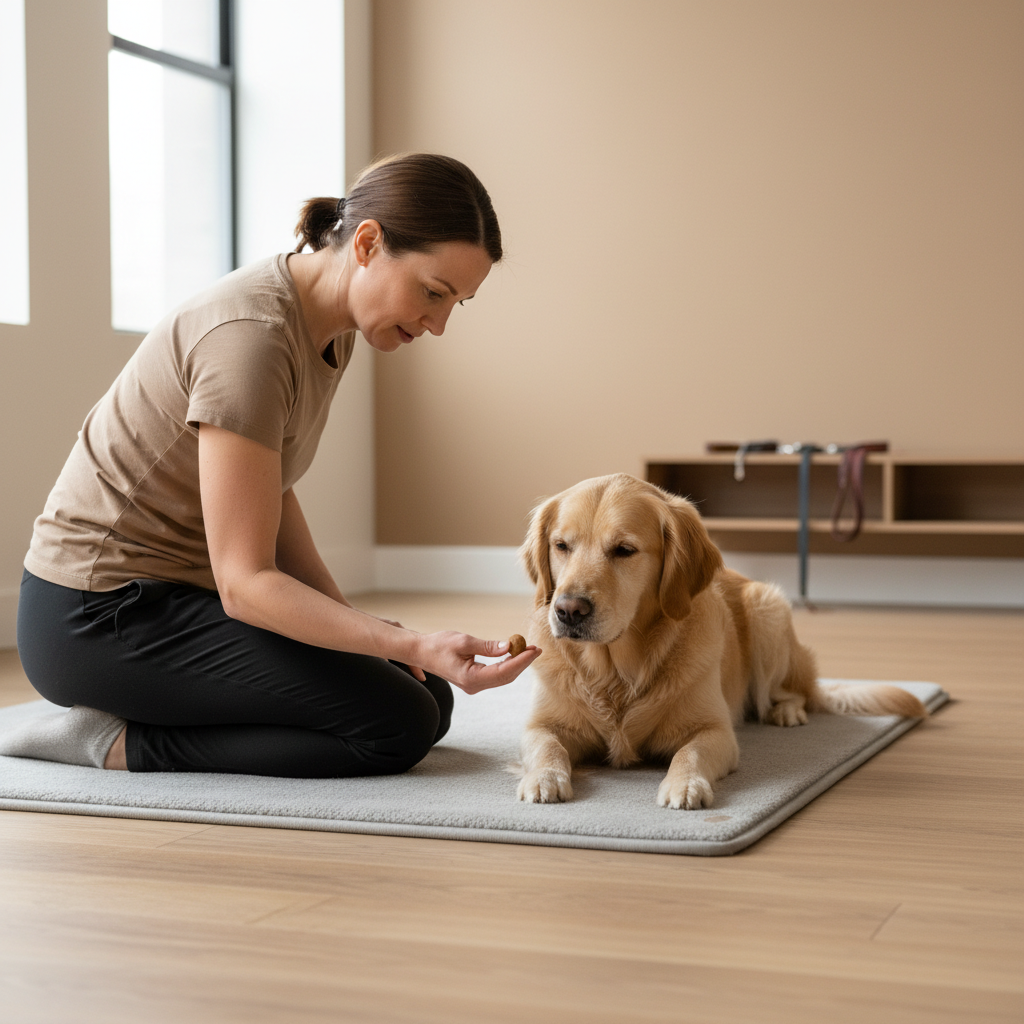
Key point: speed comes after clarity. If your dog understands the behavior, you can reward faster responses. If your dog feels confused, pushing for “quickly” usually slows everything down.
Practical Mini-Plan: 7 Days to a Cleaner “Down”
If you like a simple routine, this is a realistic pace for many pet dogs, assuming short sessions and decent treats. Adjust as needed, especially for puppies or easily overwhelmed dogs.
- Days 1–2: 10–20 successful lure reps total per day, reward in position, use the release word.
- Days 3–4: add the verbal cue, start fading the lure by making the hand motion smaller.
- Days 5–6: practice in two rooms, add 3–5 seconds duration, reward calmness.
- Day 7: try mild distractions, a person walking by, a toy on the floor, then reset to easy if it falls apart.
If you’re wondering how to teach a dog to lie down without treats forever, this is where it starts, you move from “treat every rep” to “treat the best reps,” and you add real-life rewards like going outside or greeting someone after a down.
Safety, Handling, and When to Get Professional Help
A down position can feel physically uncomfortable for some dogs. If your dog consistently avoids lying down, seems stiff, or hesitates more on one side, it may be worth checking with a veterinarian, especially for older dogs or large breeds.
Skip techniques that involve pushing shoulders, stepping on a leash to force the position, or pinning. Besides being stressful, they can backfire with dogs who guard their space. According to the American Kennel Club (AKC), positive reinforcement is a widely recommended approach for teaching basic cues, and it tends to keep training sessions clearer and more enjoyable.
If your dog growls when you reach near the collar, has a bite history, or shuts down during training, working with a qualified professional can help. Look for credentialed, reward-based trainers, and if needed, a veterinary behaviorist for complex fear or aggression cases.
Conclusion: Keep “Down” Simple, Then Make It Real
Once your dog understands the motion and you reward staying down for an extra beat, the cue starts feeling “easy” to them, and that’s when speed shows up naturally. Train in short bursts, use a release word, and practice in more than one room before you expect it outdoors.
If you want a clean next step, do one two-minute session today on a non-slip surface, and aim for five calm downs where your dog stays put until you say “OK.” That’s a small win, but it stacks fast.