
Bird perch natural wood sounds simple, but “natural” can still mean uncomfortable, hard to clean, or even risky if the wood type and setup miss the mark.
If your bird shifts feet a lot, favors one side, or leaves more pressure marks on the soles, the perch setup is often a bigger factor than people expect. Comfort is not only about softness, it’s about diameter variety, surface texture, placement, and hygiene.
This guide breaks down what actually makes a natural wood perch comfortable, how to spot common problems fast, and how to set up perches so your bird can rest, play, and move without constant foot stress.
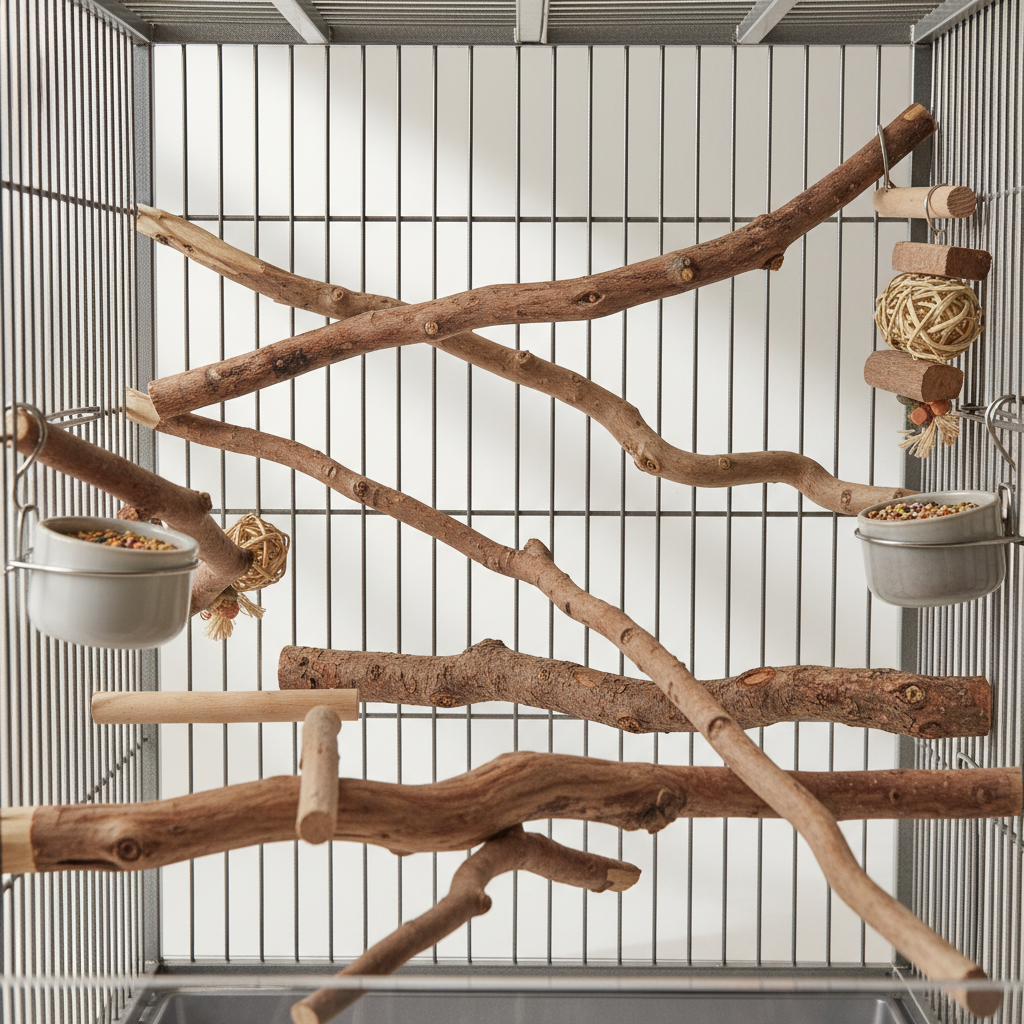
What “comfortable” really means for a natural wood perch
Comfort is less about a “plush” feel and more about whether your bird can grip, balance, and rest without the same pressure point all day. Natural branches help because they’re irregular, but they still need to match your bird and your cage.
- Right diameter: toes should wrap around with a secure grip, not fully overlap underneath and not stay too open.
- Safe texture: mild bark texture can help traction, but sharp ridges, splinters, or flaky bark that traps waste does the opposite.
- Variety: multiple shapes encourage micro-movements, which can reduce repeated pressure in one spot.
- Smart placement: a perfect perch in the wrong place becomes a poop shelf, or forces awkward landings.
According to the American Veterinary Medical Association (AVMA), pet owners should seek veterinary advice when they notice persistent lameness, pain, or behavior changes. Foot discomfort can show up subtly, so it’s worth paying attention early.
Why birds get foot trouble even with natural wood
Most “perch problems” are setup problems. Natural branches can still cause issues when they’re the only option, when the surface stays damp, or when the bird has no reason to move around.
Common real-world causes
- Too uniform: one main perch used 80% of the day, even if it’s natural, can create repeated pressure.
- Wrong diameter for the species: small birds on thick perches may slip, larger birds on thin perches may clamp too hard.
- Dirty “grip”: a branch with textured bark can hold moisture and droppings, which may irritate skin over time.
- High-traffic placement: perches placed under food bowls or other perches get soiled quickly.
- Low activity: boredom equals more standing still, and the feet take the hit.
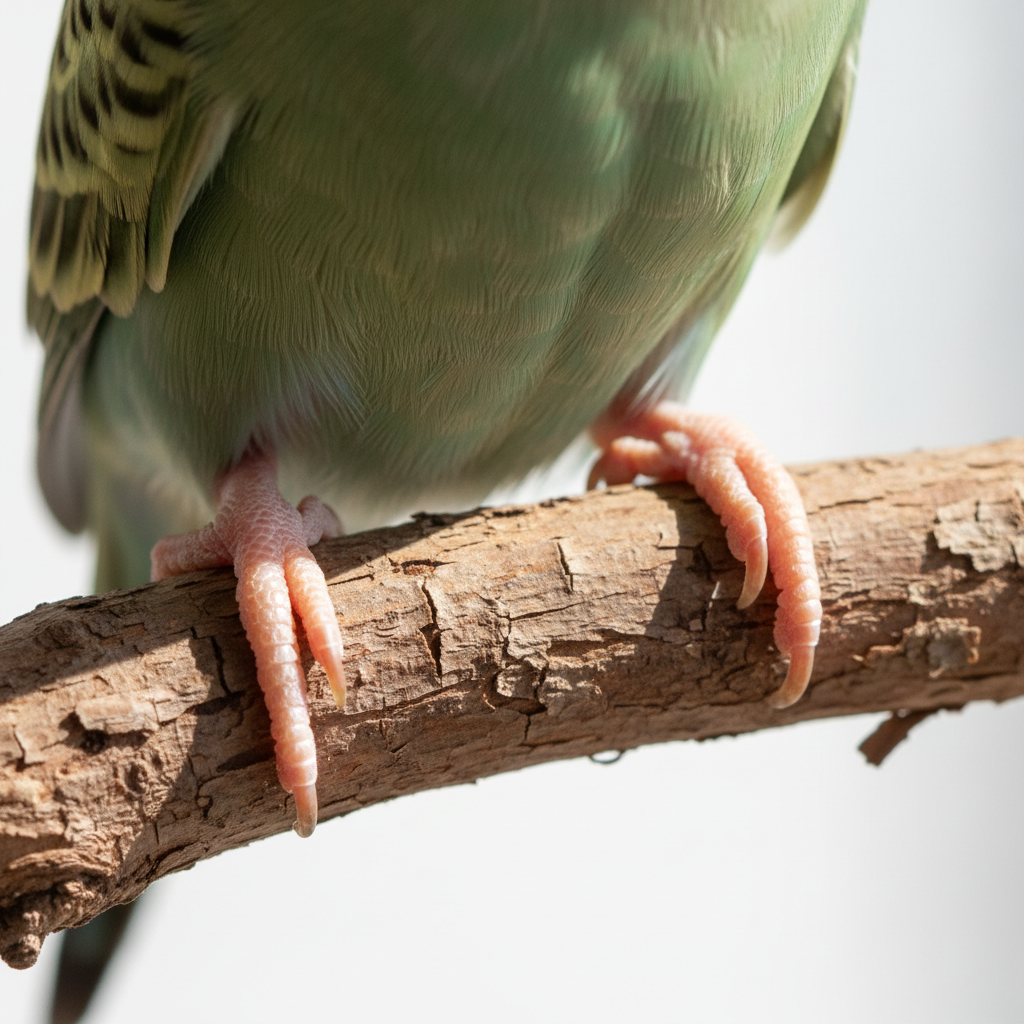
Quick self-check: is your perch setup helping or hurting?
Use this as a quick “cage audit.” You don’t need to overthink it, you just want to catch the obvious friction points.
- Bird spends most of the day on one perch
- Feet look red, shiny, or slightly swollen after long perching
- Bird repeatedly adjusts grip, or shifts weight side-to-side
- Perch feels slick when you wipe it, or stays damp after cleaning
- Visible sharp spots, cracks, or bark edges that lift easily
- Droppings often land on the main resting perch
If you check more than two boxes, don’t panic, but it’s usually worth changing one variable at a time, starting with the main sleeping perch.
Choosing bird perch natural wood: what to look for (and what to skip)
When people shop for bird perch natural wood, they often pick by appearance. Better approach: choose by structure, stability, and cleanability.
Good signs
- Solid, dense branch that doesn’t flex under your bird’s weight
- Multiple diameters across different perches in the cage
- Ends mount securely with hardware that doesn’t wobble
- Surface feels “grippy” but not sharp when you run a finger along it
Skip or replace if you see this
- Splintering or deep cracks where nails can catch
- Heavy flaking bark that traps moisture and waste
- Sticky, resinous wood (can be messy and harder to sanitize)
- Unsealed holes/soft spots that smell musty after washing
If you’re harvesting branches yourself, be cautious. Species safety can vary, and what’s “fine outdoors” can become mold-prone indoors. When in doubt, ask an avian vet or a reputable bird rescue what woods are commonly used in your area.
Comfort vs cleaning: a practical comparison table
Most cages need a mix. One perch can be “rest-first,” another can be “activity-first.” Here’s a simple way to think about it.
| Perch type | Comfort & grip | Cleaning effort | Best use |
|---|---|---|---|
| Natural wood branch (light bark) | High, varied texture | Medium | Main day perch, rotating options |
| Natural wood (heavy bark/deep crevices) | Mixed, can irritate if dirty | High | Short-term enrichment, not the only perch |
| Smooth dowel (uniform) | Low if used alone | Low | Temporary backup, not ideal as main perch |
| Rope perch (quality varies) | Can be comfortable | Medium | Climbing route; monitor fraying |
| Textured “sand” perch covers | Often too abrasive | Medium | Usually avoid for daily standing |
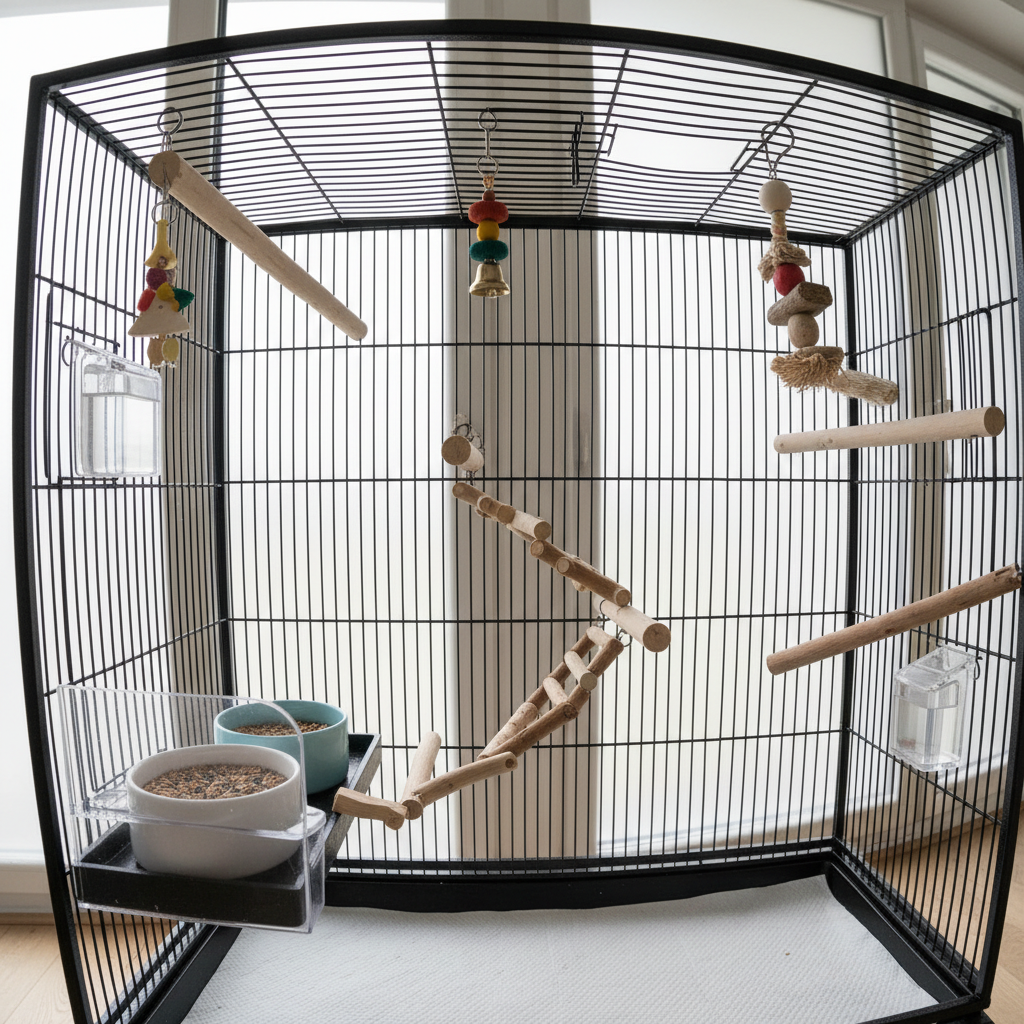
Setup that actually works: perch placement, variety, and daily use
The fastest improvement usually comes from changing the “default” perch your bird uses most, then adjusting traffic flow so the cage stays cleaner with less effort.
A simple, bird-friendly layout
- One main sleep perch: stable natural branch, placed high, not directly over bowls.
- Two secondary perches: different diameters and angles to encourage movement.
- One landing perch near the door: predictable spot for step-ups, reduces awkward jumps.
- Keep a “clean lane”: avoid stacking perches vertically where droppings rain onto the one below.
Many cages end up with too many perches. If your bird can hop everywhere without climbing or flapping, activity drops, and feet spend more time gripping one spot.
Prep, maintenance, and safety tips (without overcomplicating)
Natural wood perches are only as good as their upkeep. The goal is consistent dryness and a surface that stays stable.
Practical cleaning routine
- Daily: quick wipe on the main perch if you see obvious droppings buildup.
- Weekly: remove and scrub with hot water; allow to dry fully before reinstalling.
- Rotate: having a spare perch makes drying easier, which matters more than people think.
According to the Centers for Disease Control and Prevention (CDC), keeping bird environments clean and washing hands after handling birds or their supplies helps reduce illness risk. If you’re using disinfectants, follow label directions and rinse thoroughly, residue and fumes can be an issue in small spaces.
Safety watch-outs
- Hardware stability: a wobbling perch forces constant micro-corrections, which can stress feet and joints.
- Fraying rope near natural perches: some birds chew fibers; if you see loose strands, swap it out.
- Outdoor branches: may carry pesticides, sap, or insects; consult a professional if unsure.
Conclusion: the “comfortable perch” is usually a system, not one product
A comfortable setup rarely comes from buying one perfect branch. It comes from pairing bird perch natural wood options with smart placement, diameter variety, and a cleaning routine you’ll actually keep.
If you want a clean next step, pick one main natural perch that feels stable and grippy, move it away from droppings zones, then add one secondary perch with a different thickness. Give it a week, watch your bird’s stance and activity, then adjust from there.
FAQ
What size natural wood perch should I use for my bird?
Aim for a diameter where the toes wrap around comfortably without fully overlapping underneath. Species and individual feet vary, so offering two or three sizes usually works better than hunting for one “perfect” size.
Is bark on a natural perch good or bad?
Light, stable bark can improve traction, but deep crevices and flaking bark tend to trap waste and moisture. If it smells musty after cleaning or stays damp, it’s probably not a great daily perch.
How many perches should be in a cage?
Most setups do well with a main resting perch plus two or three additional perches that create different routes. Too many perches can reduce movement and make cleaning harder, which indirectly affects foot comfort.
Are sandpaper perch covers safe?
Many birds find them abrasive for long standing periods, and they can irritate feet. If you’re considering them for nail wear, it’s safer to talk with an avian professional about trimming and enrichment alternatives.
Can natural wood perches cause bumblefoot?
Natural branches often help, but bumblefoot is usually multifactorial: pressure, hygiene, weight, and inactivity can all contribute. If you see sores, scabs, swelling, or limping, contact an avian vet promptly.
What’s the best place to put the sleeping perch?
High enough that your bird feels secure, but not directly above food and water, and not positioned so droppings land on other perches. A stable, slightly thicker branch often works well for sleep.
How do I know if a perch is too slippery?
If your bird’s feet slide during turns or landings, or if you can feel a slick film after wiping, traction may be poor. A different wood texture, better cleaning, or a diameter change usually fixes it.
Should I boil or bake branches to sanitize them?
Methods vary and depend on wood type, thickness, and what you’re trying to remove. Because overheating can crack wood and some residues require different handling, it’s reasonable to consult an avian vet or an experienced rescue for guidance before DIY sanitizing.
If you’re trying to make your cage setup more comfortable without constantly second-guessing, it helps to choose a small set of natural wood perches in varied diameters and build a simple rotation so one can dry while the other stays in use.