
Dog food topper savory is usually the fastest way to make a bowl of kibble smell and taste more interesting, especially when your dog starts walking away mid-meal or eating only when “hand-fed.”
If that sounds familiar, you’re not alone, a lot of households use toppers to solve very normal problems: picky phases, lower appetite in hot weather, switching foods, or simply wanting a bit more variety without rebuilding the whole diet.
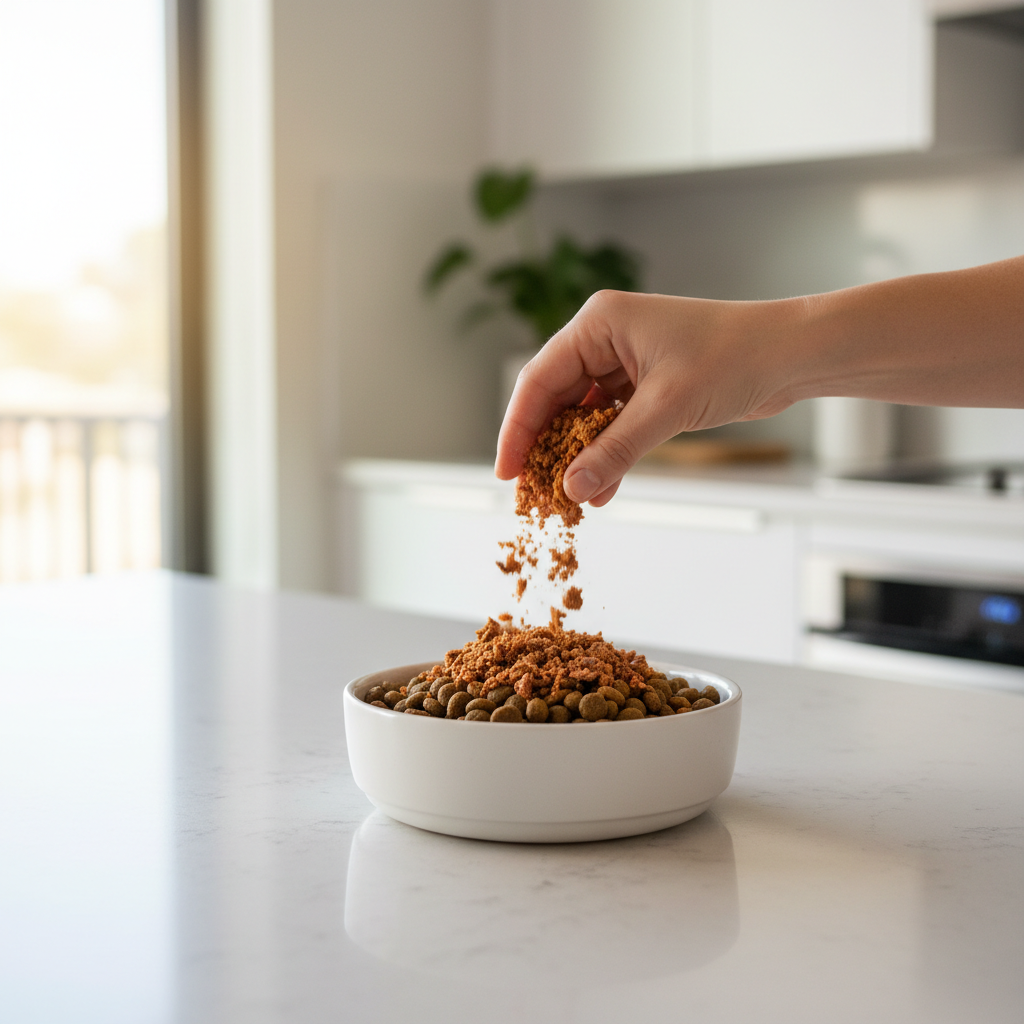
But “savory” also comes with tradeoffs, the extra flavor often means extra sodium, extra fat, or ingredients that don’t fit every dog. This guide helps you pick a topper that makes meals easier without quietly creating new issues.
Why savory toppers work (and why some backfire)
Most savory toppers work for one simple reason: smell drives appetite. Many dry foods are stable and convenient, but they can be relatively low-aroma compared with fresh or wet foods, so dogs that get bored easily may lose interest.
- Aroma boost: broth, meat drippings, and fish-based toppers throw off stronger scent cues.
- Texture change: crunch plus a moist topper can feel more rewarding than crunch alone.
- Novelty effect: rotating flavors can reset interest for some picky dogs.
Where it backfires is usually predictable: people pour freely, the topper becomes 30–50% of the bowl, and the “complete and balanced” main food no longer stays the main food. Another common issue is sodium-heavy human-style seasoning, which can be rough for sensitive dogs.
Quick self-check: is your dog a good candidate?
Before shopping, it’s worth a 60-second check so you know what you’re solving. A topper can help preference and transition problems, but it won’t fix everything.
- Likely helpful: picky phase, switching kibble, mild appetite dips, adding hydration, senior dog that prefers softer texture.
- Proceed carefully: history of pancreatitis, frequent diarrhea, food allergies, kidney or heart concerns, on a prescription diet.
- Not a topper problem: sudden appetite loss, vomiting, lethargy, painful chewing, significant weight change.
According to the American Veterinary Medical Association (AVMA), changes in appetite can be a sign of underlying illness, so if the refusal is sudden or comes with other symptoms, it’s smart to talk to a veterinarian rather than “out-flavor” the issue.
Common types of savory toppers (and what they’re best for)
Dog food topper savory products show up in a few familiar formats, each has a different risk profile and a different “best use.”
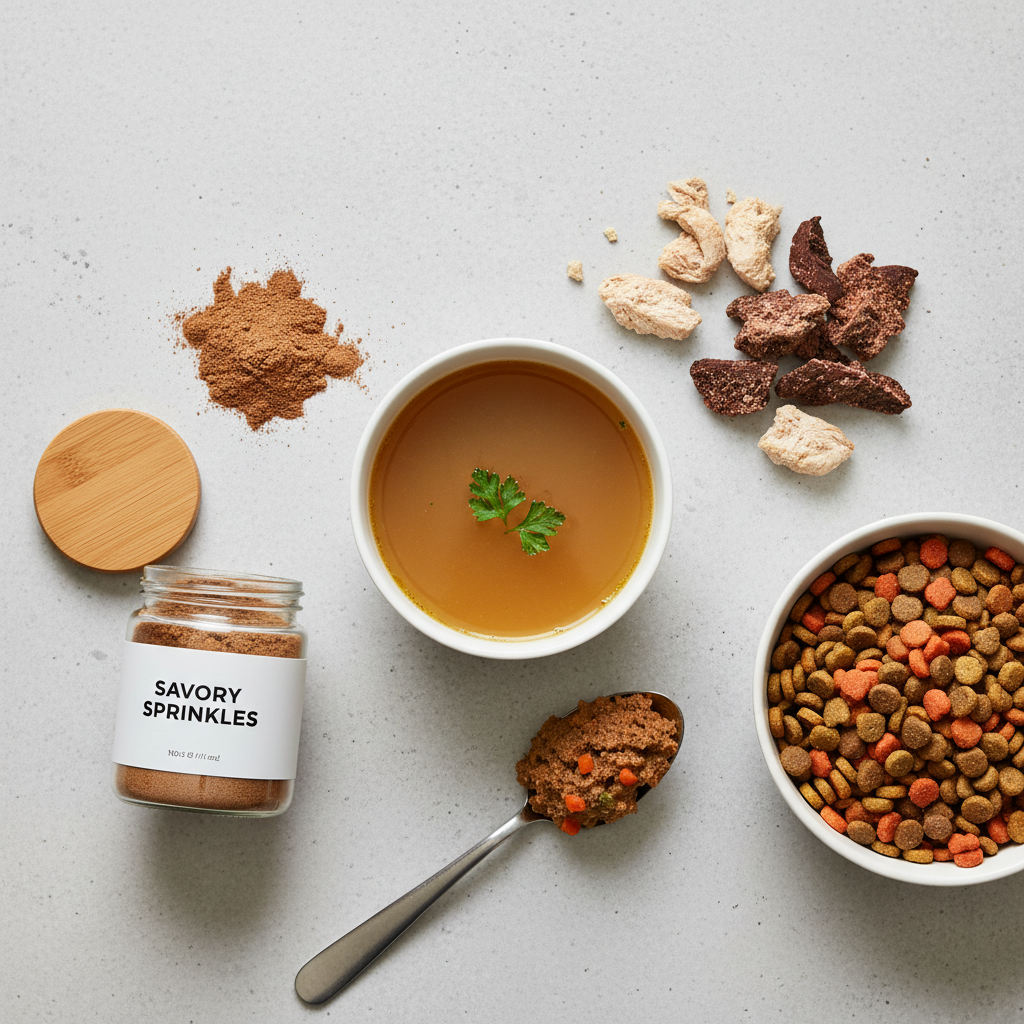
Broths and “gravy” toppers
Great for hydration and aroma. Watch for onion/garlic ingredients and high sodium, and avoid broths made for humans unless you’re certain they’re dog-safe.
Freeze-dried meat or organ crumbles
Usually very palatable and easy to portion. These can be rich, so smaller dogs and sensitive stomachs may need tiny amounts at first.
Wet food used as a topper
Reliable, consistent, and often easier on digestion than random kitchen add-ons. The drawback is calories add up quickly if you “eyeball it.”
Powders (liver dust, fish powder, seasoning-style blends)
Convenient and shelf-stable. Flavor is strong, which is good, but some powders are salty, and fish-based ones can be intense for dogs with sensitive skin.
How to choose a topper: a practical table
If you want a simple way to decide, use the label and your dog’s history to narrow options, then test in small portions.
| Goal | Topper type that often fits | What to check on the label | What to avoid |
|---|---|---|---|
| Picky eater (behavioral) | Powder or freeze-dried crumble | Single protein, short ingredient list | High salt “seasoning” blends |
| Switching foods | Wet food as topper | Similar protein to new kibble | Too many new ingredients at once |
| Need more hydration | Dog-safe broth | Lower sodium, no onion/garlic | Human broth with seasonings |
| Weight management | Broth or low-cal wet topper | Calories per serving, feeding guide | Fatty meat drippings, heavy cheese |
| Sensitive stomach | Limited-ingredient wet topper | Plain recipe, clear sourcing | Rich organ-heavy toppers early on |
According to the Association of American Feed Control Officials (AAFCO), “complete and balanced” refers to the overall diet meeting nutrient profiles, so if the topper becomes a large share of intake, you can unintentionally unbalance the diet even if the base food is solid.
How to use savory toppers without creating a picky eater
The easiest trap is teaching “hold out and you’ll get something better.” You can still use a topper, just run it like a system instead of a negotiation.
- Start tiny: begin with 1–2 teaspoons for small dogs, 1–2 tablespoons for medium/large, then adjust based on stool and appetite.
- Keep topper under control: many households do well keeping toppers around 10% of calories, but your vet may suggest a tighter cap for certain conditions.
- Mix, don’t layer: mixing reduces “eating around” the kibble.
- Set a mealtime window: offer food for 15–20 minutes, then pick it up, this helps many dogs reset expectations.
- Rotate slowly: frequent swaps can trigger GI upset, especially with rich savory ingredients.
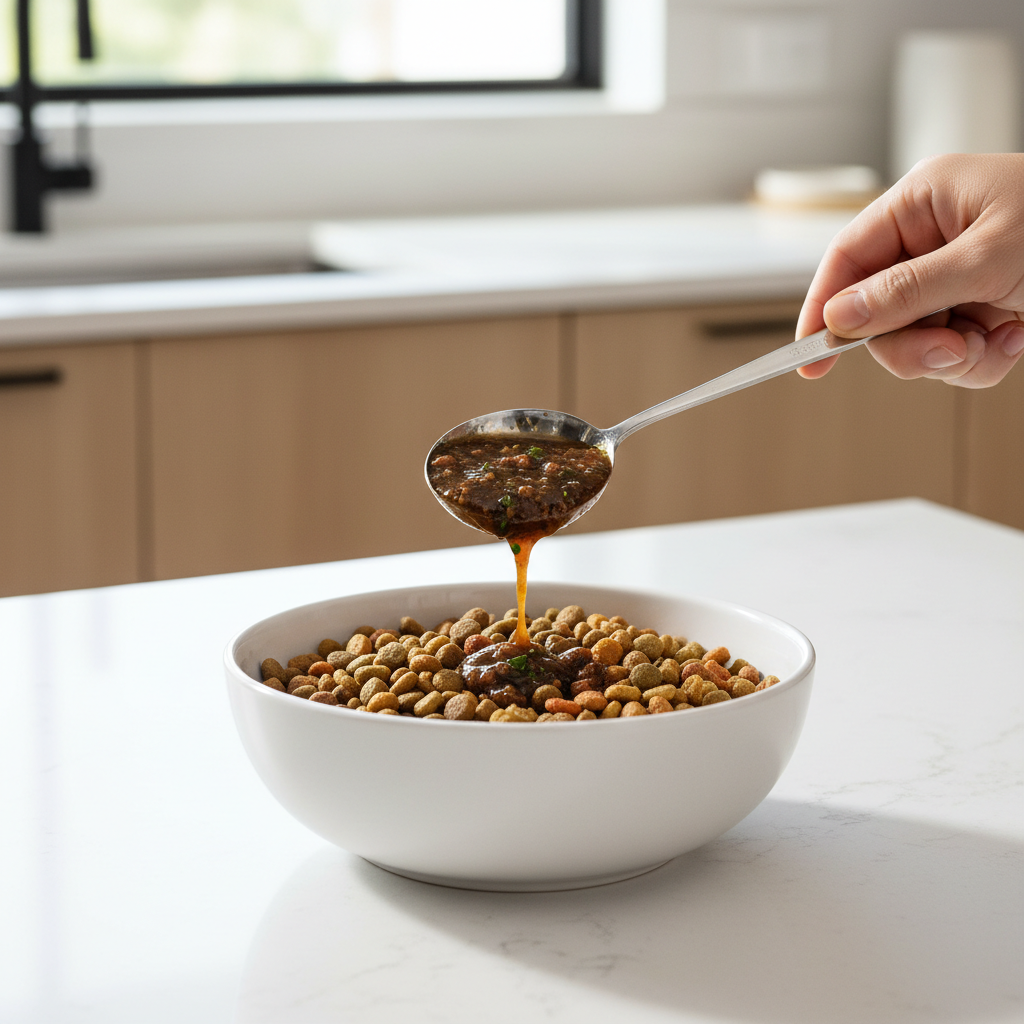
If you’re using dog food topper savory options mainly for transitions, you can taper down over 7–14 days, many dogs accept the new food once the smell is familiar.
Safety and ingredient red flags (savory edition)
Savory usually means concentrated flavor, and concentrated flavor often means ingredients you should double-check.
- Onion and garlic: even “natural flavors” should be clarified if you’re unsure, allium ingredients can be risky for dogs.
- Excess sodium: can be a concern for dogs with certain heart or kidney conditions, and can worsen thirst and stomach upset in some cases.
- High fat toppers: rich gravies, bacon drippings, or heavy organ mixes can trigger diarrhea, and in predisposed dogs may raise pancreatitis risk.
- Xylitol: uncommon in toppers, but it shows up in some human products, treat it as a hard no.
- Unclear sourcing: vague “meat by-products” is not always bad, but if your dog has allergies, you usually want clearer protein identification.
According to the ASPCA Animal Poison Control Center, some human foods and ingredients can be toxic to pets, so when in doubt, choose products formulated specifically for dogs and ask your veterinarian about your dog’s individual risk.
Key takeaways you can actually use this week
- Use a topper to support the main food, not replace it, keep portions measured.
- Match the topper to the goal: hydration, transition, picky eating, or calorie control.
- Go slow with rich savory toppers, stool quality is your quickest feedback loop.
- If appetite change is sudden, treat it as a health question first, not a flavor question.
Practical step-by-step: building a “savory topper routine”
Here’s a simple routine that tends to work for many households without turning dinner into bargaining.
- Pick one topper and commit for 10–14 days, changing multiple variables makes it hard to tell what helped.
- Measure the base food as usual, then subtract a small amount of kibble if the topper adds meaningful calories.
- Add warm water when appropriate, a little warmth can amplify aroma without adding sodium.
- Track two things only: stool quality and enthusiasm at the bowl, ignore the rest of the noise.
- Taper if the goal is transition, reduce the topper every few days once meals look stable.
If you’re managing a medical condition, or your dog eats a therapeutic diet, it’s worth confirming topper choices with a veterinarian or a board-certified veterinary nutritionist, small additions can matter more than people expect.
Conclusion: make meals enjoyable, keep nutrition steady
Dog food topper savory can be a friendly tool for picky eating and smoother transitions, as long as you treat it like a measured add-on and not a free-pour reward. Keep ingredients simple, watch sodium and fat, and let your dog’s digestion guide the pace.
If you want one next step, pick a single dog-specific savory topper, measure it for a week, and see if your dog’s appetite improves without stool changes, if anything feels “off,” pause and ask your vet what fits your dog’s history.
FAQ
What is a dog food topper savory product, exactly?
It’s an add-on designed to boost flavor and aroma, often broth, gravy, crumbles, or powder. The point is palatability, but you still want the main food to carry most nutrition.
How much savory topper should I put on kibble?
Start smaller than you think and adjust slowly. Many owners aim to keep toppers as a modest slice of total intake, and measure servings so calories don’t creep up.
Can I use human bone broth as a savory topper?
Sometimes, but it depends on ingredients. Many human broths include onion, garlic, or lots of salt, so a dog-formulated broth is usually the safer default unless you can verify the recipe.
Will savory toppers make my dog refuse plain kibble?
They can if the topper becomes a constant “upgrade” or if you keep changing flavors when your dog hesitates. Mixing well, using consistent portions, and setting a mealtime window often helps.
Are freeze-dried savory toppers safe for sensitive stomachs?
Often they’re fine in tiny amounts, but they can be rich. If your dog has a history of GI upset, introduce slowly and stop if stools soften or vomiting occurs, then check in with your vet.
What ingredients should I avoid in savory toppers?
Onion/garlic, very high sodium, and very fatty drippings are common troublemakers. If your dog has allergies, also avoid vague proteins where the source isn’t clear.
Should puppies use savory toppers?
In many cases it’s okay in small amounts, but puppies have specific growth needs, so keep the puppy food as the main calorie source and choose simple toppers, your veterinarian can guide what’s appropriate.
When should I call a vet instead of trying a topper?
If appetite drops suddenly, your dog seems painful, vomits repeatedly, has diarrhea that persists, or you notice weight loss, treat it as a medical question. A topper might hide symptoms and delay care.
If you’re trying to find a dog food topper savory option that fits picky eating without overdoing calories or sodium, it often helps to share your dog’s age, size, diet type, and sensitivities with a veterinary team or a nutrition-focused pet retailer, you’ll narrow choices faster and waste fewer bags.