
Cat harness for walking sounds simple until your cat backs up once, slips a shoulder strap, and you realize “secure” and “escape-proof” are not the same thing. If you want safer outdoor time, the harness choice matters, but fit and training matter just as much.
Most escape attempts happen in predictable moments, a sudden noise, a dog passing, a car door, or your cat doing that low, liquid “reverse gear” move. The goal is not to find a magical product, it’s to build a setup your cat can’t wriggle out of easily, and that you can trust under stress.
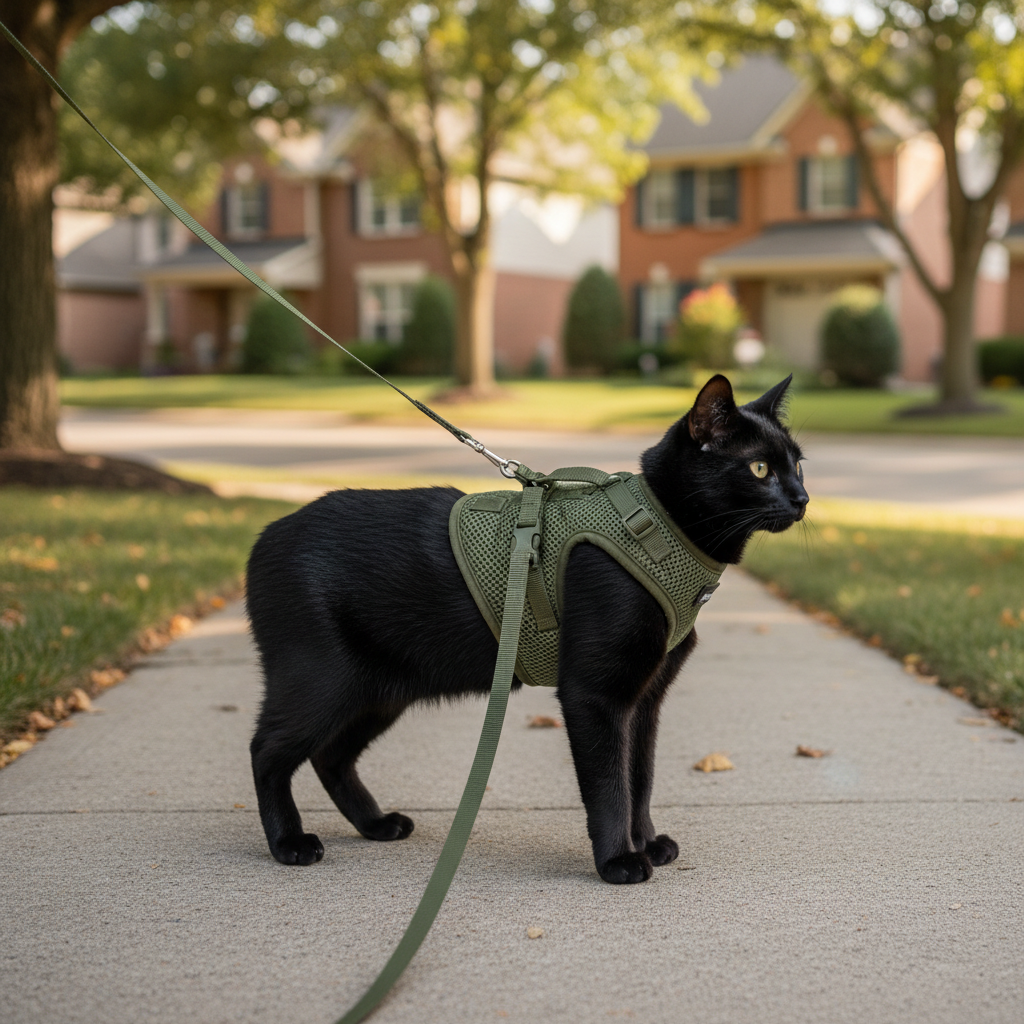
Below is a practical breakdown of why cats escape, how to tell if your current harness is risky, what features genuinely help, and how to get your cat comfortable so you’re not wrestling straps at the front door.
Why cats slip harnesses (and why “tight” isn’t always safer)
Cats escape harnesses for a few common reasons, and most are fixable once you see them clearly.
- Backward pull + shoulder collapse: Many cats can compress their shoulders and slide out when they pull in reverse, especially with H-style straps.
- Wrong strap placement: If the neck strap rides too low or the chest strap sits too far back, the harness can rotate and open a gap.
- Size mismatch between neck and chest: Cats often need different adjustments for neck vs. girth, one “average” size can fit neither well.
- Fur and body shape: Fluffy coats hide looseness, and slim “tube-shaped” cats can slip gear that looks fine on rounder bodies.
- Panic response: Even a decent harness can fail if your cat hits full-throttle fear and you grab the leash at a bad angle.
One more nuance, cranking straps down can create rubbing, restrict breathing, or make the cat more likely to fight the harness. Escape-proof usually means stable geometry plus correct tension, not maximum tightness.
Quick self-check: is your current harness “escape-risky”?
Before buying anything, test what you already own in a calm, indoor setting.
- Two-finger check (with honesty): You should fit about two fingers under each strap, but if your fingers slide around easily, it’s likely too loose.
- Reverse test: With the leash attached, apply gentle backward pressure while your cat stands. If the harness shifts toward the head or the neck loop widens, that’s a red flag.
- Rotation test: Try turning the harness slightly side-to-side. If it spins around the torso, it may be unstable outdoors.
- Armpit clearance: If straps cut into the “armpit” area, your cat may resist walking and attempt escapes more often.
- Buckle security: Check whether buckles can be nudged open by rolling or scratching, it happens more than people think.
If two or more items feel questionable, you’re probably not one training session away from success, you’re in “change the setup” territory.
What “escape-proof” usually means: harness styles compared
For a cat harness for walking, style choice changes how force distributes across the chest and shoulders, which is what prevents the classic back-out escape.
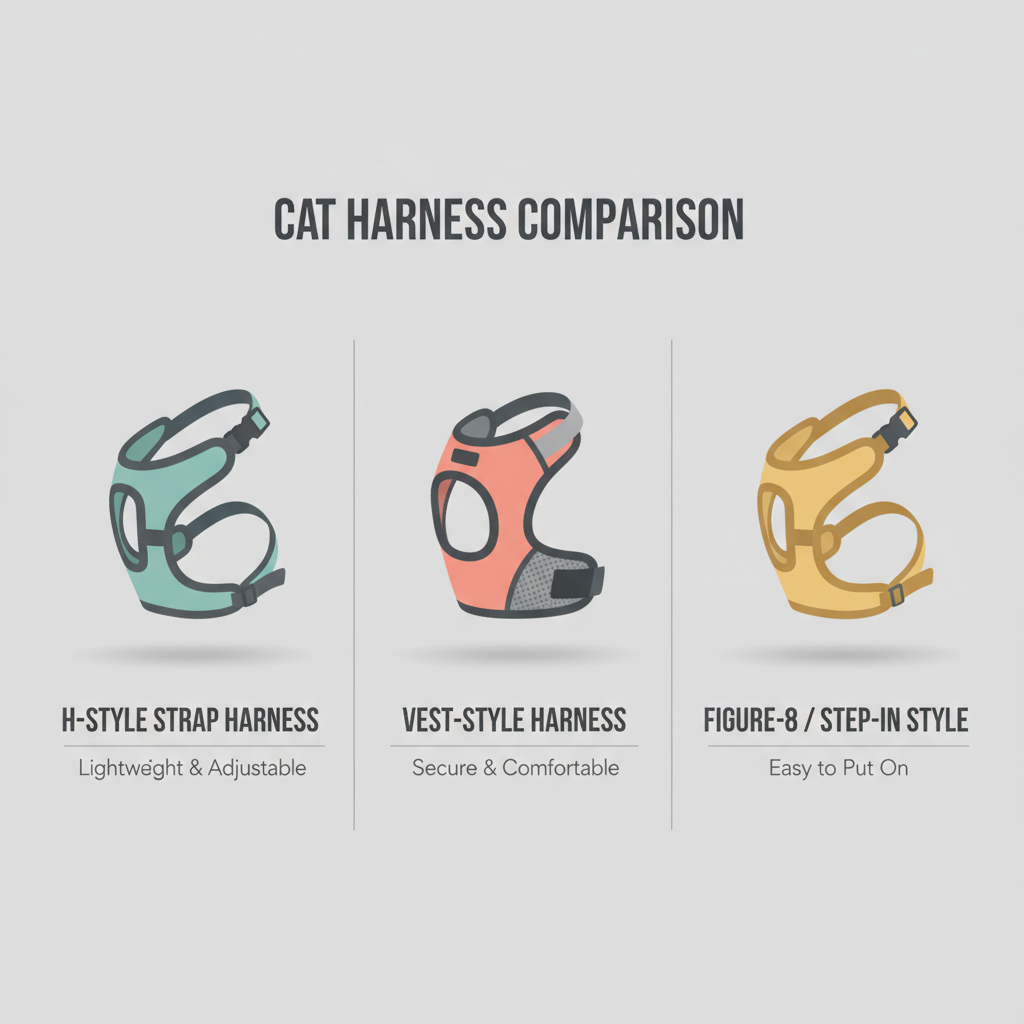
| Harness type | Why people like it | Common escape issue | Who it tends to suit |
|---|---|---|---|
| H-style (strap) | Lightweight, adjustable, cooler in heat | Can slide forward on reverse pull | Calm cats, experienced handlers, indoor training |
| Vest-style | More surface area, often harder to back out of | Can loosen as fabric shifts, can rub if poorly cut | Escape-prone cats, slim cats, beginners |
| Figure-8 / step-in | Simple on/off, good chest control | Some cats slip a front leg if fit is off | Cats that dislike head loops, short sessions |
In many households, a well-fitted vest-style harness is the most forgiving starting point for escape prevention. That said, a high-quality strap harness can work if it’s designed to stay anchored on the sternum and you dial in the adjustments.
How to pick the right size and fit (the part most people rush)
Fit is where “escape-proof” succeeds or fails. Try to slow down here, even if you’re eager to get outside.
Measure two areas, not one
- Neck: Measure around the base of the neck (not where a collar sits high).
- Girth/chest: Measure around the widest part of the ribcage, usually just behind the front legs.
If your cat falls between sizes, many brands recommend sizing up and tightening, but for escape-prone cats, the better move is often choosing the size that keeps the neck opening secure without sliding. Brand sizing varies, so use the product’s chart rather than guessing.
Look for these construction details
- Secure leash attachment point: A back D-ring positioned to keep the harness from riding up toward the head.
- Multiple adjustment points: More adjustability means you can fit both neck and girth properly.
- Anti-slip lining or structured panels: Helps stop rotation on slim bodies.
- Reinforced stitching: Especially near buckles and D-rings.
- Reflective accents: Not escape-proofing, but helpful for evening visibility.
According to ASPCA, outdoor time and enrichment can benefit many cats, but they also emphasize safety and supervision for any outdoor exposure. A reliable walking setup is part of that safety picture.
Make it escape-resistant in practice: training steps that actually stick
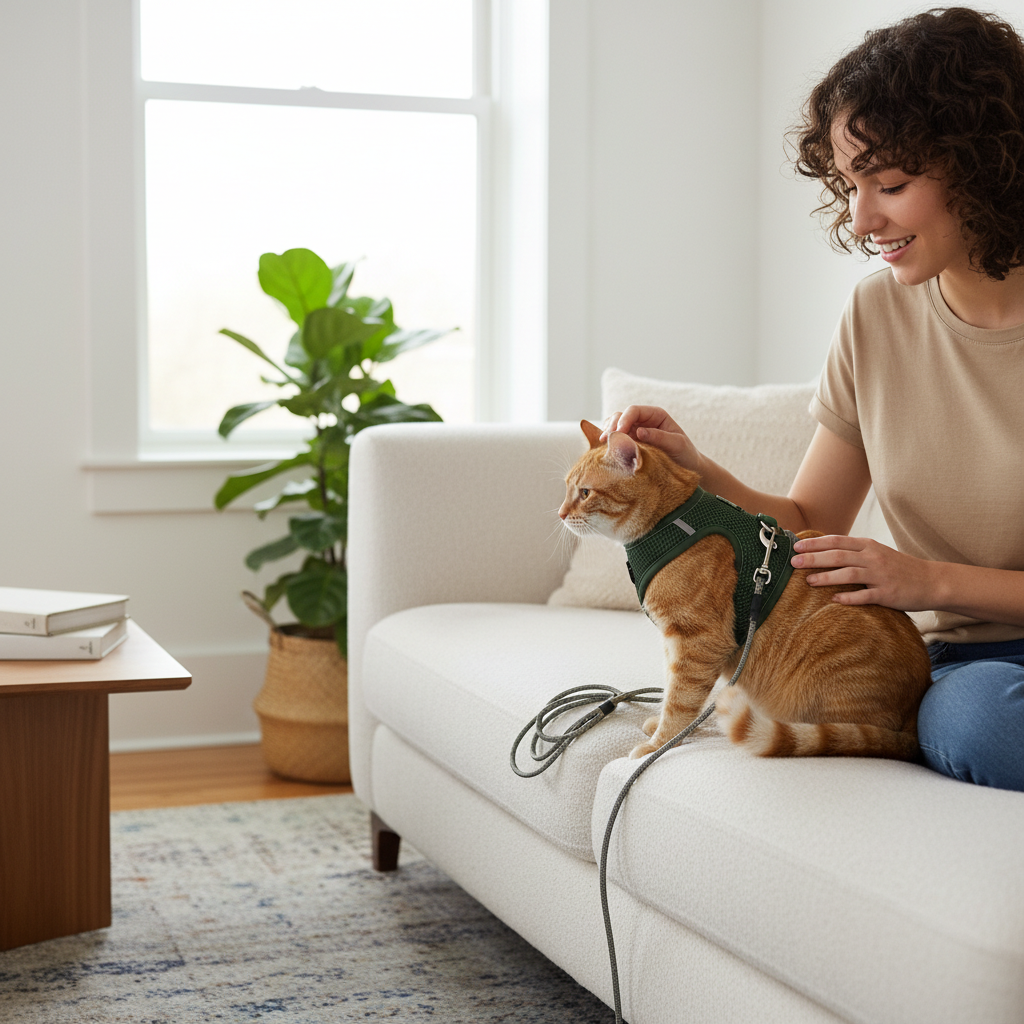
Even the best cat harness for walking can fail if your cat only associates it with restraint. The goal is calm predictability.
Step-by-step plan (short sessions)
- Day 1–3: Leave the harness near feeding spots, let your cat sniff it, reward curiosity.
- Next sessions: Put it on for 10–30 seconds, reward, then remove before your cat “freaks out.”
- Build duration: Increase indoor wear time while your cat does normal activities.
- Add leash indoors: Let the leash drag briefly under supervision, then practice gentle following.
- First outdoor trips: Start with a quiet porch or hallway, not a busy sidewalk.
What helps most is ending sessions while things still feel okay. People often push “one more minute,” and that’s when the cat learns to fight the harness.
Real-world walking tips: reduce panic, reduce escapes
Escape attempts are often stress responses. Change the walk environment and you reduce the odds of “reverse launch.”
- Use a longer leash, not a retractable: A 6–10 ft leash often gives enough slack to prevent sudden tension spikes. Retractables can create surprise pressure.
- Walk for your cat’s pace: Many cats “explore” more than they “walk.” Let sniffing be the activity.
- Avoid high-traffic triggers: Dogs, kids, loud streets, and leaf blowers are common deal-breakers early on.
- Carry a backup plan: A soft carrier or cat backpack can help if your cat shuts down or panics.
- Practice the calm pickup: If your cat spooks, step closer, lower leash tension, and calmly scoop if safe to do so.
According to AVMA, many cats do best with a controlled outdoor experience rather than free roaming, due to safety risks and wildlife impact. Harness walks can fit that middle ground, when done thoughtfully.
Common mistakes that make “escape proof” fail
- Relying on a collar as a backup: Collars can slip too, and leash pressure on a collar can be risky. A collar can hold ID, but it’s not a walking solution.
- Skipping acclimation: Putting a harness on and heading outside often creates a fear memory that takes time to undo.
- Letting the harness sit too far back: That “saddle” look can increase rotation and front-leg slipping.
- Buying for looks first: Cute patterns won’t matter if the cut rubs the armpits or the D-ring sits poorly.
- Overcorrecting with tightness: If your cat pancake-walks or freezes, fit or style may be wrong, not your cat being “dramatic.”
When to get extra help (vet, behavior pro, or fitter)
If your cat shows heavy panting, drooling, repeated frantic escape attempts, or aggression during harness sessions, it may be more than “needs time.” In those cases, pausing outdoor plans and talking with a veterinarian is a reasonable step, especially if you suspect pain, breathing issues, or anxiety.
If the problem is mostly fear-based, a certified cat behavior consultant can help you build a desensitization plan and spot subtle trigger stacking. That support is also useful if your household has unavoidable stressors like dogs, noisy streets, or shared hallways.
Key takeaways (save this before you shop)
- Escape-proof is mostly fit + stability, not just “tight straps.”
- Vest-style harnesses are often a safer starting point for escape-prone cats, but any style can work when it’s designed well and adjusted precisely.
- Do indoor reverse/rotation tests before you trust the setup outside.
- Training should feel boring and reward-heavy, short sessions beat long battles.
Conclusion: a calmer walk starts before you open the door
Picking a cat harness for walking that resists escapes is half product choice and half process. If you measure carefully, choose a stable design, and train in small steps, outdoor time becomes less about preventing disaster and more about letting your cat explore safely.
If you want one action to take today, do the reverse-pull test indoors and adjust from there. If the harness shifts toward the head, treat that as your signal to change the fit or switch styles before your next walk.
FAQ
What is the most escape-proof cat harness style for walking?
Many cats do well with a properly fitted vest-style harness because it spreads pressure and reduces rotation. Still, “most escape-proof” depends on body shape and how the harness anchors on the chest.
How tight should a cat harness be?
Usually you’re aiming for snug but not restrictive, often around a two-finger fit. If your cat’s movement looks stiff or you see rubbing near the front legs, it may be too tight or the cut may not match your cat.
Why does my cat fall over when I put a harness on?
That freeze or flop response is common during early training, but it can also happen when the harness presses in a weird spot. Short indoor sessions with treats help, and if it stays extreme, consider trying a different style and checking with a vet if you suspect discomfort.
Can I walk my cat with a collar and leash instead?
For most cats, a collar isn’t a great idea for leash walking because they can slip out and neck pressure can be risky. A collar is better used for ID while the harness handles the leash.
My cat escapes by backing out, what should I change first?
Start with fit and geometry: ensure the neck opening can’t slide up, and the chest strap sits correctly behind the front legs. If it still shifts under gentle backward pressure indoors, a more stable harness style may help.
How long does harness training usually take?
It varies a lot. Some cats adapt in a week, others need several weeks of short sessions. If you push too fast, it often takes longer overall because you’re repairing stress reactions.
Is it safe for my cat to be outdoors on a harness?
It can be, with supervision and a secure setup, but risks still exist, loose dogs, toxins, traffic, and panic events. Choose quiet areas, keep sessions short, and talk with a veterinarian if your cat has health conditions that could make stress more risky.
If you’re trying to choose between two harness sizes or styles and you want a quicker path, bring your cat’s neck and girth measurements and a couple photos of the harness fit to a local pet shop or your vet clinic, many can give practical guidance without turning it into a big project.