
Hamster bedding paper can be a simple upgrade if you’re dealing with dust clouds during clean-outs, sneezy hamsters, or that “why does it still smell” moment two days after a fresh change.
The tricky part is that “paper bedding” isn’t automatically dust-free, and the wrong bag can mean irritated airways, damp corners, and a cage that looks clean but feels gross fast. This guide breaks down what “dust-free” usually means in real life, how to spot better options, and how to use paper bedding so it actually performs.
You’ll also find a quick comparison table, a short decision checklist, and a step-by-step setup that works for most Syrian and dwarf hamsters, with notes on when to be more cautious.
What “dust-free” paper bedding really means (and what it doesn’t)
In pet products, “dust-free” often means low dust, not zero dust. Paper fibers can shed, and some batches are cleaner than others, especially if the bag was shipped and compressed for a long time.
Dust matters because hamsters live nose-first in their habitat, and paper particles can irritate sensitive airways. According to the American Veterinary Medical Association (AVMA), good husbandry and a clean environment are important parts of small pet wellness, and that includes reducing airborne irritants when possible.
So the goal is practical: bedding that doesn’t fog the air when you pour it, doesn’t coat surfaces with powder, and doesn’t make your hamster sound congested.
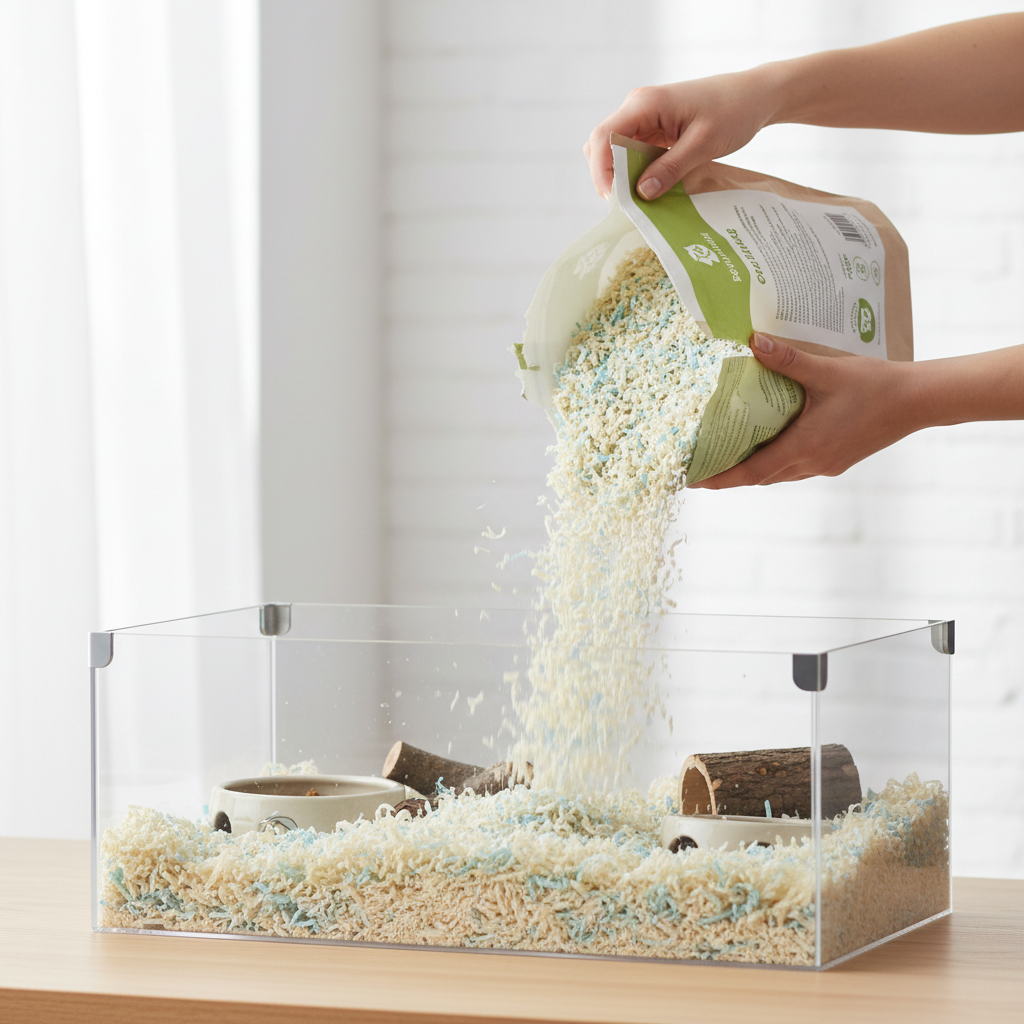
Why some paper bedding feels dusty or fails in a week
If you’ve tried paper bedding before and felt underwhelmed, it’s usually one of these issues, not “paper bedding just doesn’t work.”
- Over-processed fine fibers: very soft bedding can shed more, especially when the bag is shaken.
- Shipping compression: tight packing breaks fibers into smaller particles, and the first pour is the worst.
- Too-thin bedding depth: shallow layers get saturated faster, then smell and clump.
- Humidity + poor airflow: paper holds moisture, and damp zones turn into odor zones.
- Wrong cleaning rhythm: full cleans too often can stress hamsters, but spot-cleaning too little lets ammonia build.
One more thing people miss: some “paper” products include added fragrances. They can seem helpful, but in many cases they’re just masking odor while adding another irritant.
Quick self-check: is paper bedding a good fit for your setup?
This takes two minutes and saves a lot of trial-and-error.
- Your hamster sneezes often or you notice crusty eyes: choose low-dust paper, and consider checking with an exotics vet if symptoms persist.
- You run a bin cage or tank: paper bedding usually works well, but airflow and humidity control matter more.
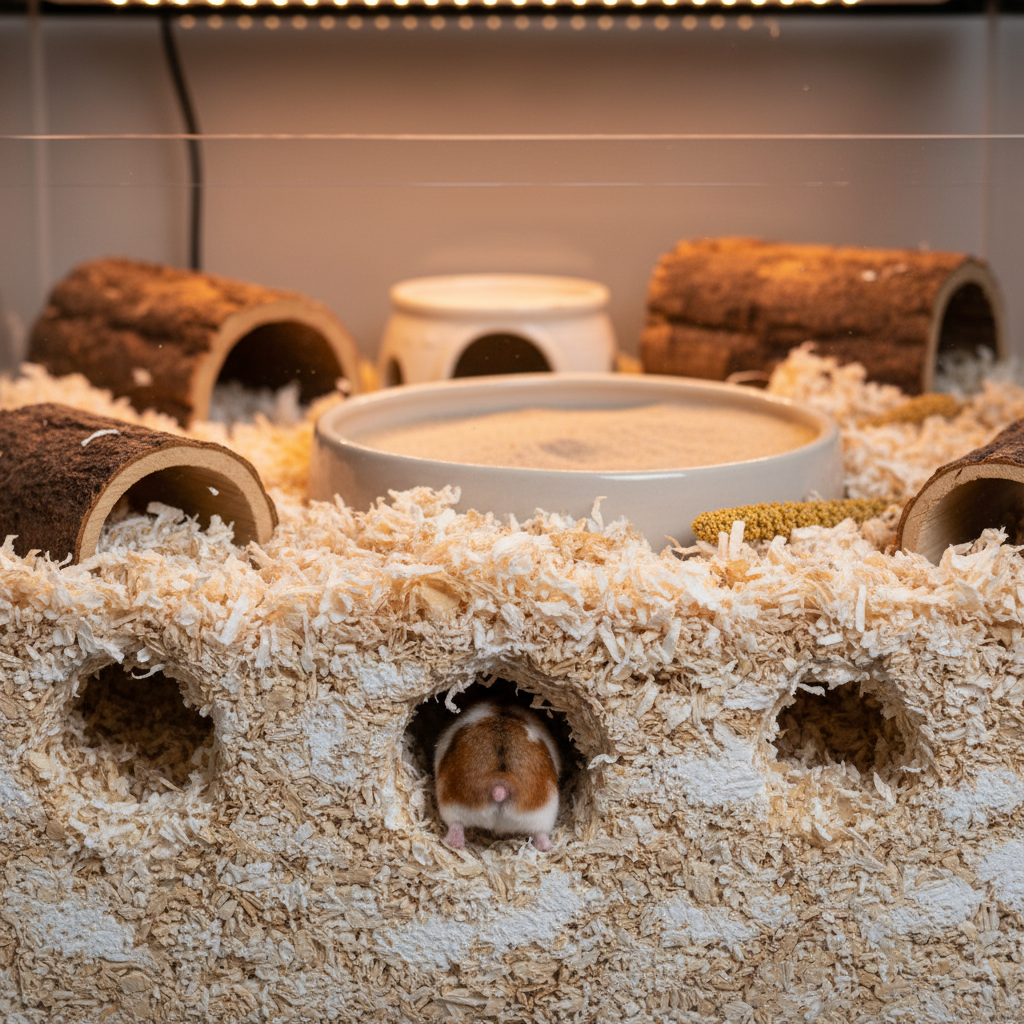
- Your hamster burrows constantly: you’ll need deeper bedding and better “hold” so tunnels don’t collapse.
- Your home is humid or the enclosure sits near a kitchen/bathroom: plan for more frequent spot-cleaning and moisture control.
- You use a sand bath: great, it often reduces oiliness and helps bedding stay fresher.
If two or more items feel like your situation, paper can still be a strong option, but you’ll want to be picky about dust and absorbency.
Paper bedding comparison table: what to look for when shopping
Brand names vary, and formulas change, so it helps to shop by characteristics. Here’s a practical way to compare bags on the shelf.
| What you’re checking | Better sign | Watch out for | Why it matters |
|---|---|---|---|
| Dust level (pour test) | Minimal visible powder, air stays clear | Powdery plume, residue on hands | Lower airway irritation risk |
| Fiber texture | Fluffy, springy pieces that interlock | Very fine, “cottony” shred feel | Supports burrows, reduces collapse |
| Absorbency | Soaks and stays relatively dry to touch | Gets soggy quickly | Moisture drives odor and bacteria |
| Added scent | Unscented | Strong fragrance | Less irritation, more honest odor monitoring |
| Color & dye | Plain, lightly processed look | Heavily dyed novelty colors | Less unknown additives, easier to spot dirty areas |
Key takeaway: the best “dust-free” experience usually comes from unscented, springy paper bedding used deep enough to stay dry and stable.
How to set up a dust-free paper bedding habitat (step-by-step)
This is the part that makes paper bedding feel “worth it.” If you do it half-way, even a good bag performs badly.
1) Start with depth, not a thin layer
Many hamster owners aim for 6–10 inches in at least one main burrowing zone, more if your enclosure allows. Deeper bedding stays drier because urine doesn’t spread across the whole surface as fast.
2) Create a pee corner on purpose
Hamsters often pick one spot. Place a small tray with sand or a dedicated litter area where your hamster already tends to go, and keep it consistent. Less urine in paper bedding means less odor, less clumping, and fewer full cage resets.
3) Pre-fluff the bedding (yes, it helps)
Right after opening the bag, gently pull apart compacted chunks in a big bin or trash bag, then pour slowly. This reduces the initial “bag dust” burst and improves tunnel structure.
4) Layer for stability
For hamsters that dig hard, some keepers mix in a small amount of hay-like fiber (pet-safe grass hay) to help hold tunnels. If you try this, keep the mix light and monitor for poky pieces near eyes.
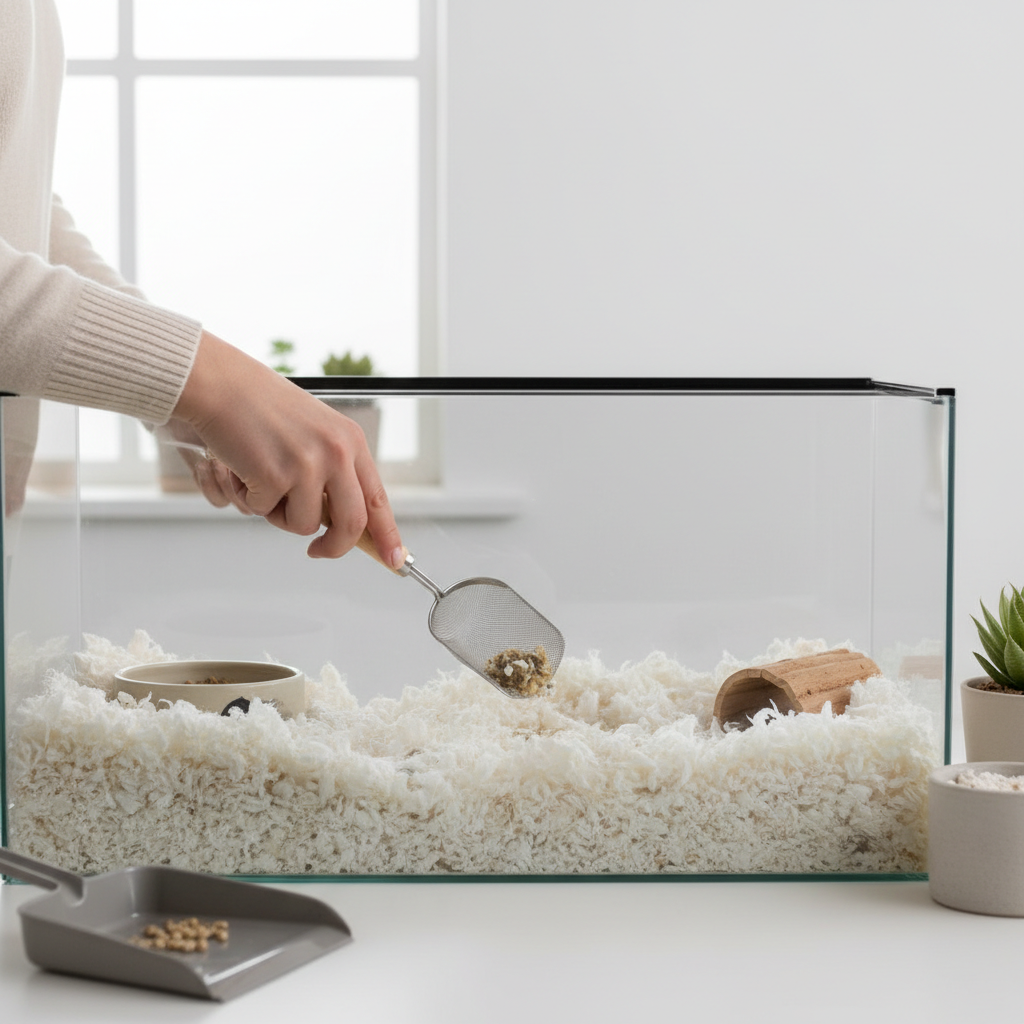
5) Spot-clean with restraint
Daily or every-other-day spot checks work well: remove wet clumps and obvious soiled patches, then top off. Full bedding changes too frequently can stress hamsters because you erase their scent map.
According to the ASPCA, small mammals benefit from clean living areas and regular maintenance, but routines should be calm and consistent, not disruptive.
Common mistakes that make paper bedding feel “not dust-free”
These show up a lot, and they’re fixable.
- Shaking the bag to “fluff it up,” which sends fine particles airborne.
- Using scented bedding and assuming it’s safer because it smells fresh.
- Putting the enclosure near vents where airflow kicks up loose fibers.
- Skipping a sand bath, then wondering why bedding gets oily and smells sooner.
- Over-cleaning: a spotless tank can still be stressful if it happens too often.
If your hamster already shows respiratory signs, it’s reasonable to be extra conservative: keep dust low, avoid fragrance, and consider discussing bedding choices with an exotics vet.
When to consider switching materials or asking a professional
Paper bedding is often a good baseline, but it’s not a rule. You might consider a different approach if any of these keep happening.
- Ongoing sneezing, wheezing, or nasal discharge, even after you improve ventilation and switch to low-dust, unscented paper.
- Constant damp bedding because your enclosure traps humidity or water bottle leaks happen often.
- Burrows collapse daily even with deep bedding, and your hamster seems frustrated or restless.
In those cases, a vet can help rule out infection or allergies, and a habitat review may solve the root problem. According to the American Animal Hospital Association (AAHA), preventive care and early consultation can be valuable when pets show persistent symptoms, even if the cause seems environmental.
If you switch substrates, do it gradually when possible, and keep a bit of the old clean bedding so the habitat still smells familiar.
Conclusion: a simple way to get cleaner air and a cleaner cage
Paper bedding can be low-dust and comfortable, but it works best when you treat it like a system: pick an unscented, springy product, use enough depth for real burrowing, and manage moisture with spot-cleaning plus a pee corner.
If you want one action today, do this: increase bedding depth in one main zone and start a consistent spot-clean routine. Most people notice the difference faster than they expect, and if symptoms continue, looping in an exotics vet is the cautious move.
FAQ
Is hamster bedding paper safe for all hamsters?
In many homes it works well for both Syrian and dwarf hamsters, especially when it’s unscented and low-dust. If your hamster has recurring respiratory signs, it’s worth being more careful and asking an exotics vet which substrates they prefer for sensitive pets.
How can I tell if paper bedding is actually dust-free?
Do a simple pour test: pour a handful into a bin under good light. If you see a noticeable powder cloud or your hands look chalky, that batch is probably not “low dust” in practice, even if the label suggests it.
Does freezing paper bedding kill mites or germs?
Freezing may reduce some pests in certain materials, but it’s not a guaranteed sanitation step, and moisture from condensation can create new problems. If you suspect mites or infestation, it’s better to consult a vet and clean the enclosure thoroughly with safe, pet-appropriate methods.
How often should I change hamster paper bedding?
Many setups do best with frequent spot-cleaning and less frequent full changes. The exact schedule depends on enclosure size, bedding depth, and how strong odor gets, but a big tank with deep bedding can often go longer between full swaps than a smaller cage.
Why does my cage still smell with paper bedding?
Usually it’s moisture management, not the substrate itself. Check for a consistent pee corner, wet patches under hides, and water bottle leaks. Also, avoid removing all bedding too often because odor can spike when hamsters re-mark a “brand new” space.
Can I mix paper bedding with aspen or hay?
Many keepers mix small amounts to improve structure, but it depends on the specific material and your hamster’s sensitivity. If you mix, keep it simple, avoid dusty wood products, and watch for poky strands near eyes or cheeks.
What bedding depth is best for burrowing?
A practical target is 6–10 inches in at least one area, with more depth if your enclosure allows. Stability depends on the paper’s texture too, so “more depth” can’t fully compensate for a very fine, dusty product.
Is scented paper bedding a bad idea?
It’s often not worth the risk. Fragrances can irritate some small animals, and they can also hide early odor cues that tell you a spot needs cleaning. Unscented bedding keeps things clearer and simpler.
If you’re trying to choose hamster bedding paper that stays low-dust in a real home, it helps to describe your enclosure type, bedding depth, and any sneezing or odor issues, then narrow options based on those constraints rather than labels alone.