
How to care for newborn kitten without mom comes down to four jobs you can’t skip: keep them warm, feed the right way, help them pee and poop, and watch closely for trouble.
If that sounds intense, it is, especially during the first two weeks when kittens can’t regulate body temperature and crash fast if something is off. The good news is that a simple routine, the right supplies, and a vet’s guidance when you’re unsure usually take you a long way.
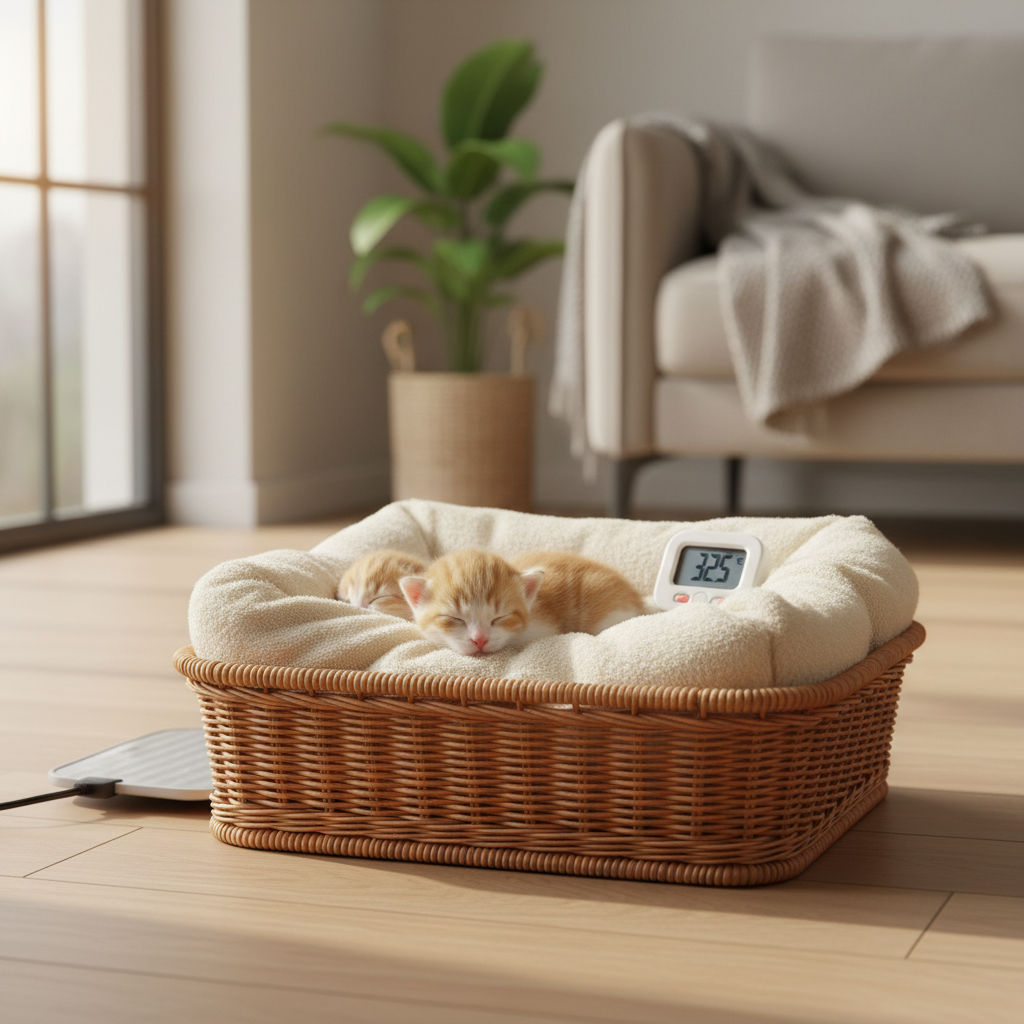
One common mistake is focusing on feeding first. In real life, cold kittens often can’t digest formula well, so warmth comes before food. Another misconception is that any milk works, it doesn’t. This guide walks you through what to do today, what to track daily, and when to stop guessing and call a professional.
First hour triage: warmth, breathing, and safety
The first goal is stabilization. If you just found kittens, assume they are chilled until proven otherwise, even if they feel “kind of warm.”
- Check breathing: steady breaths, pink-ish gums, no constant gasping. If breathing seems strained or gums look gray/blue, seek urgent veterinary help.
- Warmth first: place kittens in a small box or carrier with towels. Add gentle heat to only half the space so they can crawl away if too warm.
- Avoid direct high heat: no hot water bottles against skin, no hair dryers, no heating pad on high. Burns happen easily.
According to the ASPCA, orphaned kittens need supplemental heat because they can’t maintain body temperature on their own early in life. That’s why your setup matters as much as your feeding schedule.
Create a simple “kitten ICU” at home (supplies + setup)
You don’t need fancy gear, but you do need consistency. A small, draft-free space is easier to keep warm and clean, and it reduces stress for kittens that already feel vulnerable.
Basic supplies to gather
- Kitten milk replacer (KMR) powder or liquid, not cow’s milk
- Kitten nursing bottles and nipples, plus a syringe as backup
- Digital kitchen scale (grams), notebook or app for tracking
- Heating pad with no auto shutoff if possible, or a safe heat source approved for pets
- Thermometer for the nesting area
- Soft towels, unscented baby wipes, cotton rounds
- Shallow litter tray (for later), non-clumping litter
Temperature target (nesting area)
Exact targets vary by source and kitten condition, so use your vet’s advice if you have it. As a practical home rule, keep the nesting area comfortably warm and check kittens often, they should be warm to the touch, not sweaty or panting.
According to Cornell University College of Veterinary Medicine, young kittens require external warmth and careful monitoring because hypothermia and dehydration can become serious quickly.
Feeding newborn kittens: formula, schedule, and technique
Once kittens are warm and responsive, feeding becomes the next priority. This is where many caregivers get nervous, and honestly, that’s reasonable, aspiration (formula into the lungs) is a real risk if you rush.
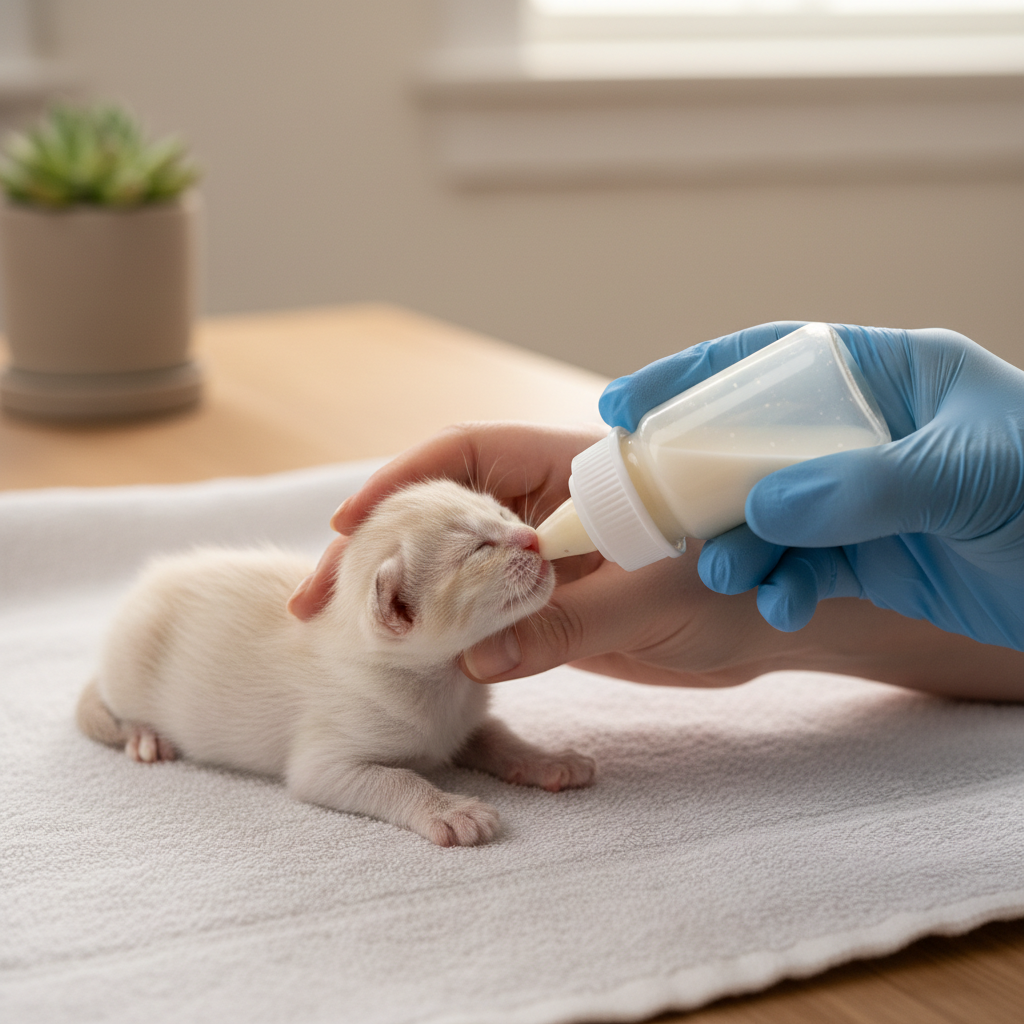
What to feed (and what not to)
- Use kitten milk replacer: buy from a reputable pet store or vet clinic.
- Avoid cow’s milk: it commonly causes diarrhea and dehydration.
- Mix exactly as directed: over-concentrated formula can upset digestion, too diluted can underfeed.
How often to feed
Age, size, and health change the schedule. Many newborns need frequent feeds day and night, and the interval usually stretches as they grow. Your vet or a local shelter can help you estimate age and set a plan.
Safe feeding technique (this matters more than speed)
- Position: kitten belly-down, head level, never on the back like a human baby.
- Warm formula: comfortably warm, not hot, test on your wrist.
- Let them suckle: gently support, don’t force-squeeze formula into the mouth.
- Watch for bubbles, coughing, milk from nose: stop feeding and contact a vet, aspiration can be dangerous.
As you practice how to care for newborn kitten day to day, the goal is steady intake and calm feeds, not “finishing the bottle” at all costs.
Help them pee and poop: stimulation and hygiene
Newborn kittens typically can’t eliminate on their own. Mom cat licks them to stimulate urination and bowel movements, you’ll be replacing that step for a while.
How to stimulate elimination
- After each feeding, use a warm, damp cotton round or soft cloth.
- Gently rub the genital area in small circles until they urinate.
- For stool, continue a little longer, but don’t over-rub and irritate skin.
- Dry them and keep bedding clean to prevent rashes.
What you’re looking for is regular output and comfortable bellies. If the abdomen looks swollen and hard, or there’s no pee after feeds, that’s a reason to ask a veterinarian for guidance.
Track growth and hydration: your daily checklist
If you only do one “pro” thing, make it this: weigh kittens daily. Weight trends tell you early when something starts going wrong, often before you can see it.
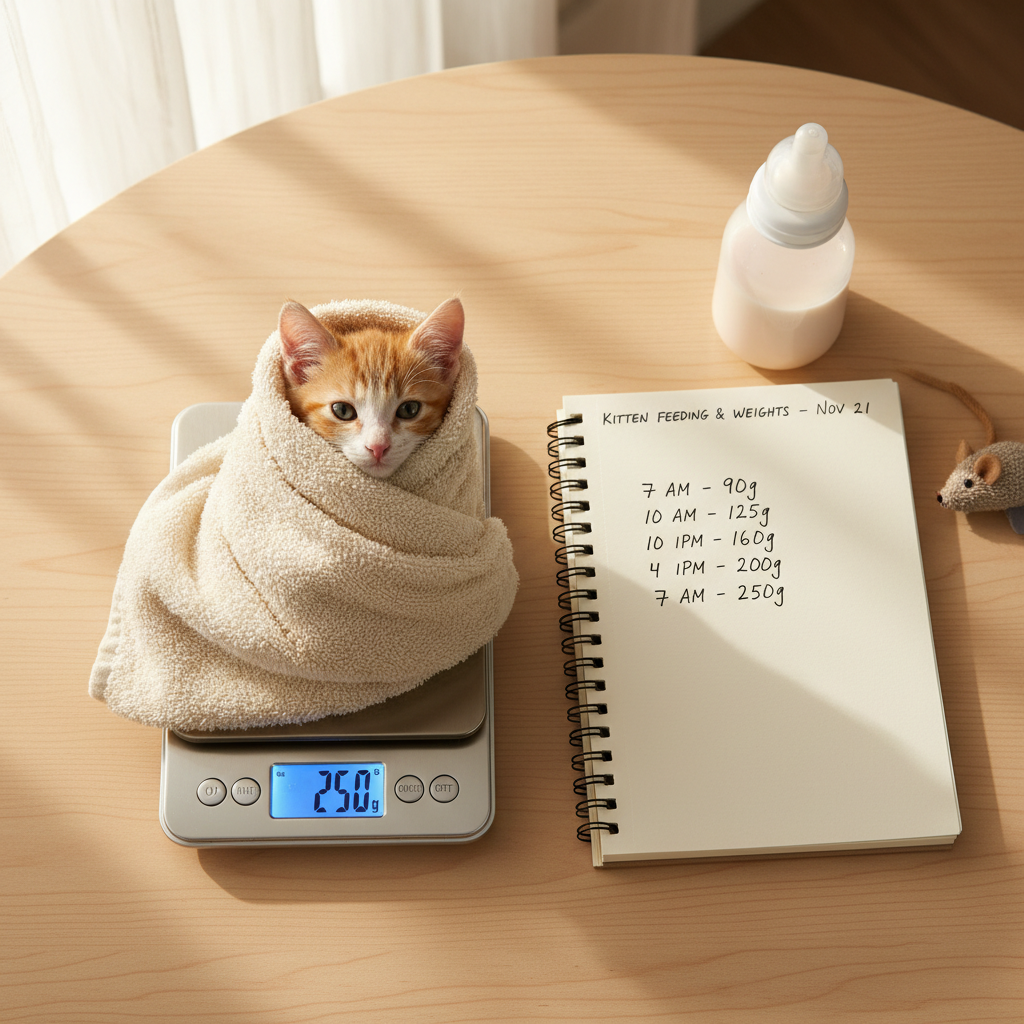
Quick daily “am I on track?” list
- Weight: trending up over time, not flat or dropping
- Energy: wakes for feeds, not limp or constantly crying
- Skin and mouth: not tacky-dry, gums not pale
- Elimination: urine after feeds, stool happening regularly
- Body temp behavior: not piling in a panicked way (too cold) and not sprawled away from heat (too hot)
Simple tracking table (copy/paste)
| Time | Fed (ml) | Urinated? | Stool? | Notes (energy, coughing, belly) |
|---|---|---|---|---|
| Morning | ||||
| Midday | ||||
| Evening | ||||
| Overnight |
When people ask how to care for newborn kitten safely, this kind of log is the unglamorous answer, it keeps you honest, and it gives a vet something useful if you need help.
Common problems and what to do (before it gets scary)
Most issues start small: a missed feed, a chilly box, a little diarrhea. The earlier you react, the better the odds.
Diarrhea
- Common triggers include wrong milk, overfeeding, mixing formula incorrectly, stress, parasites.
- Do not “wait it out” for long in tiny kittens, dehydration can happen fast.
- Call a vet or shelter clinic for advice, bring your formula brand and mixing method.
Constipation
- Double-check stimulation technique and hydration.
- Don’t use human laxatives unless a veterinarian specifically instructs you.
Fleas
- Newborns can’t use many flea products. A gentle flea comb and warm water wiping may be suggested, but consult a vet for the safest approach.
- Wash bedding frequently, treat the environment carefully.
Upper respiratory signs
- Sneezing, nasal discharge, eye crusting, poor appetite can escalate.
- Keep them warm and get veterinary guidance, especially if feeding drops.
When to involve a vet, rescue, or emergency clinic
There’s a point where “home care” becomes guesswork, and kittens pay the price for delay. If any of the signs below show up, it’s worth getting professional help the same day, and sometimes immediately.
- Cold kitten that won’t warm up, weak suckle, or can’t hold head up
- Labored breathing, open-mouth breathing, blue/gray gums
- Milk from nose, persistent coughing during feeds
- Repeated vomiting or diarrhea, especially with lethargy
- No weight gain or weight loss over 24 hours
- Dehydration signs such as tacky gums or very low energy
According to the American Veterinary Medical Association (AVMA), veterinary teams can guide safe feeding, parasite control, and early illness care. If you’re fostering through a rescue, lean on their protocols, they’ve usually seen every scenario you’re facing.
Practical routine: a realistic day plan for solo caregivers
This is the part nobody tells you: the workload is real. Planning your day reduces mistakes and helps you keep your sanity while doing right by the kittens.
A workable loop
- Warm check: feel paws and belly, confirm heat source is safe
- Feed: calm, belly-down position, stop if coughing
- Stimulate: urine and stool check, gentle cleanup
- Record: weight (daily), feed amount, elimination, any odd signs
- Reset bedding: dry, clean, no drafts
Key takeaways to keep on your fridge
- Warmth before feeding, cold kittens and formula mix poorly.
- Technique beats volume, aspiration is a bigger risk than a slightly smaller feed.
- Weight trend is your early warning system, don’t skip it.
- When in doubt, ask, shelters and vets often prefer quick questions over late emergencies.
Conclusion: keep it simple, keep it consistent
How to care for newborn kitten without mom isn’t about doing everything perfectly, it’s about doing the basics reliably and noticing changes early. Start with a warm, safe nest, feed kitten formula with good positioning, stimulate elimination after meals, and track weight like it’s your dashboard.
If you’re caring for more than one kitten or you’re losing sleep trying to troubleshoot symptoms, calling a vet or partnering with a local rescue can turn this from stressful to manageable. Your next step can be as small as setting up the box correctly and making a tracking sheet before the next feeding.
FAQ
- How often should I feed a newborn kitten without mom?
It depends on age and size, but newborns often need frequent feeds around the clock. A veterinarian or shelter can help you estimate age and set a safe schedule. - Can I give a newborn kitten regular milk or lactose-free milk?
Usually not a good idea. Many kittens don’t tolerate these well and diarrhea can become dangerous quickly. Use kitten milk replacer and mix it exactly as directed. - What if the kitten cries nonstop after feeding?
Crying can mean cold, hunger, gas, or discomfort. Recheck warmth, confirm feeding technique, and look for bloating or diarrhea. If crying is intense or paired with weakness, ask a vet. - How do I know if the kitten is too cold?
Cool paws, lethargy, weak suckle, and constant piling together can suggest chilling. Warm gradually and avoid feeding until the kitten feels warm and alert. - How long do I need to stimulate a kitten to poop and pee?
Often after each feeding for the first weeks. If you’re stimulating and still not getting urine, or the belly feels tight and swollen, get professional advice. - Is it normal for formula to come out of a kitten’s nose?
No, that can indicate aspiration risk or poor flow/position. Stop feeding and contact a veterinarian promptly for guidance. - When can orphan kittens start weaning?
Timing varies, but many kittens begin transitioning when teeth come in and they show interest in food. A vet or rescue can recommend a safe weaning plan for your kittens’ age and weight.
If you’re trying to care for newborn kittens while juggling work or sleep, it can help to bring your log, weights, and feeding notes to a vet visit or share them with a rescue coordinator, even a short consult often clarifies what to adjust and what to stop worrying about.