
how to stop dog from barking is usually less about “stopping the noise” and more about figuring out what your dog is trying to accomplish with the barking, then teaching a different, workable behavior.
If your dog barks at every sound, every passerby, or every minute you leave the house, it can wear you down fast, and it can also strain relationships with neighbors or landlords. The good news is that excessive barking often responds well to a mix of management and training, as long as you match the plan to the cause.
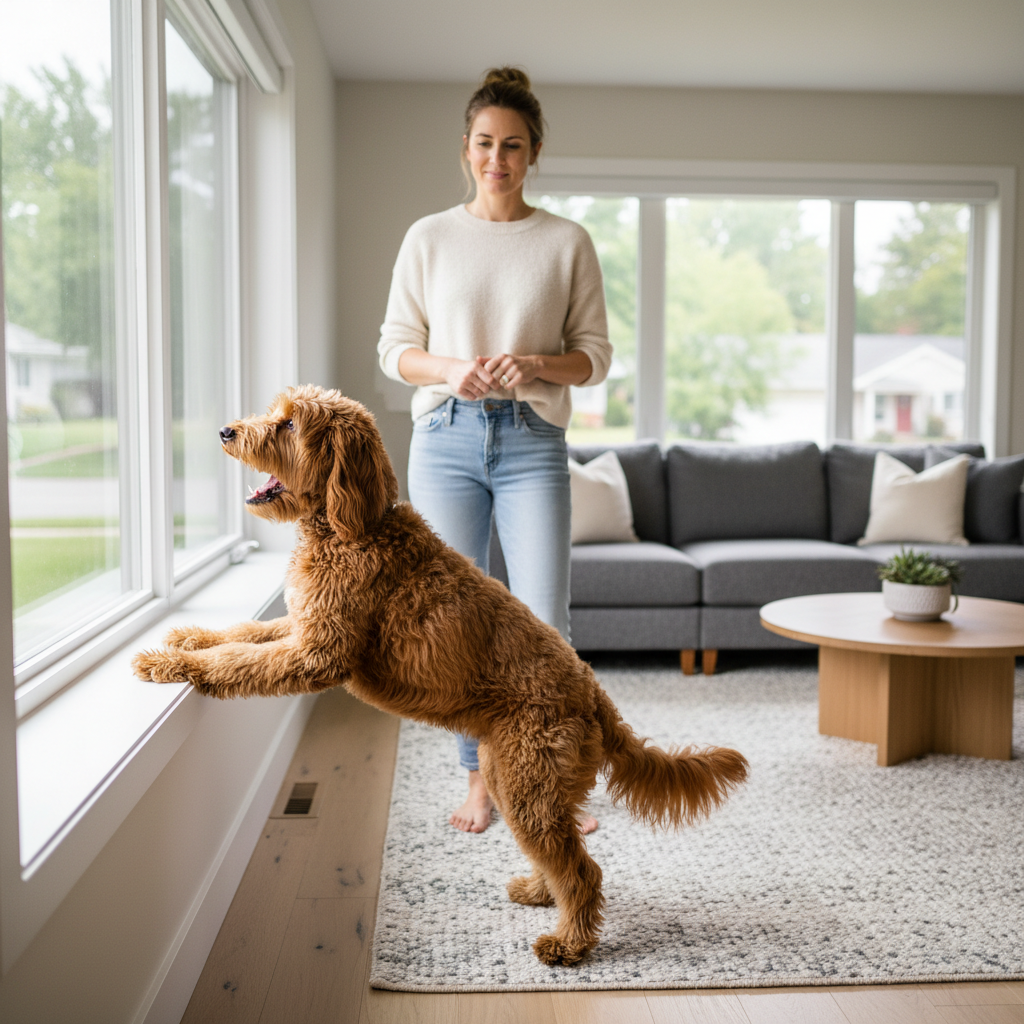
One quick note before we get tactical, barking is normal dog communication. The goal is not silence, it’s “appropriate barking” where your dog can alert you briefly, then settle.
Below you’ll get a practical way to diagnose the likely trigger, a simple checklist to confirm it, and step-by-step fixes you can start today, without relying on harsh tools.
What “excessive barking” usually means (and why it happens)
Dogs tend to bark for a reason that makes sense to them, even if it feels random to us. Many households actually have two things happening at once, a dog with a strong barking habit, plus an environment that keeps paying that habit off.
- Alert/territorial barking: “Something is outside, I need to warn you.” Often happens at windows, doors, fences.
- Demand barking: “Do something for me,” attention, food, play, go outside.
- Fear or stress barking: “I’m not okay with this,” unfamiliar people, noises, certain rooms.
- Boredom or under-enrichment: “I have energy and nothing to do.” Common in young dogs.
- Separation-related barking: vocalizing when left alone, sometimes paired with pacing or destruction.
- Compulsive/habit barking: repetitive barking that can look “stuck on,” often needs a bigger plan.
According to the American Kennel Club (AKC), barking is a natural behavior, and effective solutions focus on identifying the cause and teaching an alternative response rather than punishment.
Fast self-check: identify your dog’s barking pattern
If you want to know how to stop dog from barking in a way that actually holds up, start by tracking the pattern for two days. Not forever, just long enough to stop guessing.
A 2-minute checklist
- Trigger: window noise, doorbell, people/dogs outside, being ignored, alone time?
- Distance: does barking stop if the trigger is farther away or blocked from view?
- Body language: loose/wiggly, stiff/leaning forward, tucked tail, panting, pacing?
- Payoff: do you talk, approach, open the door, pick up the leash, offer food?
- Timing: specific times daily, or only during certain routines (work calls, deliveries, evenings)?
Write one line per episode: “Dog barked at UPS truck at front window, lasted 90 seconds, stopped when I closed blinds.” That sentence tells you what to fix.
Match the cause to the fix (quick guide table)
Here’s the part many people skip, they try one technique for every bark. It rarely works that way.
| Barking type | Common signs | What helps most |
|---|---|---|
| Alert/territorial | Window/yard focus, scans for sounds | Block visuals, teach “thank you + settle,” reward quiet |
| Demand | Barks at you, escalates when you move | Remove payoff, reinforce polite requests, add structure |
| Fear/stress | Stiff body, backing up, barking-lunging | Increase distance, desensitization, calm pairing with treats |
| Boredom | Restless, paces, barks in bursts | Enrichment plan, exercise, chew/forage routines |
| Separation-related | Only when alone, neighbor reports, camera shows distress | Alone-time training, management, professional help if severe |

Practical training steps that reduce barking (without punishment)
Think of this as two lanes, management (reduce chances to rehearse barking) and training (teach what to do instead). You typically need both.
Step 1: Prevent “practice barking” this week
- Window control: close blinds, use frosted film, move furniture away from the sill.
- Sound buffering: white noise machine, fan, or soft music during peak triggers.
- Leash/long line in yard: prevents fence-charging rehearsals while you retrain.
- Create a station: a bed or mat away from the door/window where good things happen.
This part can feel “too simple,” but it matters because every barking episode your dog repeats is rehearsal.
Step 2: Teach “quiet” as a behavior, not a scolding
A common mistake is saying “quiet” while the dog is still barking. The cue becomes background noise. Instead, capture the moment they pause.
- Wait for a brief pause in barking, even half a second.
- Say “quiet” once, calm voice, then immediately mark and reward (treat or toy).
- Repeat in easy situations first, then slowly apply around real triggers.
If your dog never pauses, you may be too close to the trigger, increase distance or block the view so the dog can succeed.
Step 3: Replace alert barking with “go to mat”
This works well for doorbells and hallway noises, because it gives your dog a job.
- Practice sending your dog to the mat when the house is quiet, reward heavily.
- Add the trigger softly, a door knock sound from your phone, reward on the mat.
- Gradually raise realism, actual knocks, then doorbell, then guests.
According to the American Veterinary Society of Animal Behavior (AVSAB), reward-based training supports behavior change while minimizing fear and stress, which is especially relevant for noise reactivity.
Fixes by scenario: what to do when…
Your dog barks at the window nonstop
- Block the visual short term so barking doesn’t stay self-rewarding.
- “Look at that” game: when your dog notices a person/dog outside at a safe distance, feed a treat for noticing calmly, then guide attention back to you.
- Reinforce calm scanning: reward when your dog looks out quietly and disengages.
Many people try to drag the dog away mid-bark, but the dog just returns. Changing what the dog expects at the window tends to stick better.
Your dog barks to demand attention
- Remove the payoff: no eye contact, no talking, no touching during barking.
- Reward the first quiet second with attention or a quick game.
- Teach a replacement: sit, touch (nose to hand), or bring a toy to ask politely.
Yes, it can get worse for a few days, that “burst” often means the old strategy used to work. Stay consistent, and make sure your dog has a clear alternative that does work.
Your dog barks when left alone
If you suspect separation-related barking, avoid assuming it’s “stubbornness.” It can be distress. A cheap camera can tell you a lot.
- Practice tiny departures your dog can handle, seconds not minutes, then build up.
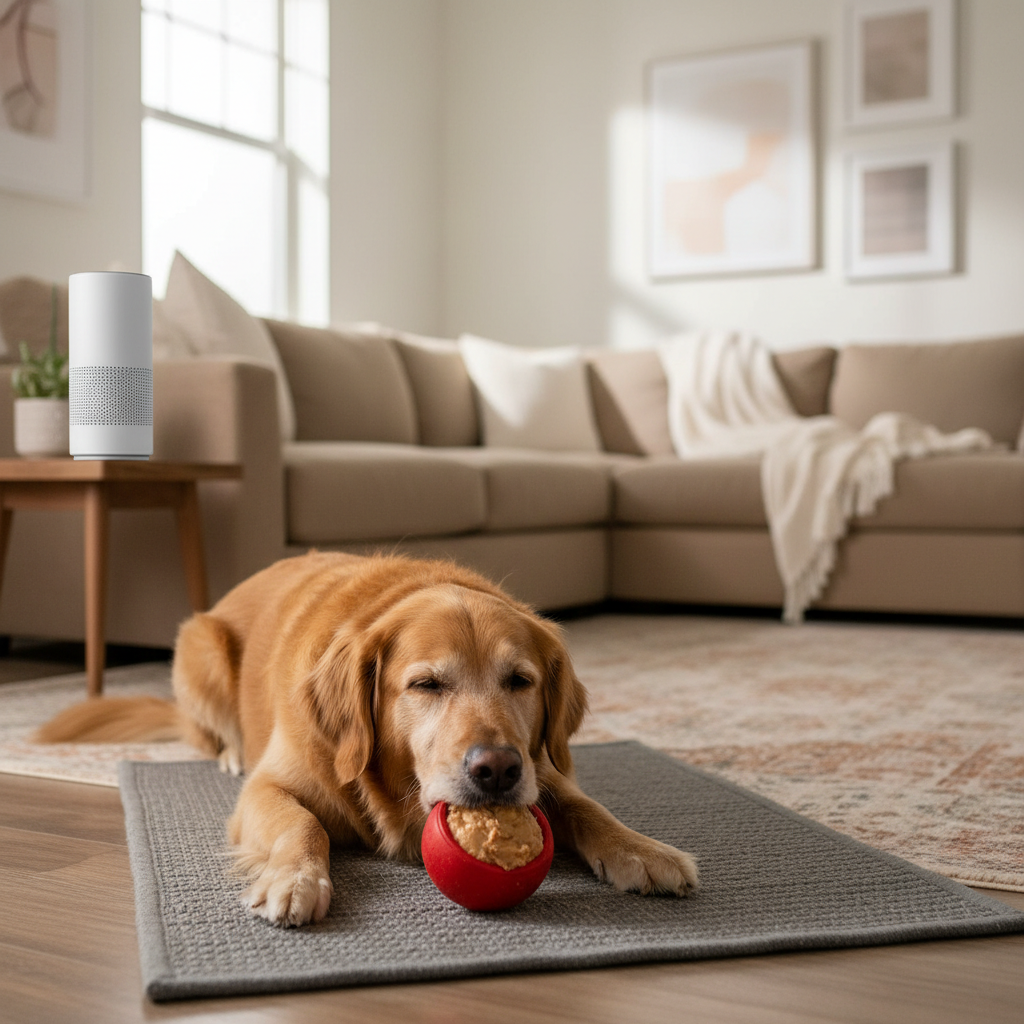
- Use high-value food only for alone time, frozen Kong-style toys, lick mats.
- Consider daycare/dog walker as a management bridge while training.
According to the ASPCA, separation anxiety can involve vocalization and other stress signs, and many cases improve with gradual desensitization, while severe cases may require help from a veterinarian or behavior professional.
Common mistakes that keep barking problems stuck
- Accidentally rewarding barking: even “stop it” attention can reinforce demand barking.
- Correcting without teaching: suppression might lower noise briefly, but the trigger and emotion stay.
- Trying to out-yell the dog: it raises arousal, and some dogs treat it like joining in.
- Too much trigger exposure too soon: if your dog is over threshold, learning stops.
- Inconsistent household rules: one person ignores barking, another delivers treats, the dog keeps gambling.
If you’re using any bark collar or aversive tool, it’s worth pausing and getting guidance. These tools can create fallout in some dogs, especially fear-based barking, and safer options often exist.
When to involve a vet or a certified behavior pro
Some barking is straightforward, some is a sign the dog isn’t coping well. Getting help early can save months of frustration.
- Sudden change in barking, especially in older dogs, consider a vet check to rule out pain or cognitive changes.
- Separation distress with self-injury risk, nonstop vocalizing, or panic behaviors, work with your veterinarian and a qualified trainer.
- Aggression signals with barking, growling, snapping, lunging, consult a certified applied animal behaviorist or veterinary behaviorist.
Look for credentials and humane methods, and ask what their plan is for reinforcement, management, and realistic timelines.
Key takeaways (so you can act today)
- Identify the trigger before choosing a technique, guessing wastes time.
- Stop rehearsal with window/sound management while you train.
- Reward quiet moments and teach a replacement like “go to mat.”
- Go slower than you think around real-world triggers, distance is your friend.
- Escalating or panic barking deserves professional input, not tougher corrections.
Conclusion: a calmer house is a training plan, not a magic cue
If you’ve been searching how to stop dog from barking, the most reliable path is simple but not always easy, match the barking to its cause, reduce opportunities to practice it, and reinforce a calmer alternative until it becomes your dog’s default.
Pick one trigger to work on this week, set up the environment so your dog can succeed, then do five short sessions a day that reward quiet and disengagement. Small reps add up faster than one long battle.