
how to calm a dog during thunderstorm is usually about one thing: helping your dog feel safe when their nervous system is telling them danger is close, even if your house is perfectly fine.
If you’ve ever watched your dog pant, shake, pace, hide in the bathtub, or cling to you the second thunder hits, you already know this isn’t “bad behavior.” It’s panic, and panic tends to snowball when we guess our way through it.
The good news is that many dogs can get noticeably better with a few environment tweaks, a calmer plan from you, and practice on non-storm days. The not-so-fun part is that what works depends on the dog’s intensity, triggers (sound, pressure changes, lightning), and what you can realistically do at home.
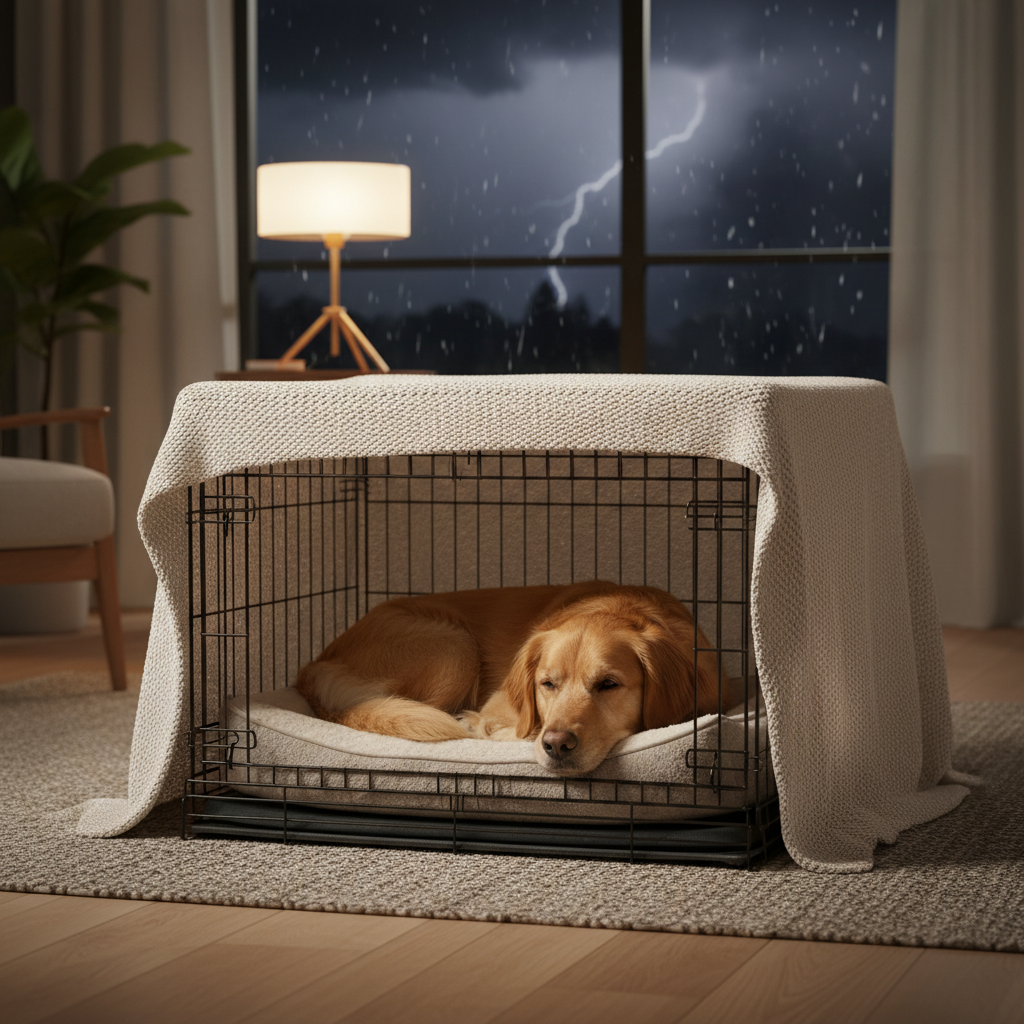
What’s really happening when dogs panic during storms
Thunderstorm fear is common, and it can range from mild unease to full-blown phobia. You’re not imagining the “they know it’s coming” part either, many dogs react to cues before the first boom.
- Sound sensitivity: thunder’s low-frequency rumble travels through walls and floors, some dogs feel it more than we do.
- Barometric pressure changes: shifts can be uncomfortable or simply “off,” and anxious dogs may anticipate what follows.
- Flashes + vibrations: lightning, window rattles, and wind noise stack together, it’s rarely just one trigger.
- Static electricity: in some cases, static buildup may make coats feel prickly, which can worsen agitation.
According to the American Veterinary Medical Association (AVMA), fear-related behaviors are often rooted in anxiety, and punishment can make the fear response worse. That matters because scolding a trembling dog often teaches them that storms predict both thunder and your disapproval.
Quick self-check: how severe is your dog’s storm anxiety?
This is the part people skip, then they wonder why “white noise” didn’t fix a dog that’s already in a panic spiral. Use this quick check to pick a plan that matches reality.
Mild
- Startles, seeks you out, wants to stay close
- May stop eating briefly, then settles with comfort
Moderate
- Shaking, pacing, panting, drooling
- Hiding, vocalizing, can’t focus on cues
Severe (phobia-level)
- Destructive escape attempts, scratching doors, breaking blinds
- Self-injury risk, nonstop panic, won’t take treats even before peak thunder
- Episodes that persist long after the storm ends
If your dog lands in the severe category, home setup still helps, but you’ll likely get better results pairing it with a veterinarian or a credentialed trainer who works with fear cases.
Set up a “storm plan” before you need it
When people ask how to calm a dog during thunderstorm, they usually want an in-the-moment trick. The calmer path is to prepare a routine your dog recognizes, because predictability is soothing.
Create a safe space that actually feels safe
- Pick a quiet interior spot, closet, bathroom, or covered crate often works better than an open living room.
- Add thick bedding, a familiar shirt, and a water bowl, keep it simple and non-slippery.
- Darken the area slightly, cover a crate with a breathable blanket if your dog likes dens.
Important: don’t force your dog into the space. You’re building a “go here when you’re scared” option, not a time-out.
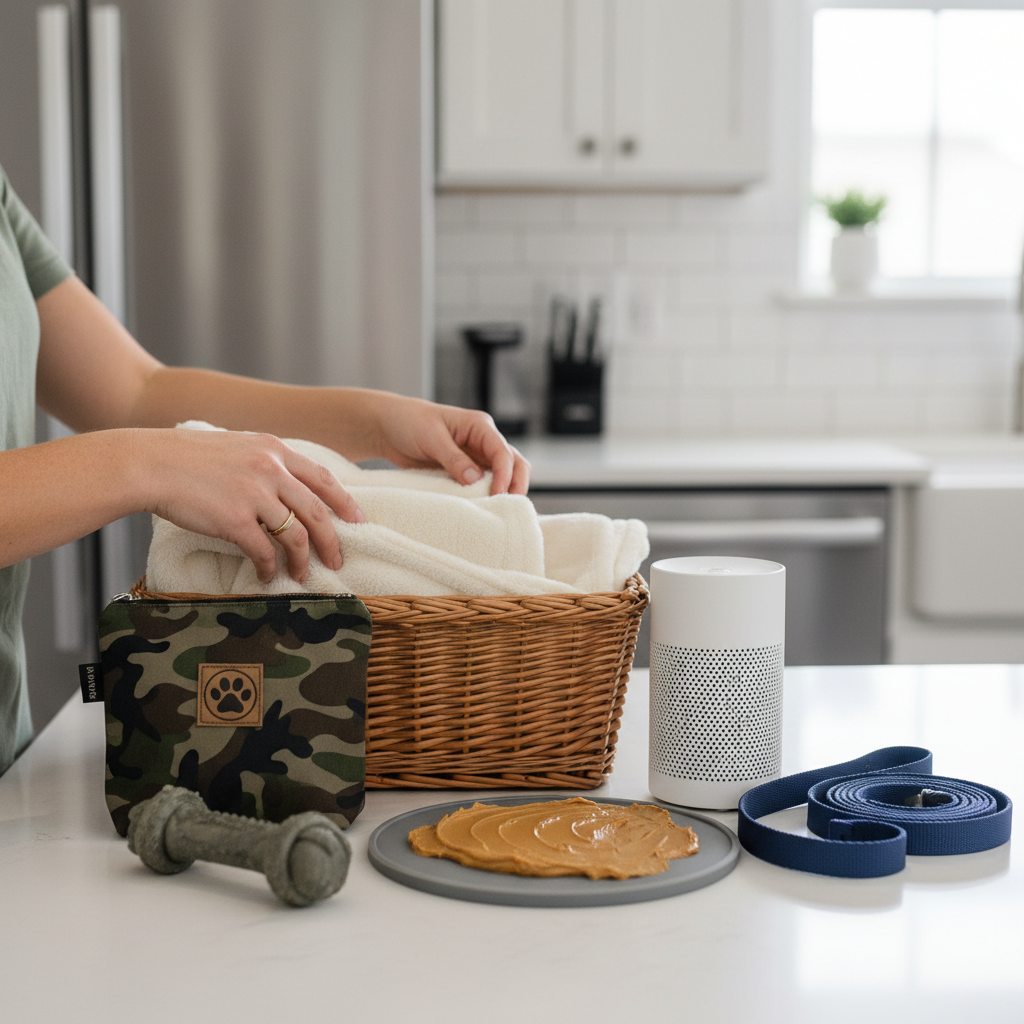
Build a calm kit
- High-value treats your dog can eat even when slightly stressed
- Lick mat or stuffed food toy, licking can be soothing for many dogs
- Chew item if your dog enjoys chewing when anxious
- White noise machine or a speaker for steady sound
- Thundershirt-style pressure wrap if your dog tolerates it
What to do during the storm (practical steps that don’t backfire)
When thunder starts, your goal is “lower arousal,” not “make them brave.” Small wins matter.
- Start sound masking early: turn on white noise, a fan, or steady music before the worst thunder hits, it works better as prevention than rescue.
- Close curtains and reduce flashes: less visual drama helps many dogs.
- Guide them to the safe space: invite with treats, a calm voice, and your body language, think slow and boring.
- Offer a soothing activity: licking and sniffing are often calming, try a lick mat or scatter a few treats if they can eat.
- Stay neutral-calm: you can comfort your dog, but keep your energy low, avoid frantic cooing that accidentally signals “yes, this is scary.”
According to the American Kennel Club (AKC), many dogs benefit from management strategies like creating a safe place and using calming aids, but results vary by dog and consistency tends to matter more than a single technique.
Training outside storm season: desensitization and counterconditioning
If storms are frequent where you live, training pays off. If storms are rare, training still helps, but you may rely more on management and vet support.
How it works (simple version)
- Desensitization: expose your dog to thunder sounds at a level that does not trigger panic.
- Counterconditioning: pair that sound with something your dog loves, treats, play, sniffing games.
A realistic at-home starting protocol
- Play thunder audio at very low volume for 30–60 seconds.
- Feed a few high-value treats or do a short, fun game.
- Stop while your dog is still relaxed, repeat a few times per week.
- Increase volume slowly over sessions, if your dog startles or stops taking treats, you went too fast.
According to the American College of Veterinary Behaviorists (ACVB), behavior modification for fear often involves systematic desensitization and counterconditioning, and severe cases may benefit from medication support prescribed by a veterinarian.
Common mistakes that keep storm anxiety stuck
These are the “well-intended” moves that often prolong the problem.
- Punishing fear behaviors: yelling at barking or accidents usually raises stress and can worsen the association with storms.
- Waiting until panic peaks: once your dog is over threshold, learning stops, and calming tools help less.
- Over-reassurance with frantic energy: comforting is fine, but if you sound scared too, some dogs escalate.
- Flooding: playing loud thunder audio to “get them used to it” can backfire and intensify fear.
- Assuming one product solves it: wraps, sprays, supplements may help some dogs, but rarely replace training and planning.
A simple decision table: pick the right approach for your dog
If you’re trying to decide what to do next, this table keeps it practical.
| What you see | What to try now | What to build long-term |
|---|---|---|
| Clingy, mild trembling, still eats | Safe space + white noise + lick mat | Low-volume thunder training sessions |
| Pacing, panting, hides, hard to redirect | Dark quiet room, mask sound early, pressure wrap if tolerated | Structured counterconditioning, trainer support if stalled |
| Escape attempts, destructive, won’t eat | Safety first: block hazards, secure area, reduce stimulation | Vet consult for behavior plan, possibly medication + training |

When to talk to a veterinarian or behavior professional
It’s worth seeking help when safety, quality of life, or intensity crosses a line. A vet can also rule out pain issues that sometimes make sensitivity worse.
- Your dog injures themselves, breaks through doors, or tries to jump fences during storms
- Anxiety starts hours before thunder, or lasts hours after
- They stop eating entirely during storms, or show panic even with mild rain sounds
- You’re avoiding leaving the house because you’re worried about what will happen
According to the American Animal Hospital Association (AAHA), behavior concerns are a legitimate medical and welfare issue, and your primary-care veterinarian can help discuss behavior treatment options or refer you to a veterinary behaviorist when needed.
Key takeaways you can keep on the fridge
- Plan beats improvisation: set up the safe space and calm kit before storm season.
- Mask sound early: prevention usually works better than rescue.
- Don’t punish fear: it tends to increase anxiety and can damage trust.
- Train on calm days: low-volume thunder + great treats builds resilience over time.
- Escalating cases deserve support: severe panic often improves faster with a vet-led plan.
Conclusion: make storms boring, not heroic
how to calm a dog during thunderstorm comes down to lowering stress in the moment and shrinking the fear response over weeks, not “fixing” it in one night. Set up a quiet safe spot, start sound masking before the storm peaks, and give your dog a simple calming job like licking or sniffing if they can handle it.
If your dog’s fear looks intense or dangerous, don’t wait for the next big storm to test your luck, schedule a conversation with your veterinarian and bring notes on what you see, what you tried, and what helped even a little.