
how to train a dog to stay reliably starts with one idea most people skip: your dog needs to understand what “stay” means before you test their self-control around real life distractions.
If your dog pops up the second you shift your weight, you’re not alone, this cue often fails because we accidentally teach “stay until something changes,” not “stay until I release you.” The good news is that reliability comes from a few boring but powerful habits, clean mechanics, short sessions, and a plan for distractions.
This guide walks through a stay that holds up in your kitchen, at the front door, and in public. You’ll get a simple progression, quick self-checks, common mistakes that quietly wreck the cue, and a practical schedule so you can see improvement without drilling your dog into frustration.
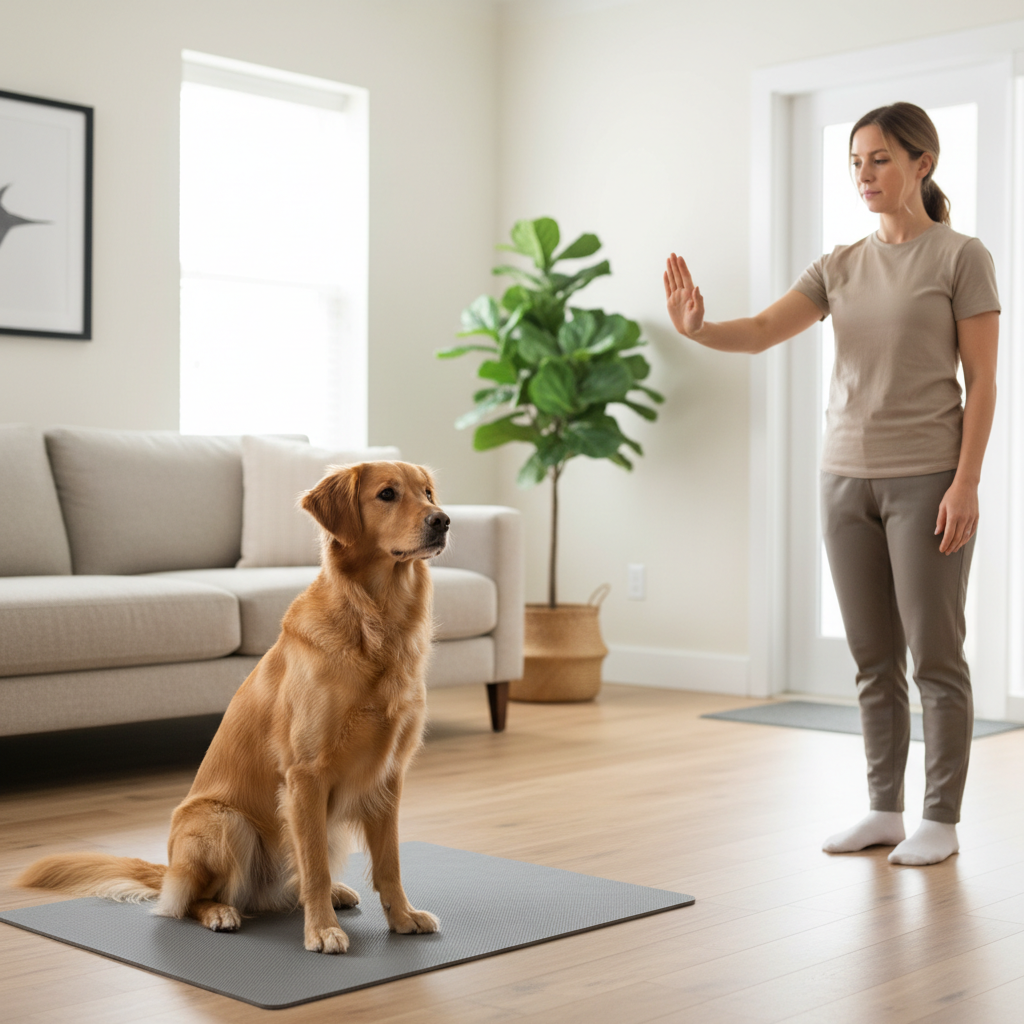
What “stay” really means (and why most dogs break it)
“Stay” is a duration behavior, not a position. Your dog holds still in a given posture until you release them, even if you move, talk, or do something mildly distracting.
Two details matter more than the word itself:
- A clear release cue (like “free” or “okay”) so your dog knows exactly when the job ends.
- Gradual proofing, meaning you teach the cue in easy conditions before expecting success at the door, on walks, or around other dogs.
According to the American Kennel Club (AKC)..., dogs learn best when training stays consistent and rewards are timed well. That lines up with what trainers see daily: most “broken stays” are actually “unclear criteria” plus too much difficulty too soon.
Set up for success: cues, rewards, and your training space
Before you run repetitions, set yourself up so your dog can win early. A reliable stay grows faster when you remove the random variables.
Pick your words and stick to them
- Position cue: “sit” or “down.”
- Stay cue: “stay” (optional for some methods, but helpful for many households).
- Release cue: “free,” “break,” or “okay.”
Important: if you never teach a release, your dog guesses. Guessing is where creeping, whining, and popping up begins.
Use rewards that match the difficulty
- Early stage: small, soft treats, delivered quickly.
- Later: mix treats with praise, toy play, and real-life rewards (going out the door, greeting someone, getting the leash clipped).
According to the ASPCA..., positive reinforcement methods help teach behaviors by rewarding what you want to see more often. For stay training, the timing of that reward becomes your “yes, that’s it.”
Choose a “boring” training location first
Start in a low-traffic room with minimal noise. If your dog struggles here, they are not ready for the porch, park, or pet store.
A simple method: build stay using the 3 D’s (Duration, Distance, Distraction)
If you want to know how to train a dog to stay without hitting a plateau, follow the 3 D’s. The trick is that you usually raise one D at a time, not all of them together.
Step 1: Teach the release first (yes, first)
Ask for a sit. Pause half a second. Say your release cue, then encourage your dog to move toward you and reward.
- Goal: your dog learns moving only happens after release.
- Keep it light: 5–8 reps, then stop.
Step 2: Add micro-duration
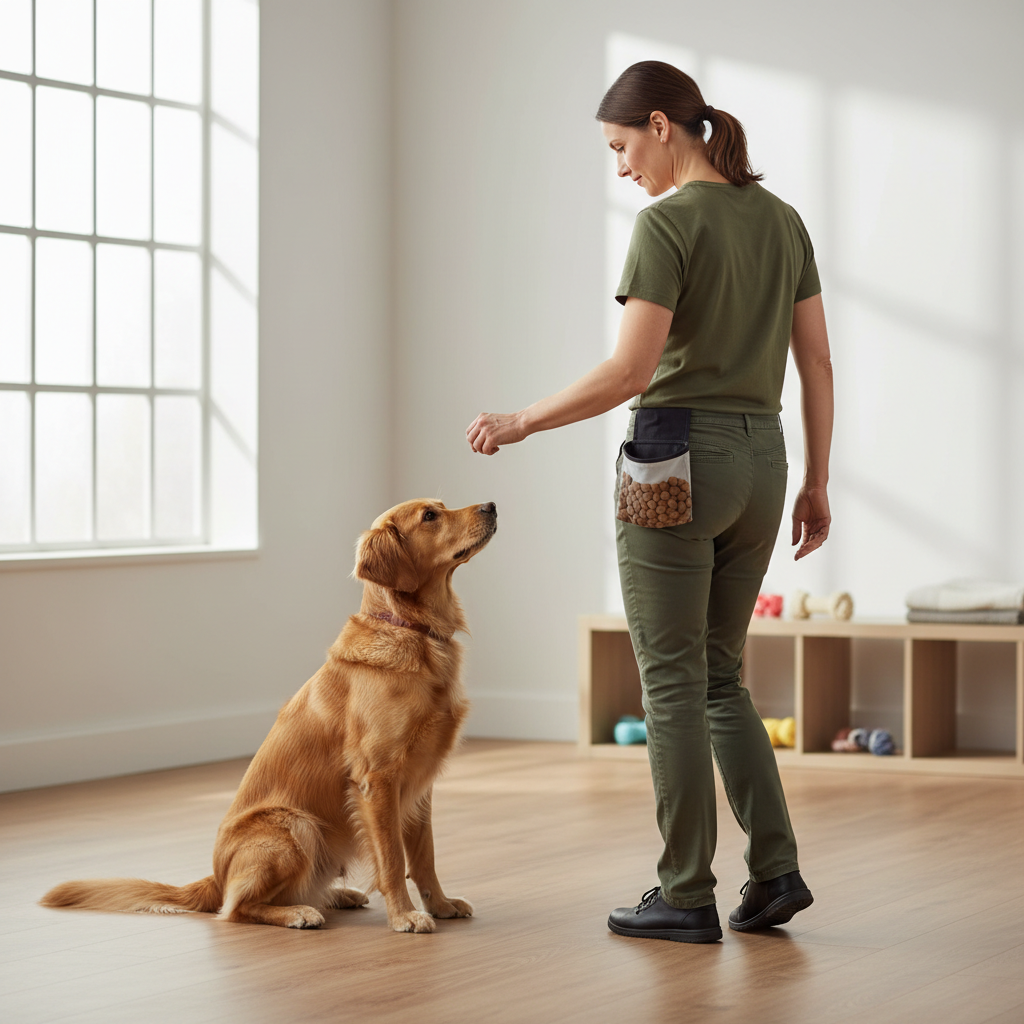
Ask for sit or down, say “stay,” count “one,” mark with praise, deliver a treat while your dog remains in place, then release.
- Reward in position, release after.
- If you release first, you may accidentally reward getting up.
Step 3: Add distance in inches, not steps
Take a half-step back, return, reward in position, then release. If your dog breaks, you went too far.
Step 4: Add distraction as a skill, not a surprise
Distractions should be planned and mild: you turn your body, you tap your leg, you set a mug down. If your dog holds the stay, reward and release. If not, reduce difficulty and rebuild.
Quick self-check: why your stay falls apart (and what it means)
This list helps you diagnose the weak link fast, because the fix depends on how the behavior breaks.
- Your dog breaks when you move: distance too hard, or you rewarded after they stood up.
- Your dog creeps forward slowly: you are rewarding “almost staying,” or duration jumps are too big.
- Your dog stays but whines: stress or frustration, shorten reps and pay more often, keep sessions calmer.
- Your dog breaks only at the door: competing reward is huge, you need door-specific proofing with lower criteria.
- Your dog breaks when you return: returning predicts release, practice returning, rewarding, and leaving again without releasing.
If you’re unsure which pattern fits, record 10 seconds of a training rep. Video usually makes the “oops, I released too early” moment obvious.
Training plan you can follow: 10 minutes a day for 2 weeks
You can build real progress with short sessions. Long sessions often create sloppy reps, and sloppy reps teach sloppy stays.
Two-week structure
- Days 1–3: release cue + 1–3 seconds duration, no distance.
- Days 4–7: 3–8 seconds duration, add tiny distance (half-step to one step).
- Days 8–11: add mild distractions (turn, sit down, pick up keys), keep duration modest.
- Days 12–14: mix: short easy reps + a few “challenge reps,” always end on a win.
Progression table (use this like a menu)
| Goal | What you change | Example rep | When to lower difficulty |
|---|---|---|---|
| Duration | Add 1–3 seconds | Down-stay for 5 seconds | Dog breaks twice in 5 reps |
| Distance | Add inches/half-step | Step back, step in, reward | Dog follows your feet |
| Distraction | Add one mild trigger | Drop a towel, reward if held | Dog startles or vocalizes |
| Real-life | Change locations | Stay on mat while you open door | Dog breaks instantly at new place |
Key point: if your dog breaks, don’t repeat “stay” louder. Just reset, make it easier, and rebuild clean reps.
Real-world proofing: making “stay” work at the door, on walks, and around people
How to train a dog to stay in your living room is one thing, how it holds up when life happens is the actual goal. Proofing is where reliability is built, and it’s also where most people rush.
Doorway stay (safety and manners)
- Ask for stay on a mat or a spot a few feet from the door.
- Touch the knob, return, reward in position.
- Open the door a crack, close it, return, reward.
- Only release when the door is fully under control.
If your dog is a door-darter, safety matters. A professional trainer can help you set up management tools (like baby gates or leashes) while you train, especially in busy homes.
Leash and walk contexts
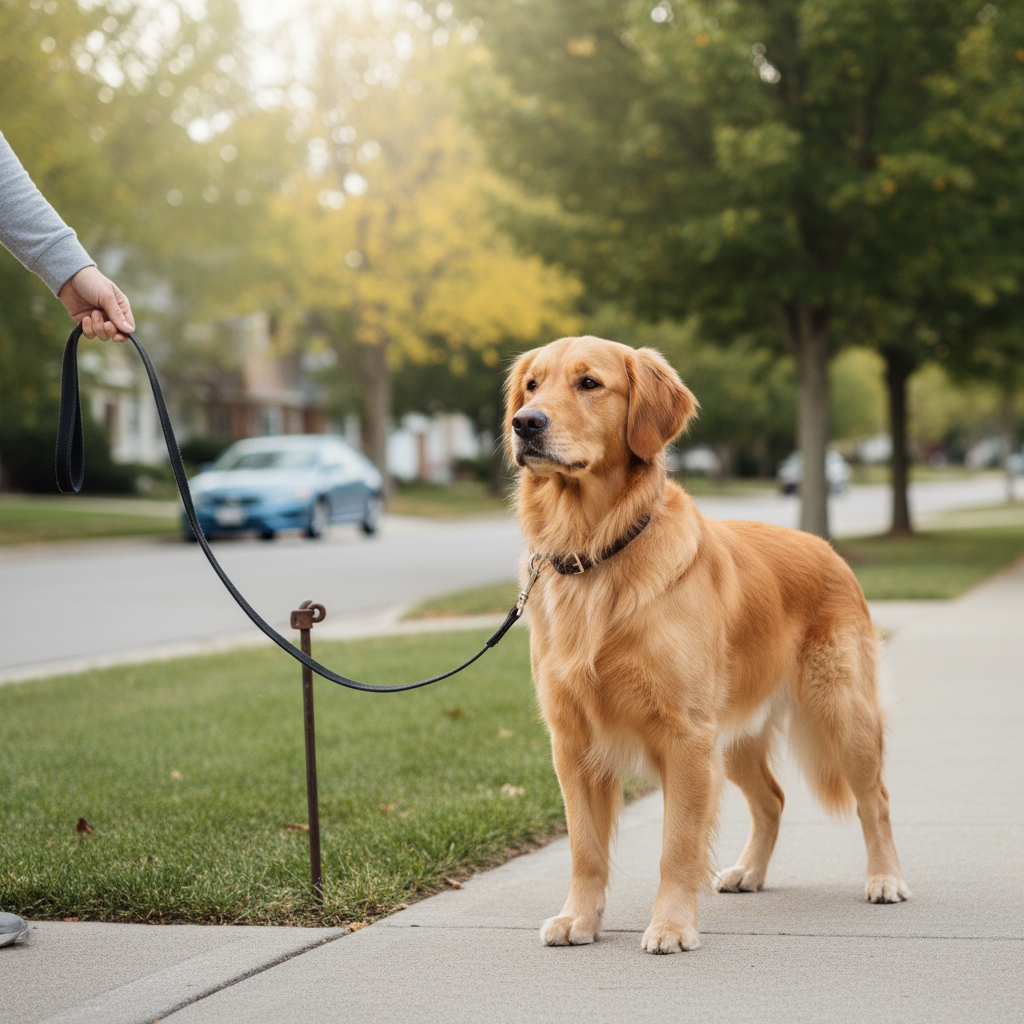
- Practice a 2–5 second stay before clipping the leash, that clip becomes a real-life reward.
- On walks, use short “pause stays” at curbs, reward, then release to continue.
People and dog distractions
Start far enough away that your dog can still think. If your dog lunges or barks, it may be reactivity or fear, not a “stay problem,” and you may want a qualified trainer to design a plan that keeps everyone safe.
Common mistakes that sabotage stay training
These are the “invisible” errors that make people think their dog is stubborn, when the training setup is just unclear.
- Using “stay” as a correction: if “stay” gets paired with frustration, the cue becomes stressful and unreliable.
- Releasing by walking back: if you always return and then release, your return becomes the release.
- Paying after the dog moves: treat delivery timing matters, reward stillness, then release.
- Jumping from 5 seconds to 30 seconds: duration grows in small, boring increments.
- Training only one position: teach sit-stay and down-stay, dogs don’t always generalize automatically.
According to the American Veterinary Society of Animal Behavior (AVSAB)..., reward-based training supports learning while reducing the risk that fear or anxiety gets layered into cues. If your sessions feel tense, that’s usually your signal to simplify.
When to get professional help (and when to manage for safety)
If your dog breaks stay because they are excited, you can usually train through it with better progression. If your dog breaks because they are overwhelmed, anxious, or aggressive, pushing harder can backfire.
- Consider a qualified trainer if your dog bolts doors, guards resources, or shows fear around people or dogs.
- If your dog has pain signs (hesitation to sit, stiffness, yelping), a veterinary check is a smart first step, discomfort can make stays difficult.
- For behavior concerns, look for credentials (for example, CPDT-KA or IAABC) and a reward-based approach.
Key takeaways and next steps
how to train a dog to stay comes down to clear criteria and patient proofing: teach a release cue, reward in position, raise duration, distance, and distraction one at a time, then practice in real life with easy wins mixed in.
If you want a clean next step, do this today: run 6 reps of a 2-second stay, reward while your dog holds position, say your release cue, then end the session. Tomorrow, add a half-step of distance, and keep everything else easy.