
how to train a dog to be alone starts with one unglamorous truth, most “bad alone-time behavior” is a skills gap, not a stubborn attitude. Dogs panic, get bored, or rehearse habits like barking and chewing because nobody has shown them what calm looks like when you leave.
If you handle this early, you usually get a quieter house, fewer damaged items, and a dog that recovers faster from everyday change. If you wait until the pattern feels “set,” the fix often takes longer because the dog has practiced the chaos.
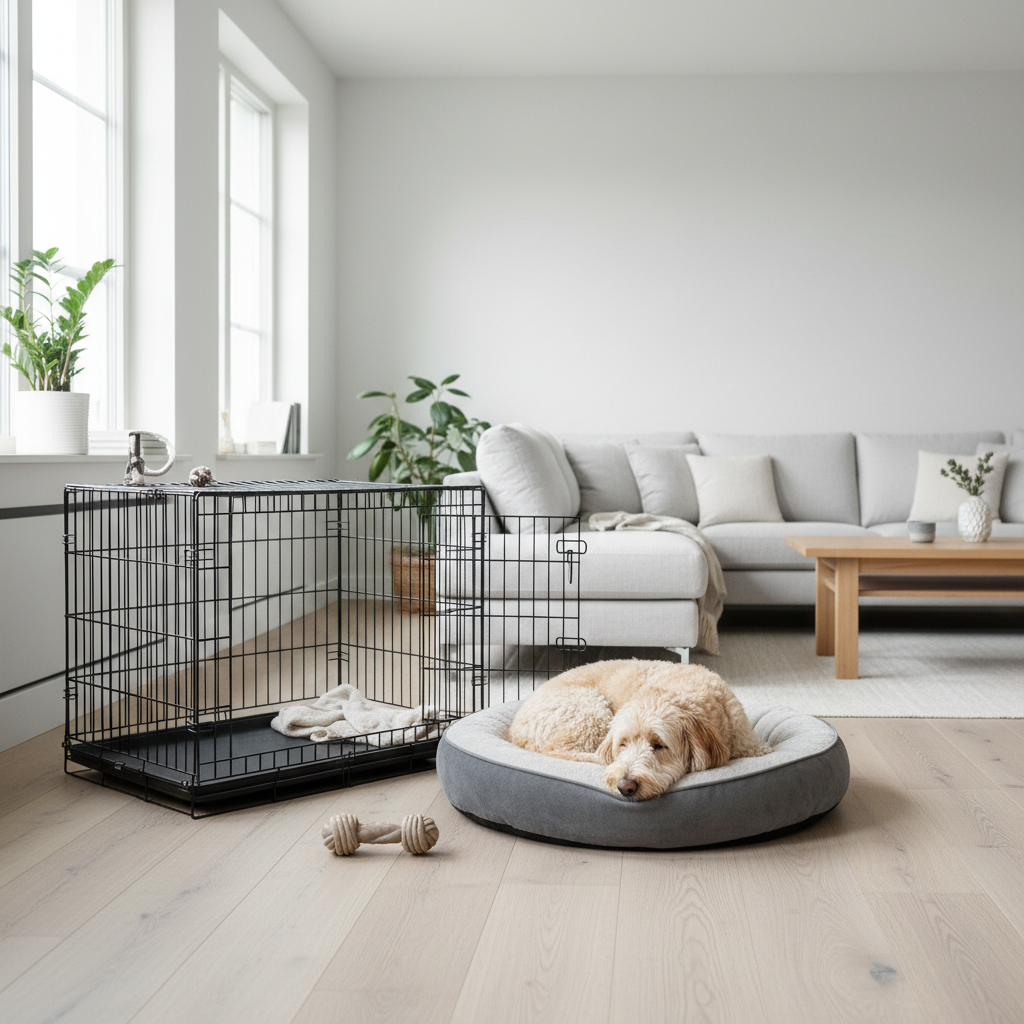
This guide walks you through a practical plan: why dogs struggle alone, how to tell normal puppy protest from a real separation problem, and what to do in week-one to week-four so alone time becomes routine. I’ll also flag mistakes that slow progress, because a few well-meaning moves can accidentally teach your dog to worry more.
Why dogs struggle with being home alone (and what it usually means)
When a dog melts down after you leave, it typically falls into one of these buckets, and the bucket matters because the solution changes.
- Separation-related anxiety: distress linked to the person leaving, not the house itself. You’ll often see pacing, drooling, nonstop barking, or scratching at doors shortly after departure.
- Under-exercised or under-enriched: the dog has energy and no job, so they invent one. Chewing chair legs can be “self-assigned work.”
- No alone-time skill built yet: common in rescues and pandemic puppies. They simply haven’t practiced being safely bored.
- House-training or routine mismatch: accidents happen because the time alone exceeds bladder limits or the schedule keeps changing.
- Barrier frustration: the dog can handle you leaving, but hates confinement (crate, gate, closed door).
According to the American Veterinary Medical Association (AVMA), behavior problems are a common reason pets are rehomed, which is why it’s worth treating alone-time training as a real life skill, not an afterthought.
Quick self-check: is this normal adjustment or a bigger issue?
Before you start changing routines, get a clearer read on what’s happening. A cheap camera or an old phone recording can save you weeks of guessing.
Green-light signs (usually trainable with routine work)
- Whining for a minute or two, then settling
- Chewing only on available toys
- Sleeping most of the time you’re gone
- Accidents mainly with long absences or inconsistent potty breaks
Yellow/red flags (slow down, consider professional support)
- Continuous vocalizing for long stretches, not just at the start
- Attempts to escape that cause injury risk (bloody nails, broken teeth, bent crate bars)
- Heavy panting, drooling, trembling, or frantic pacing
- Destruction focused on exit points (door frames, windows)
According to the American College of Veterinary Behaviorists (ACVB), separation anxiety is a treatable condition, but it often improves fastest with a structured behavior plan, and in some cases medication prescribed by a veterinarian. If you suspect true panic, it’s smart to treat it like a welfare issue, not a “training challenge.”
Set up the environment so your dog can succeed
Training works better when the room isn’t stacked against your dog. Think of this as removing “easy ways to fail.”
- Choose the right space: many dogs do well in a puppy-proofed room or exercise pen, while some relax more with free roam. If confinement increases stress, don’t force a crate plan just because it’s popular.
- Control access to tempting items: shoes, trash, kids’ toys, food wrappers, cords.
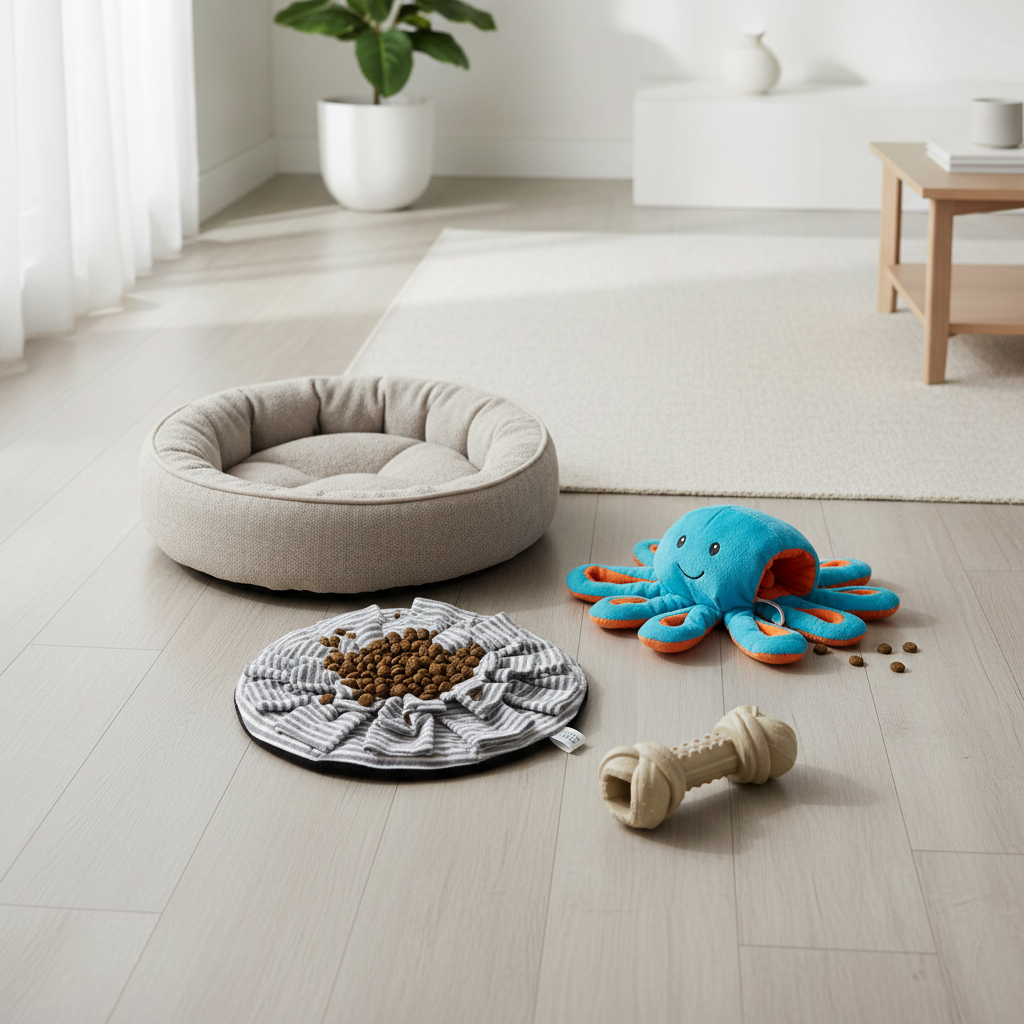
- Give legal chewing: durable chew options and food puzzles can reduce restless energy. If your dog has a history of swallowing pieces, ask your veterinarian what types are safer.
- Use sound strategically: a fan or white noise often helps dogs who react to hallway sounds.
One small detail that matters, leave water available unless a vet has advised otherwise, and make sure collar tags can’t catch on crate wires or furniture if your dog will be unsupervised.
Step-by-step training plan (short sessions that build real calm)
Here’s the part most people skip: you’re not only training “don’t bark,” you’re training a full sequence of behavior, settle, stay relaxed, and recover if something startles them.
1) Teach a “settle spot” when you’re still home
Pick a bed or mat. Reward calm body language, hips down, head resting, slow breathing. Keep rewards low-key so you don’t wind your dog up.
- Start with 10–30 seconds of calm, then treat.
- Gradually extend time between treats, but don’t make it a staring contest.
- Add a simple cue like “place” if you like, but the goal is the emotion: relaxed, not rigid.
2) Practice “micro-departures” that don’t trigger panic
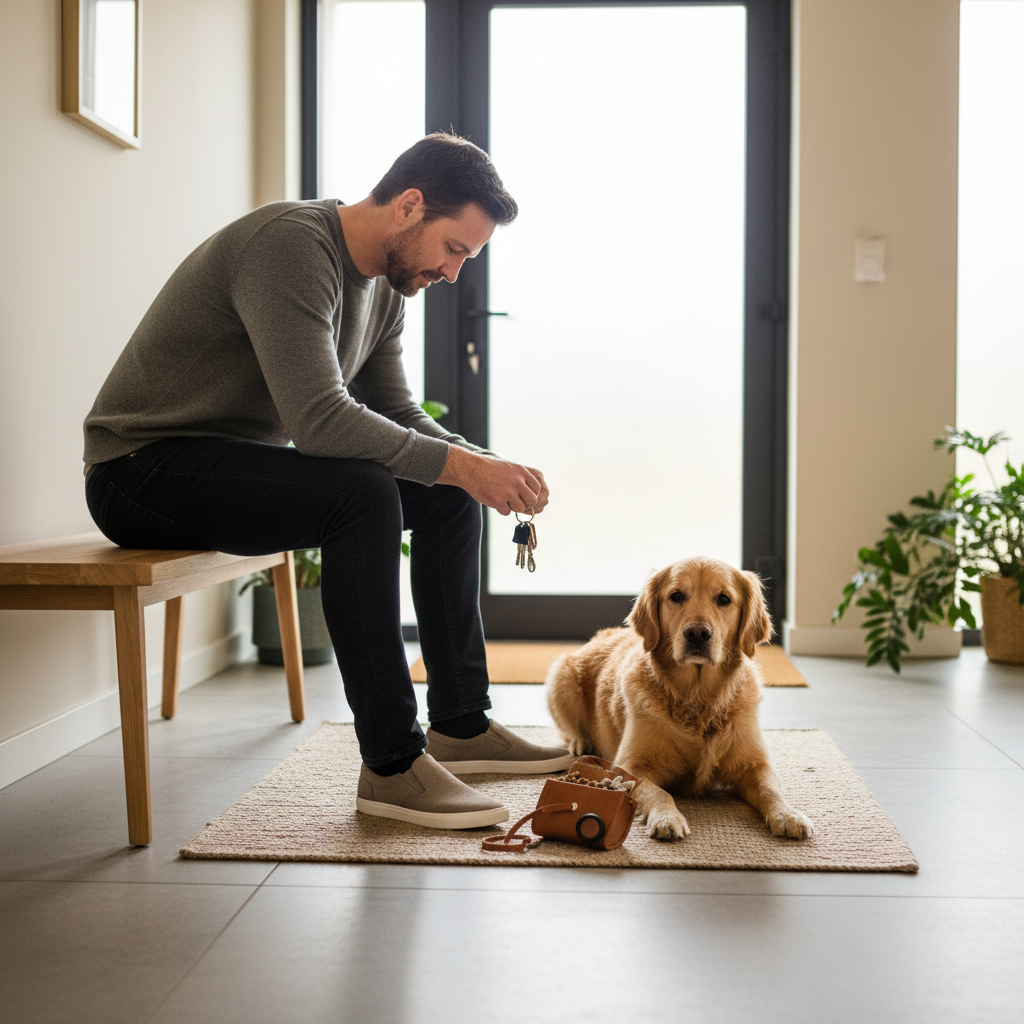
Most dogs react to the routine of leaving, shoes, keys, purse, door. So you practice tiny versions until the routine becomes boring.
- Pick up keys, sit back down, reward calm.
- Put on shoes, walk to the door, return, reward calm.
- Open the door, step out for 1 second, step back in, no big greeting.
If the dog erupts, you jumped too far. Make the step easier, and try again later.
3) Build duration with a simple rule: return while your dog is coping
When you’re working on how to train a dog to be alone, timing matters more than bravery. You want your dog learning, “I can handle this, and it ends.”
- Increase alone time in small, uneven jumps: 5 sec, 10 sec, 20 sec, 15 sec, 30 sec.
- Mix in easy reps so every session isn’t a test.
- Keep arrivals boring for 30–60 seconds, then offer calm affection.
4) Add real-life departures (but protect training)
This is where progress often breaks. If you’ve trained to 5 minutes but suddenly leave for 2 hours, your dog learns the scary version again.
If you must be gone longer than your dog can handle, consider temporary help: a friend, a dog walker, daycare, or a pet sitter, just for the training phase. It’s not “spoiling,” it’s preventing backslide.
Sample schedules you can actually follow
These are example frameworks, not rigid promises. Your dog’s age, history, and anxiety level change the pace.
| Dog situation | Week 1 focus | Week 2–3 focus | Week 4 goal (typical) |
|---|---|---|---|
| Puppy (8–16 weeks) | Settle spot, 1–60 sec departures | 2–10 min, routine potty timing | 15–45 min with breaks |
| Adult dog new to home | Predictable routine, micro-departures | 5–30 min plus enrichment | 45–120 min if coping |
| Separation distress suspected | Camera baseline, sub-threshold absences | Slow duration build, professional plan | Varies widely, aim for steady improvement |
Key point: if your dog shows panic signs, “pushing through” usually increases sensitivity. In that scenario, smaller steps are not babying, they’re the method.
Make alone time easier with enrichment (without creating new problems)
Food puzzles and chews can be a game changer, but they’re not magic. Some anxious dogs won’t eat once you leave, and that’s a useful clue.
- Use a pre-departure routine: potty, short sniff walk, small drink, then settle.
- Offer a “departure-only” item: a stuffed food toy your dog gets only when you leave, so it signals good things.
- Rotate options: novelty helps, but keep it safe and familiar enough to avoid choking risk.
- Leave a sniffing outlet: scatter a few kibble pieces in a snuffle mat for dogs who like foraging.
If your dog guards food or gets overstimulated by high-value items, keep enrichment simple and talk with a qualified trainer before you introduce “special leave treats.”
Common mistakes that slow progress (even when you mean well)
- Big emotional goodbyes: it can turn departures into a dramatic event your dog braces for.
- Punishing damage or accidents: the dog connects punishment with your return, not with what happened earlier, and anxiety often increases.
- Inconsistent reps: training to 10 minutes, then doing a 3-hour errand teaches the brain to stay on alert.
- Too much crate, too soon: some dogs love crates, others feel trapped. Watch behavior on camera before you commit.
- Rewarding frantic greetings: if your dog jumps and squeals and you match that energy, you may accidentally make arrivals and departures the biggest moments of the day.
According to the ASPCA, separation-related behaviors can include vocalizing, destruction, and house soiling. If you treat the root cause rather than the symptom, you usually get better long-term stability.
When to get professional help (and what that help looks like)
If you’re seeing red-flag distress, it’s reasonable to bring in support sooner. Many owners wait because they feel they “should” be able to fix it, but separation issues can be stubborn, and your dog’s stress is real.
- Certified trainer: look for a force-free professional who has separation anxiety experience, not just basic obedience.
- Veterinarian: rule out medical contributors, and discuss calming aids or medication if anxiety looks severe.
- Veterinary behaviorist: for intense cases or when progress stalls, this can be the most direct route.
If self-injury risk exists, prioritize safety immediately, and avoid leaving your dog alone beyond their coping threshold until you have a plan.
Conclusion: a calm-alone dog is trained, not “born”
how to train a dog to be alone usually comes down to two things, building calm as a habit in tiny repetitions, and preventing the panic rehearsal that makes the next departure harder. Once you treat alone time like a trainable routine, most dogs improve in a way you can actually measure on camera.
If you want a clean next step, pick one settle spot, run 5 micro-departures today, and note the exact moment your dog starts to struggle. That single number becomes your starting line, and it’s how you build alone time without guessing.