Pet hair remover brush for furniture sounds simple, but if you’ve ever tried to clean a couch with a lint roller that “works” for two swipes, you already know the frustration: hair gets woven into fabric, clings to seams, and shows up again right after you sit down.
The good news is you don’t need a complicated setup to make a big dent in fur on couches, chairs, and ottomans. What you do need is the right brush style for your upholstery, plus a routine that doesn’t damage fabric or spread hair around the room.
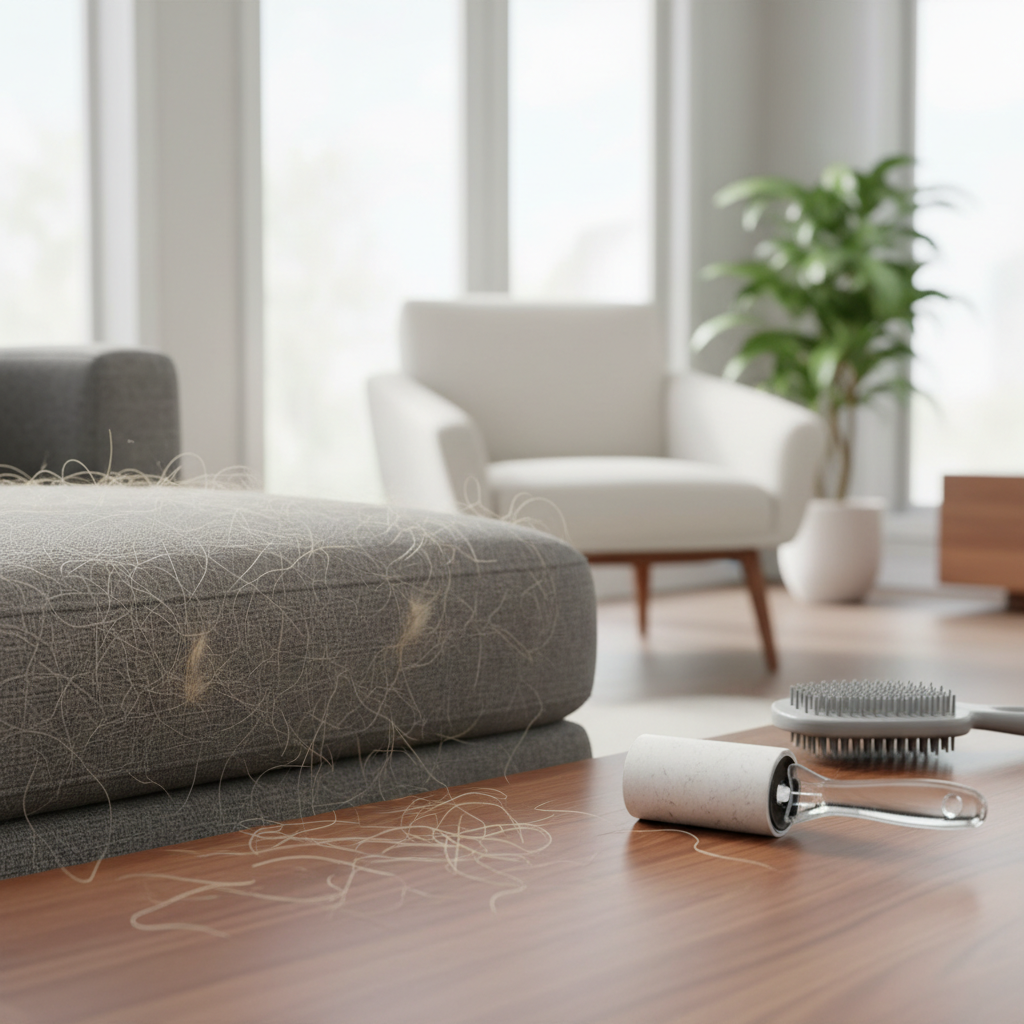
This guide breaks down why hair sticks so stubbornly, how to tell which remover brush type fits your furniture, and a step-by-step method that usually feels faster than vacuuming alone. I’ll also call out common mistakes that waste time, because most “it didn’t work” stories come down to mismatch: brush type vs fabric type.
Why pet hair clings to couches and upholstery
On most sofas, pet hair isn’t just sitting on top, it’s caught in texture. A few real-world reasons this happens:
- Fabric weave traps hair: Tweed, microfiber, and some polyester blends have enough texture to hold hair like tiny hooks.
- Static electricity: Dry indoor air and synthetic fabrics can increase cling, so hair resists lifting.
- Body oils + dander: Over time, oils and fine skin flakes can make hair “stickier” on upholstery.
- Seams and creases: Hair builds up where cushions meet the frame, places a vacuum head often misses.
According to the American Cleaning Institute, cleaning methods should match the surface and soil type, which is exactly why a one-size tool rarely performs well across every couch fabric.
Types of pet hair remover brushes (and what they’re good at)
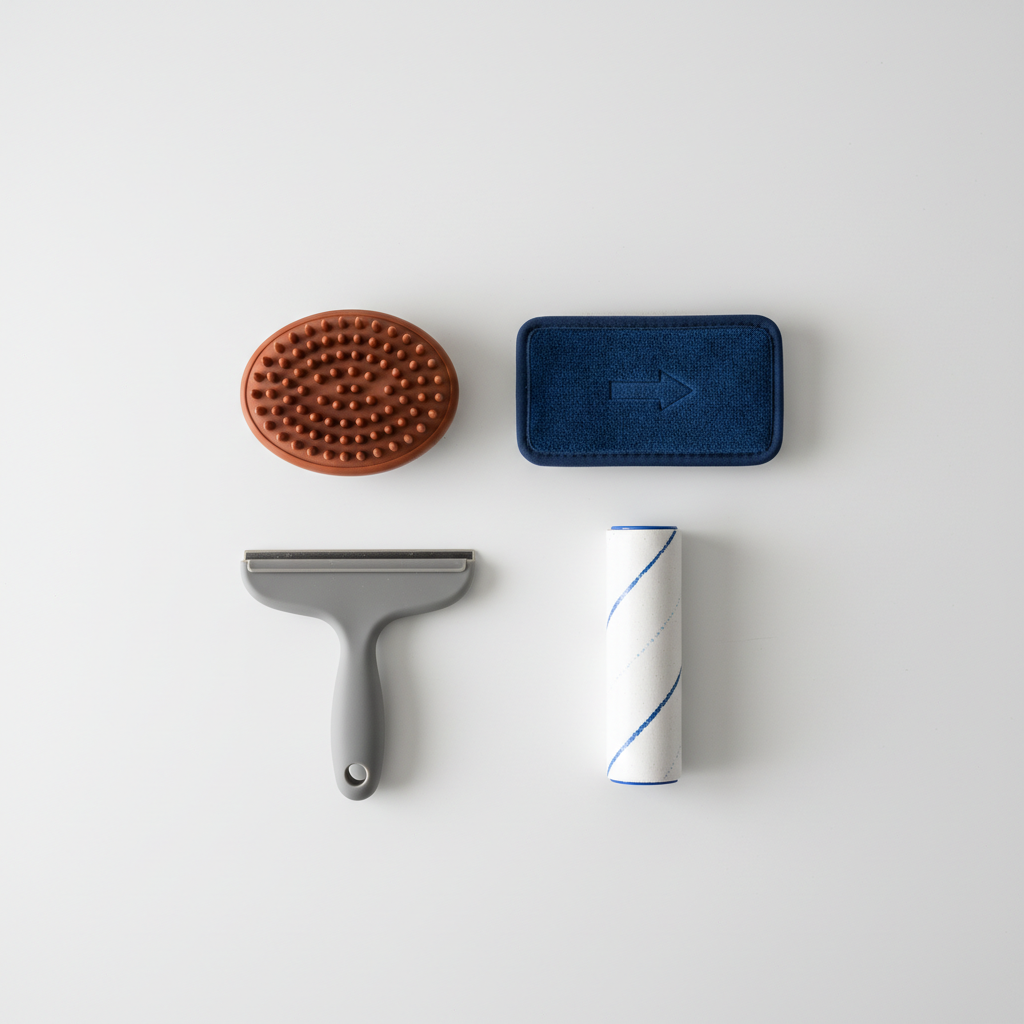
“Brush” can mean a few different designs, and they behave very differently on furniture. Here’s a practical comparison you can use before buying.
| Brush type | Best for | Watch-outs |
|---|---|---|
| Rubber bristle brush | Microfiber, velvet-like upholstery, car seats, tight weaves | Can drag on delicate fabrics if you press too hard |
| Velvet/fabric directional brush (self-cleaning base) | Quick daily touch-ups on flatter upholstery and cushions | Less effective on deep texture or heavy shedding days |
| Silicone squeegee style | Large flat areas, pet beds, rugs with short pile | Not great in tight seams and corners |
| Glove-style rubber tool | Spot cleaning, armrests, corners, around buttons | Easy to redeposit hair if you don’t wipe it off often |
| Metal edge tools (specialty) | Some heavy-duty carpet situations | Often risky for upholstery, can snag threads or damage fabric |
Quick self-check: which brush fits your furniture?
If you’re not sure what to choose, don’t overthink it. Use this quick checklist and you’ll usually land on a good match.
- Your couch is microfiber or “suede-like” → rubber bristles or rubber glove tends to grab hair fast.
- Your couch fabric feels smooth and flat → a directional fabric brush works for everyday maintenance.
- You see hair “woven in,” not just on top → rubber tools plus a vacuum follow-up usually beats lint rollers.
- You have lots of seams, tufting, or piping → glove or smaller rubber brush helps with detail work.
- You’re worried about snagging → avoid sharp-edged or aggressive tools, test in a hidden spot first.
One more practical clue: if vacuuming alone leaves a “shadow” of hair behind, a pet hair remover brush for furniture is usually the missing step, because it breaks the grip between hair and fabric so suction can finish the job.
How to use a pet hair remover brush for furniture (step-by-step)
This is the workflow that tends to feel the least annoying, because it prevents hair from floating around and landing back on the couch.
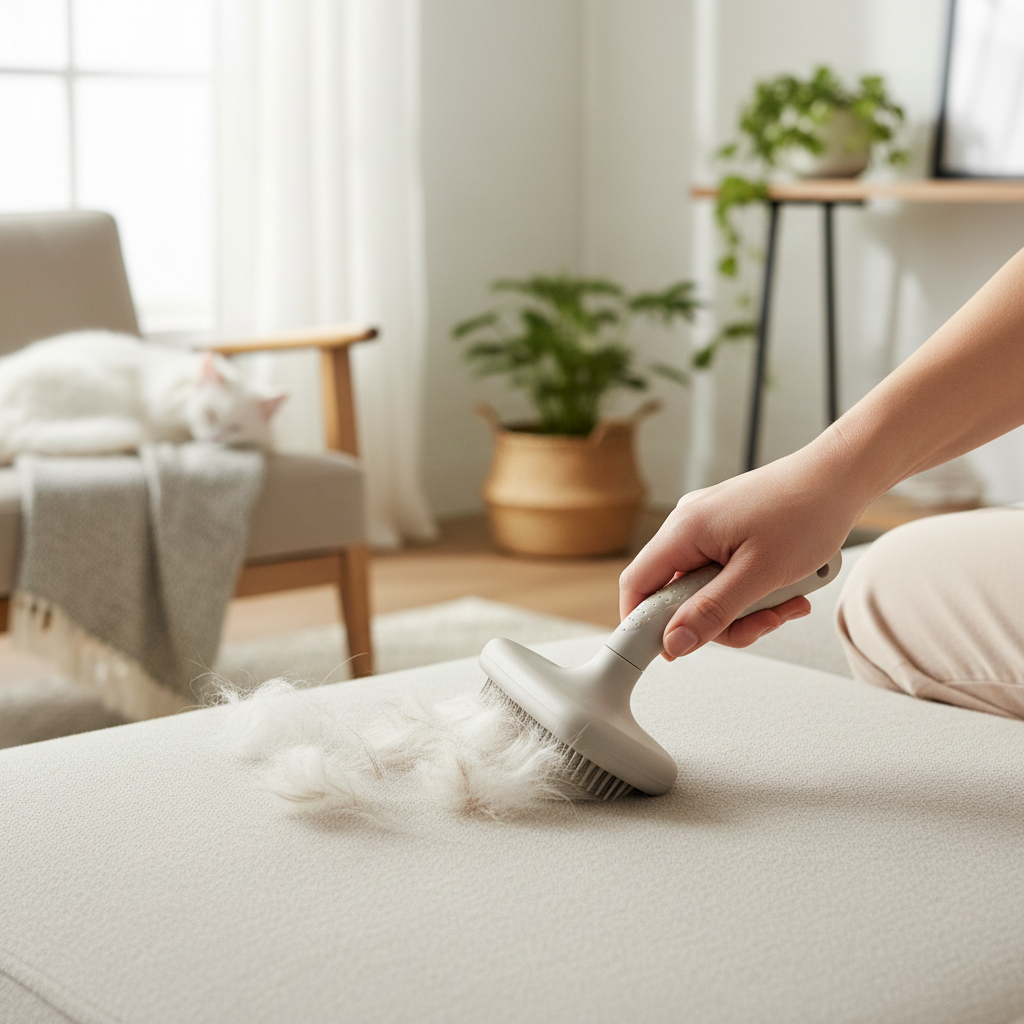
1) Dry brush first, using short strokes
Work in one small section at a time, using short, firm strokes. On many fabrics, brushing in one direction lifts hair into little “rows” you can gather.
2) Collect the rolled-up hair before moving on
Pick up the clumps by hand, or use a slightly damp paper towel. If you skip this, you’ll drag hair into clean sections.
3) Hit seams and corners deliberately
Use the tip of the brush or a glove tool to pull hair out of cushion seams, piping, and where cushions meet the frame.
4) Vacuum second, not first
Vacuuming after brushing is where you “cash in” the work. Use an upholstery attachment and slow passes to pick up loosened hair and fine dander.
5) Optional: light mist for static control
If static is making hair stubborn, a very light mist of water on your hand or cloth can help. Avoid soaking fabric, and follow the furniture care label. According to the U.S. Consumer Product Safety Commission, always use household products as directed and keep electrical devices away from excess moisture.
Real-world tips that make couch hair removal easier
These are small changes, but they add up, especially in multi-pet homes.
- Do a 2-minute maintenance pass a few times a week, heavy sessions feel smaller when you don’t wait a month.
- Keep one tool where the mess happens, a brush in the living room works better than a “perfect” tool stored in a closet.
- Rotate tools: rubber brush for deep grab, directional brush for quick polish, vacuum to finish.
- Use washable throws strategically where pets actually sleep, not where you wish they slept.
Common mistakes (and what to do instead)
A lot of frustration comes from doing the right action in the wrong order, or using a tool that’s too aggressive for the fabric.
- Mistake: pressing hard and “scrubbing”
Instead: use steady pressure and repeated passes, let friction do the work, not force. - Mistake: using sticky rollers for heavy shedding
Instead: brush to lift hair, then vacuum, save lint rollers for clothing and final touch-ups. - Mistake: ignoring the care tag
Instead: check the upholstery code, if you’re unsure, test any method on a hidden area. - Mistake: skipping seams
Instead: seams hold the most hair, treat them like their own “zone.” - Mistake: expecting one tool to solve everything
Instead: pair a brush with vacuuming, it’s usually the combo that feels like a breakthrough.
When it makes sense to get extra help
If hair removal turns into a bigger issue than hair, it’s fine to bring in support. A few situations where professional cleaning or repair advice is worth considering:
- Persistent odors, stains, or possible allergen concerns, especially if someone in the home has sensitivities, a professional can recommend safe approaches.
- Delicate or high-end upholstery (silk blends, antiques, custom fabrics) where snagging or color change is a real risk.
- Loose threads, pilling, or fabric damage after brushing, stop and ask an upholstery pro what’s safe next.
According to the Environmental Protection Agency, indoor cleaning decisions can affect indoor air quality, so if you’re dealing with respiratory issues, it may help to discuss options with a qualified professional.
Key takeaways before you buy or replace your brush
- Match the tool to the fabric, rubber grabs deep, directional brushes maintain, gloves handle details.
- Brush first, vacuum second, that order usually saves time.
- Use light pressure and repeat passes, aggressive scraping can backfire on upholstery.
- Small routine beats occasional marathons, a few minutes weekly keeps couches presentable.
Conclusion: a cleaner couch is mostly the right method
A pet hair remover brush for furniture earns its keep when it’s used with intention: pick a style that suits your upholstery, work in sections, collect clumps as you go, then vacuum to finish. Once you find a combo that works for your couch, the job stops feeling endless and starts feeling like a quick reset.
If you want one action step today, do this: test your brush on a hidden area, then try a 5-minute brush-first session on one cushion, you’ll know quickly whether you’ve got the right tool for your fabric.
FAQ
What is the best pet hair remover brush for furniture fabrics like microfiber?
Microfiber often responds well to rubber bristle brushes or rubber gloves because they create friction that lifts hair out of the nap. Start with light pressure and repeat passes rather than scraping hard.
Can a pet hair remover brush damage upholstery?
It can, depending on the brush design and fabric. Aggressive edges or heavy pressure may snag threads or increase pilling, so a small spot test in an unseen area is a smart habit.
Should I vacuum before or after brushing pet hair off a couch?
In many cases, brushing first works better because it breaks the hair free from the weave. Vacuuming after picks up what you loosened, especially in seams and corners.
Why does pet hair come back right after I clean the couch?
Usually it’s leftover hair in seams, under cushions, or on throws and pillows that shifts back onto the main seating area. A quick seam pass plus washing removable covers can reduce that “instant return.”
Do self-cleaning lint brushes work for heavy shedding pets?
They can be convenient for daily touch-ups on flatter fabrics, but for heavy shedding, rubber tools often pull more hair per pass. Many homes end up using both: quick brush daily, deeper clean weekly.
Is it safe to use water or spray on the couch to reduce static?
A very light mist can help with static, but soaking upholstery can cause water marks or damage, and some fabrics have specific care codes. Follow the care label, and if you’re unsure, ask a professional cleaner.
How often should I use a pet hair remover brush for furniture?
If pets use the couch daily, a short maintenance session a few times a week keeps buildup manageable. If shedding is seasonal, you may only need deeper sessions during peak periods.
If you’re cleaning fur off a couch every week and it still feels like you’re losing the battle, it may help to choose a brush style that matches your upholstery and set up a simple two-tool routine, brush to lift, vacuum to finish, so the effort finally looks like results.