
Best pet hair dryers for dogs usually come down to three things you can feel on day one: drying speed, noise, and how safely the heat behaves near skin and ears. If your dog bolts the second the dryer turns on, or you keep finding damp undercoat an hour later, the “wrong dryer” problem is real.
It’s also not just about convenience, a slow dry can leave moisture trapped close to skin, which in many cases triggers itchiness or that musty “wet dog” smell. And if you’re bathing at home more than occasionally, the right setup saves your back, your time, and your dog’s patience.
This guide narrows what matters in 2026, highlights features worth paying for, and gives a practical decision checklist. I’ll also share a quick at-home routine that makes most dogs tolerate drying better, without turning bath day into a wrestling match.
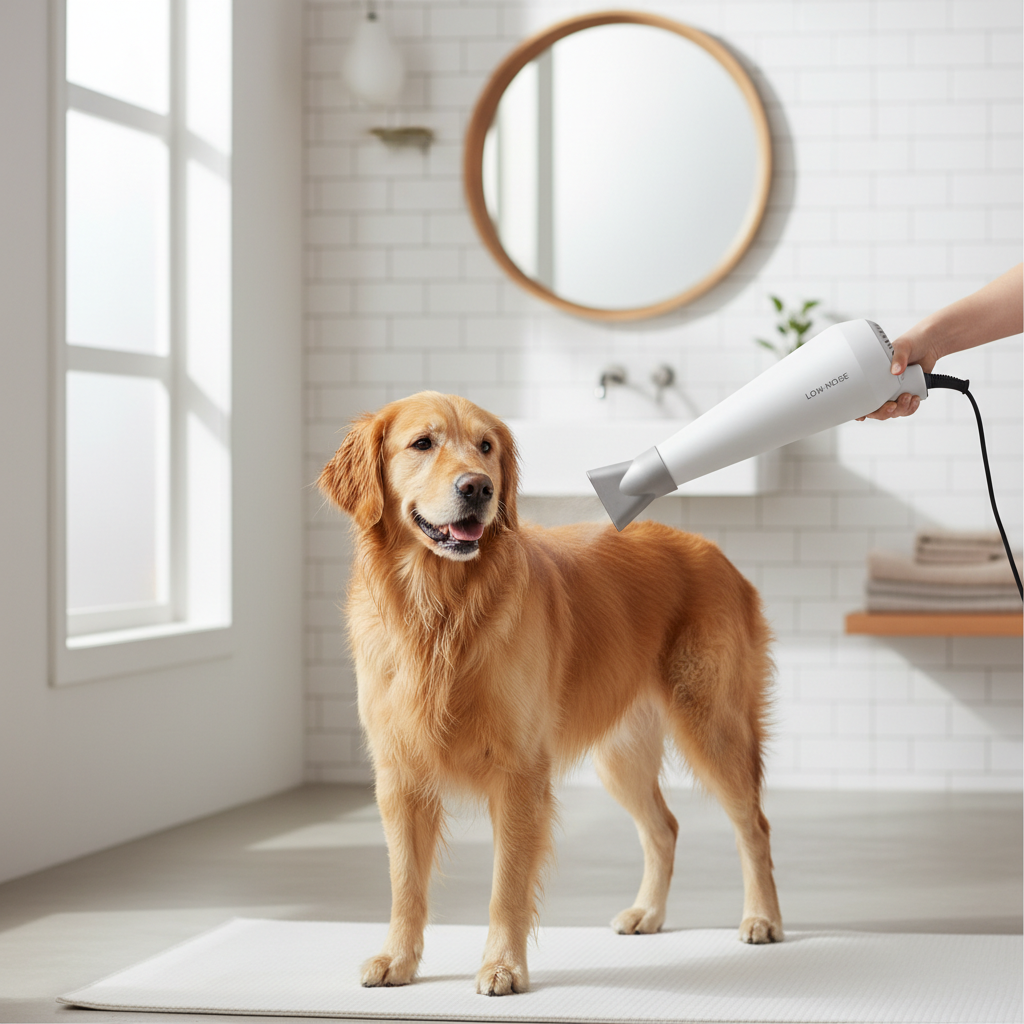
What to look for in a dog hair dryer (what actually matters)
Most shoppers get pulled into wattage and flashy marketing, but those aren’t the best predictors of a good experience. Focus on the controls you’ll use mid-dry, when your dog shifts, shakes, or decides the nozzle is suspicious.
- Airflow (CFM) and airspeed: Higher airflow typically dries faster, especially for double coats. Airspeed matters for “blasting” water off topcoat, but too much can spook noise-sensitive dogs.
- Heat control that’s truly adjustable: Look for multiple heat settings or “warm air only.” Dogs can overheat more easily than humans, and hot spots near ears and paws are common mistakes.
- Noise profile: Not just decibels, the pitch matters. Some dryers sound “sharp,” others are more like white noise, many dogs tolerate the second type better.
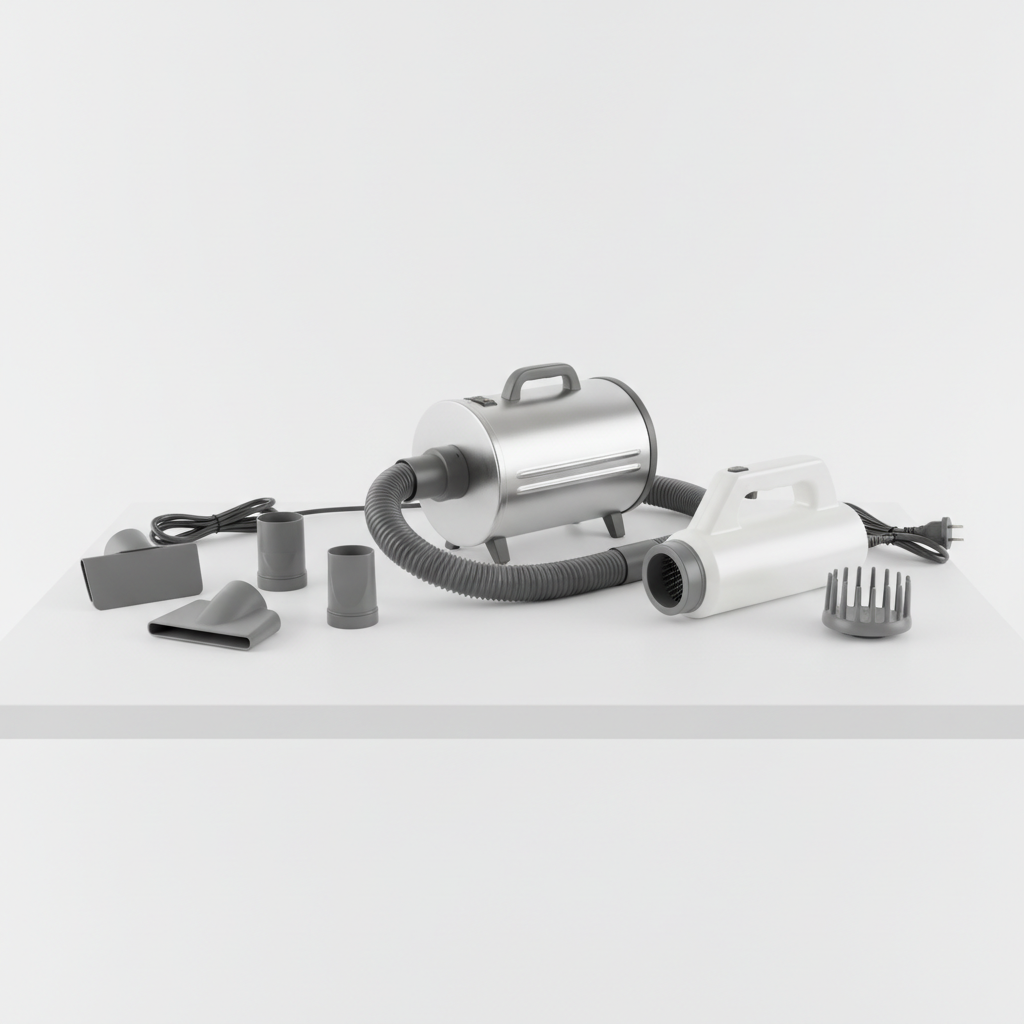
- Hose + nozzle options: A flexible hose and a few nozzles (wide, concentrator, comb/pick) make a bigger difference than people expect.
- Safety basics: Overheat protection, stable base, and easy-to-reach power switch. If it’s hard to shut off quickly, it’s the wrong tool for most homes.
According to the American Kennel Club (AKC), dog dryers should be used with caution around heat and stress, especially near sensitive areas like ears, and owners should avoid overheating. That’s a good reminder: faster matters, but controlled airflow and temperature matter more.
Quick comparison table: common dryer types for home use
Before you pick “the best,” decide which category fits your space and dog temperament. Most households land on either a compact forced-air dryer or a quiet human dryer paired with smart towel technique.
| Type | Best for | Pros | Watch-outs |
|---|---|---|---|
| Forced-air pet dryer (single motor) | Most home baths, small to large dogs | Fast drying, coat fluffing, usually no high heat needed | Noise can bother anxious dogs, learn distance control |
| High-velocity dryer (dual motor) | Thick double coats, multiple dogs | Very fast, great for undercoat shedding | Often loud, can overwhelm puppies/seniors |
| Stand dryer | Calm dogs, grooming table setups | Hands-free positioning | Takes space, not ideal for wiggly dogs |
| Human blow dryer (with diffuser) | Short coats, touch-up, noise-sensitive dogs | Easy to buy, often quieter | Heat can get too hot, slower on undercoat |
Best pet hair dryers for dogs in 2026: a practical short list by scenario
I’m not going to pretend there’s one model that wins for every dog. The best pet hair dryers for dogs depend on coat type, noise tolerance, and how often you bathe at home. Use these scenario picks as your “shopping filter,” then match to your budget and preferred brands.
1) For double coats (Husky, GSD, Golden): forced-air with strong airflow
For dense undercoat, you want airflow that separates hair and pushes moisture out, not heat that cooks the top. A single-motor forced-air dryer with variable speed is the sweet spot for many homes.
- Prioritize: variable speed, wide nozzle + concentrator, longer hose
- Nice to have: a comb/pick nozzle for undercoat sections
2) For curly coats (Poodle mixes): controlled airflow + gentle heat
Curly coats can mat if you blast random directions and stop halfway. Steady airflow with a concentrator nozzle helps you dry in sections and brush as you go.
- Prioritize: stable warm setting, concentrator nozzle, manageable noise
- Avoid: constant high heat close to skin, it can irritate
3) For anxious or noise-sensitive dogs: quieter motor and “slow start” control
In real life, the “best” dryer might simply be the one your dog will tolerate. Look for a unit that can start low and ramp up, and consider using a towel squeeze + low airflow combo for the first few minutes.
- Prioritize: low minimum speed, lower pitch noise, quick-off switch
- Tip: practice with the dryer on in another room before aiming it at your dog
4) For multi-pet homes: durability and serviceable filters
If you bathe two dogs back-to-back, filters and overheating behavior matter more than you think. A washable or easy-to-replace filter reduces airflow drop-off over time.
- Prioritize: washable filter, strong warranty support, solid hose build
Self-check: pick the right dryer in 90 seconds
If you’re stuck between options, answer these quickly. Your answers usually point to the right category without overthinking specs.
- Coat density: Is the undercoat still damp after towel drying? If yes, forced-air often makes sense.
- Dog’s stress level: Does your dog hate vacuums or clippers? If yes, prioritize lower starting speed and quieter tone.
- Dry time target: Are you okay with 30–45 minutes, or do you need 10–20? Faster often means more airflow and potentially more noise.
- Space: Do you have storage for a canister unit and hose, or do you need compact?
- How often: Monthly baths vs weekly grooming changes what “worth it” means.
Key point: If your dog is small, short-coated, and noise-sensitive, a high-velocity unit may be overkill. If your dog is double-coated, a human dryer can feel like you’re drying a carpet with a desk fan.
How to use a dog dryer safely (and make it easier on your dog)
The best pet hair dryers for dogs still need good technique. Many “dryer problems” are really “distance, direction, and timing” problems.
Step-by-step home routine
- Do the towel part seriously: Press and squeeze, don’t rub aggressively. A microfiber towel helps reduce frizz and tangles.
- Start at low speed, far away: Begin at the body, not the face. Keep the nozzle moving.
- Work in sections: Shoulder to ribcage, then hips, then legs. You’ll finish sooner than random “all over” drying.
- Use warm, not hot: If the air feels too hot on your wrist, it’s probably too hot for skin contact zones.
- Face and ears: Many owners skip direct drying here and use a towel plus low airflow at a distance. If you’re unsure, a groomer or vet can advise for your dog’s needs.
According to the American Veterinary Medical Association (AVMA), heat stress is a real risk for dogs, and preventing overheating matters during grooming and drying. If your dog pants heavily, seems disoriented, or can’t settle, stop and cool down.
Mistakes that waste money (and make dogs hate drying)
A few common missteps make people conclude a dryer “doesn’t work,” when the setup just needs tweaks.
- Chasing high heat: Heat can feel effective, but controlled airflow usually does the real drying, especially on thick coats.
- Holding the nozzle too close: This spikes noise and sensation, and it can create hot spots, even on “warm.”
- Skipping filter maintenance: Clogged filters reduce airflow, increase motor strain, and can shorten the dryer’s life.
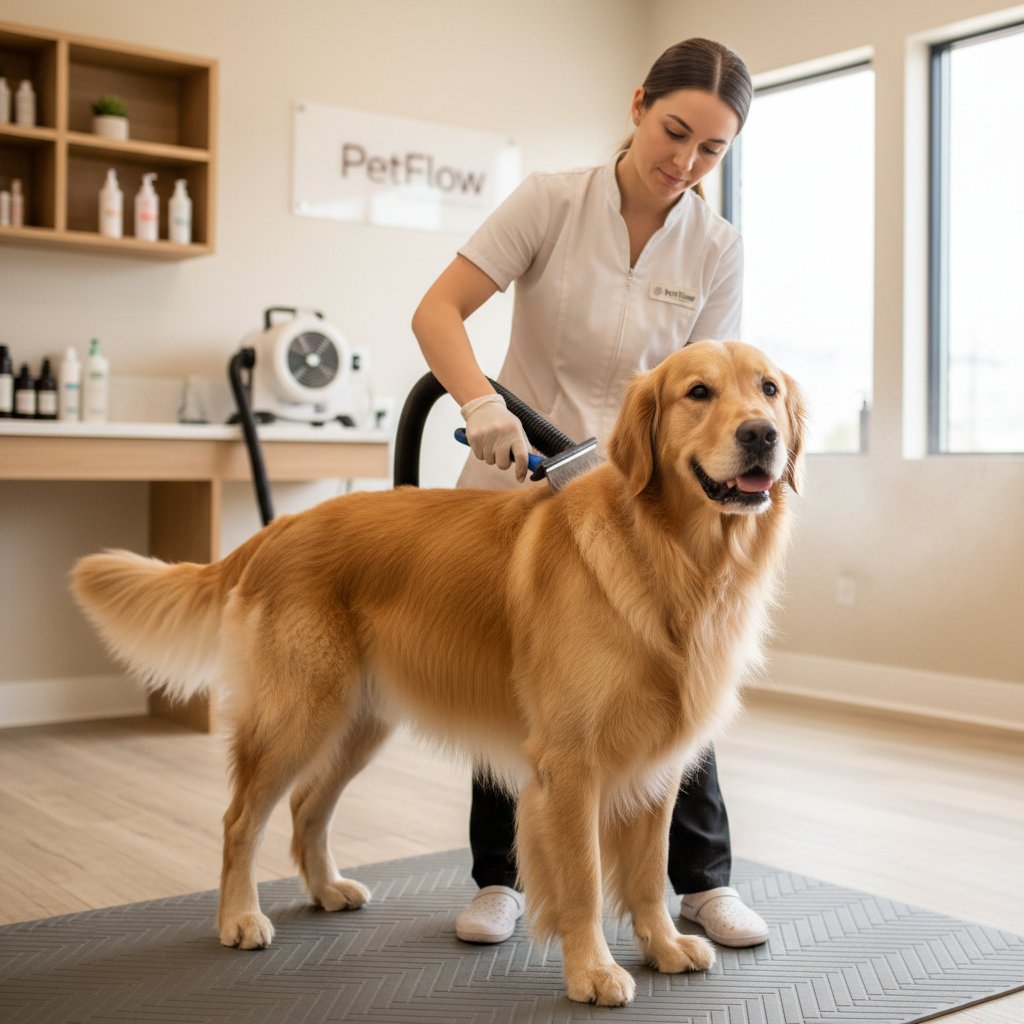
- Drying without brushing for some coats: Curly and long coats often need brushing to prevent knots forming as hair dries.
- Expecting one attachment to fit all: A wide nozzle for the body and a concentrator for targeted spots is a realistic combo.
When to ask a groomer or vet instead of DIY
Home drying is workable for many dogs, but a few situations deserve extra caution. If you’re seeing repeated skin redness, ear discomfort, or your dog becomes extremely stressed, it’s reasonable to pause the DIY experiment.
- Skin issues: Hot spots, flaking, persistent odor, or frequent scratching may need veterinary guidance.
- Ear infections: If your dog has recurring ear problems, ask a vet how to keep ears dry safely.
- Senior dogs or heart/airway issues: They may fatigue quickly, so shorter sessions and cooler air often make more sense, but ask a professional if you’re unsure.
- Severe matting: Drying matted hair can tighten mats; a groomer can prevent pain and skin pulling.
Conclusion: how to choose quickly (and feel good about it)
Shopping for the best pet hair dryers for dogs is less about chasing the most powerful unit and more about matching airflow control, noise tolerance, and attachments to your dog’s coat. If you pick a dryer that starts gentle, stays comfortably warm, and has the nozzle options you’ll actually use, bath day gets noticeably easier.
Two actions that pay off fast: write down your dog’s coat type plus noise tolerance before you shop, then commit to a section-by-section routine for the first three dries, it builds predictability and most dogs relax once the pattern feels familiar.
FAQ
What is the safest temperature setting for drying a dog at home?
Many owners do best with low heat or warm air, plus steady movement and distance. If air feels hot on your inner wrist, dial it down, and when in doubt, ask a groomer or vet for dog-specific guidance.
Are high-velocity dryers too loud for most dogs?
They can be, especially for anxious dogs or puppies. Some dogs adapt with slow introductions and lower starting speed, but if your dog panics, a quieter forced-air unit or gentler approach is often more realistic.
Can I use a regular human blow dryer instead?
You can for short coats or quick touch-ups, but it’s usually slower on undercoat and the heat can run hotter than you expect. Use the lowest heat setting, keep it moving, and avoid close-range drying near ears and face.
How do I dry a double-coated dog without causing skin irritation?
Use airflow more than heat, keep the nozzle moving, and dry in sections so you don’t leave damp undercoat. Brushing during and after drying helps separate hair and reduces trapped moisture.
What attachments matter most for pet hair dryers?
A wide nozzle speeds up body drying, a concentrator helps targeted areas, and a comb/pick nozzle can help lift undercoat on some breeds. You don’t need ten attachments, you need two or three you’ll consistently use.
How long should it take to dry a dog after a bath?
It depends on coat and dryer type. Short coats might be 10–20 minutes, thick double coats can take longer. If it’s taking an hour and the undercoat stays damp, a forced-air dryer may be a better match.
How can I make my dog less afraid of the dryer?
Start with the dryer noise at a distance, reward calm behavior, and keep the first sessions short. Many dogs do better when the dryer starts low and you avoid the face early on.
If you’re trying to narrow down options and want a more “no regrets” path, make a short list based on coat type and your dog’s noise tolerance, then prioritize variable speed and safe heat controls over raw power, it’s usually the difference between a tool you use weekly and one that sits in a closet.