Best dog bowls for messy eaters usually come down to one thing: controlling where the water and food go when your dog eats like it’s a competitive sport.
If you’re wiping up puddles, chasing kibble under cabinets, or watching your dog “dig” in the bowl like it’s a sandbox, the right bowl can save time and protect floors. It can also make meals calmer, which matters if gulping or splashing is part of the mess.
Below is a practical 2026-style shortlist: what bowl types actually help, who they work for, and what to skip. I’ll also share a simple sizing method, cleaning tips, and a quick decision table so you can buy once and be done.
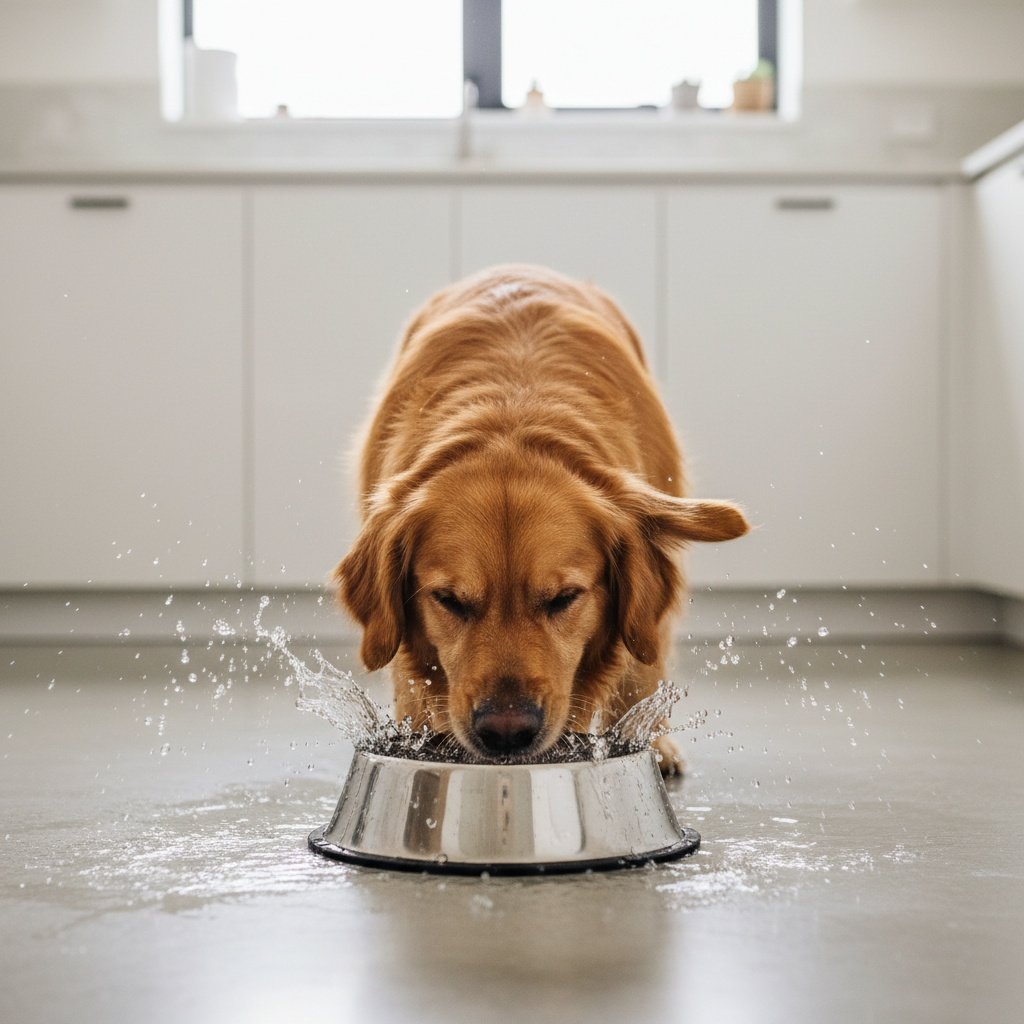
What “messy eater” usually means (so you buy the right fix)
Mess happens for different reasons, and the “best” bowl depends on which problem you’re solving. A slow feeder won’t stop a water spiller, and a splash-proof water bowl won’t keep a nosy snout from flinging kibble.
- Splashers: pawing water, dunking the whole muzzle, flipping the bowl edge.
- Pushers: shoving bowls across tile or hardwood, tipping lightweight bowls.
- Scatterers: picking up mouthfuls then dropping food while walking away.
- Gulpers: inhaling meals fast, often creating mess plus occasional regurgitation.
- Long-eared/flat-faced breeds: ears dragging through food or face shape making spills more likely.
According to American Kennel Club (AKC)... some dogs eat too quickly, and using tools like slow feeders can help reduce speed. Speed isn’t the only cause of mess, but it’s a common one.
Quick pick table: best dog bowls for messy eaters by problem
If you want a fast answer, match your dog’s “mess style” to a bowl type, then refine by size and material.
| Problem | Bowl style that helps | Why it works | Watch-outs |
|---|---|---|---|
| Water splashing/pawing | Splash-proof water bowl (floating disk or narrow opening) | Limits surface area and wave action | Needs frequent cleaning; some dogs dislike the disk at first |
| Bowl scooting | Heavy stainless bowl + rubber base, or weighted bowl | Mass + grip reduces movement | Rubber rings can trap grime if not removed |
| Kibble scatter | High-sided bowl or “no-spill” pet feeder mat + bowl | Walls catch dropped pieces | Too high can bother short-nosed dogs |
| Fast eating | Slow feeder bowl (maze/patterned interior) | Forces smaller bites, slows pace | Some designs are hard to scrub; choose dishwasher-safe |
| Long ears in food | Spaniel-style bowl (narrower top) | Keeps ears out of the bowl | May not fit wide muzzles |
| Big drips after drinking | Elevated stand + splash-proof water bowl | More controlled posture, less slosh | Elevation height should fit the dog; ask your vet if unsure |
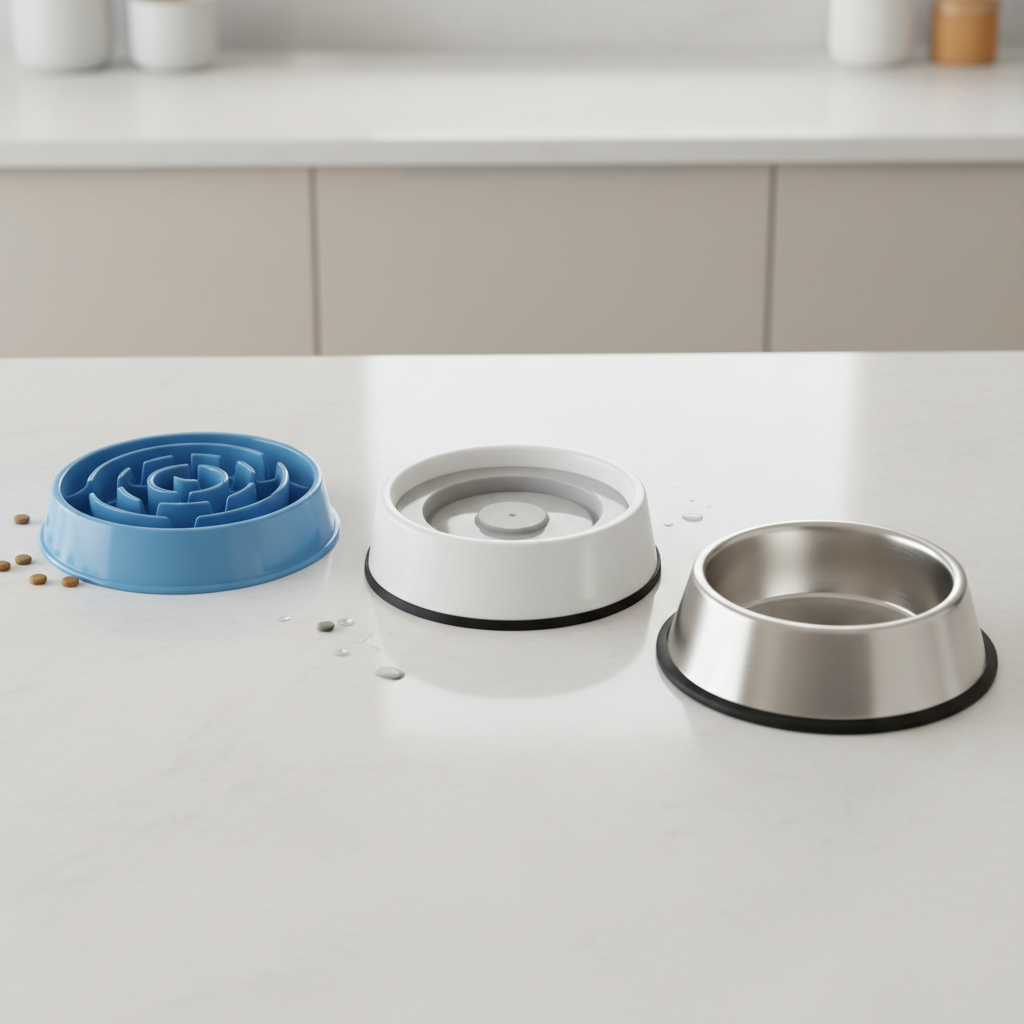
Top bowl types that actually reduce mess in 2026
1) Splash-proof water bowls (floating disk / anti-splash)
If water is your main headache, this category often gives the biggest “wow, my floor is dry” change. The floating disk limits how much water a dog can scoop up at once and reduces sloshing when they bump the bowl.
- Best for: enthusiastic drinkers, paw splashers, dogs that tip water bowls.
- Look for: removable parts, smooth edges, non-slip base, easy-to-clean design.
- Skip if: you won’t clean it often, multi-part bowls can hold grime in seams.
2) Slow feeder bowls (for gulpers who create chaos)
Slow feeders don’t just slow eating, they also keep kibble “contained” so a dog can’t bulldoze a full mouthful onto the floor. Many messy eaters are messy because they’re fast.
- Best for: dogs that inhale food, dogs that cough/gag from speed.
- Look for: stable base, wide footprint, patterns that match your dog’s muzzle length.
- Reality check: if your dog is aggressive about food, slow feeders can increase frustration in some cases, monitor the first few meals.
3) Heavy stainless-steel bowls with grippy bases
For pushers and tippers, weight and friction do most of the work. Stainless is also one of the easiest materials to keep clean, which matters because “messy” often turns into “smelly” if residue builds up.
- Best for: dogs that skate bowls across hard floors.
- Look for: thick gauge steel, wide bottom, removable silicone ring.
4) High-sided bowls and “no-spill” bowl shapes
High-sided designs can catch flying kibble and reduce the classic “one piece at a time” scatter. They’re underrated for dogs that eat politely but drop food when they lift their head.
- Best for: scatterers, seniors with a little mouth spillage.
- Watch-out: very deep bowls can be awkward for flat-faced breeds.
5) Elevated stands (sometimes helpful, not mandatory)
Raised feeders can reduce slouching and keep bowls from sliding if the stand has a stable base. Whether elevation helps depends on your dog’s build and comfort. If your dog has a medical condition or you’re concerned about swallowing issues, it’s safer to ask a veterinarian for guidance.
According to AVMA (American Veterinary Medical Association)... feeding choices should consider an individual pet’s health and safety, and owners should consult their veterinarian when unsure. That’s especially true if you’re changing feeding posture due to symptoms.
How to choose the right size and shape (without guessing)
The “best dog bowls for messy eaters” are often the ones that fit your dog’s mouth and your feeding setup, not the most expensive option.
- Diameter: your dog should reach food without pressing whiskers hard against the side. If they keep backing away mid-meal, the bowl may be too narrow.
- Depth: deeper can reduce scatter, but too deep can cause face rubbing and spills for short-nosed breeds.
- Capacity: pick a size that holds the full meal without piling food into a mound, mounds invite scooping and flinging.
- Stability: a wider footprint usually beats a taller bowl for preventing tip-overs.
Simple at-home test: put the current bowl on a towel, feed one meal, then measure where crumbs land. A tight “crumb halo” suggests you can fix this with higher sides or a mat; crumbs across the room usually points to a carry-and-drop habit.
Self-check checklist: what kind of messy eater do you have?
Before you buy anything, answer these quickly. You’ll usually end up with one dominant issue and one secondary issue.
- Is most of the mess water, food, or both?
- Do you see paw prints in the water area, or just puddles?
- Does the bowl end up in a different spot after the meal?
- Does your dog pick up food and walk away to chew?
- Does mess spike with excitement, visitors, or multi-dog feeding?
- Do you notice coughing, gagging, or frequent regurgitation after fast meals? If yes, talk with a vet.
Key takeaway: water mess almost always needs a water-specific solution, and food scatter often improves with bowl walls, slower pace, or a controlled feeding station.
Practical setups that work (step-by-step)
Setup A: “Water everywhere” fix
- Switch to a splash-proof water bowl with a non-slip base.
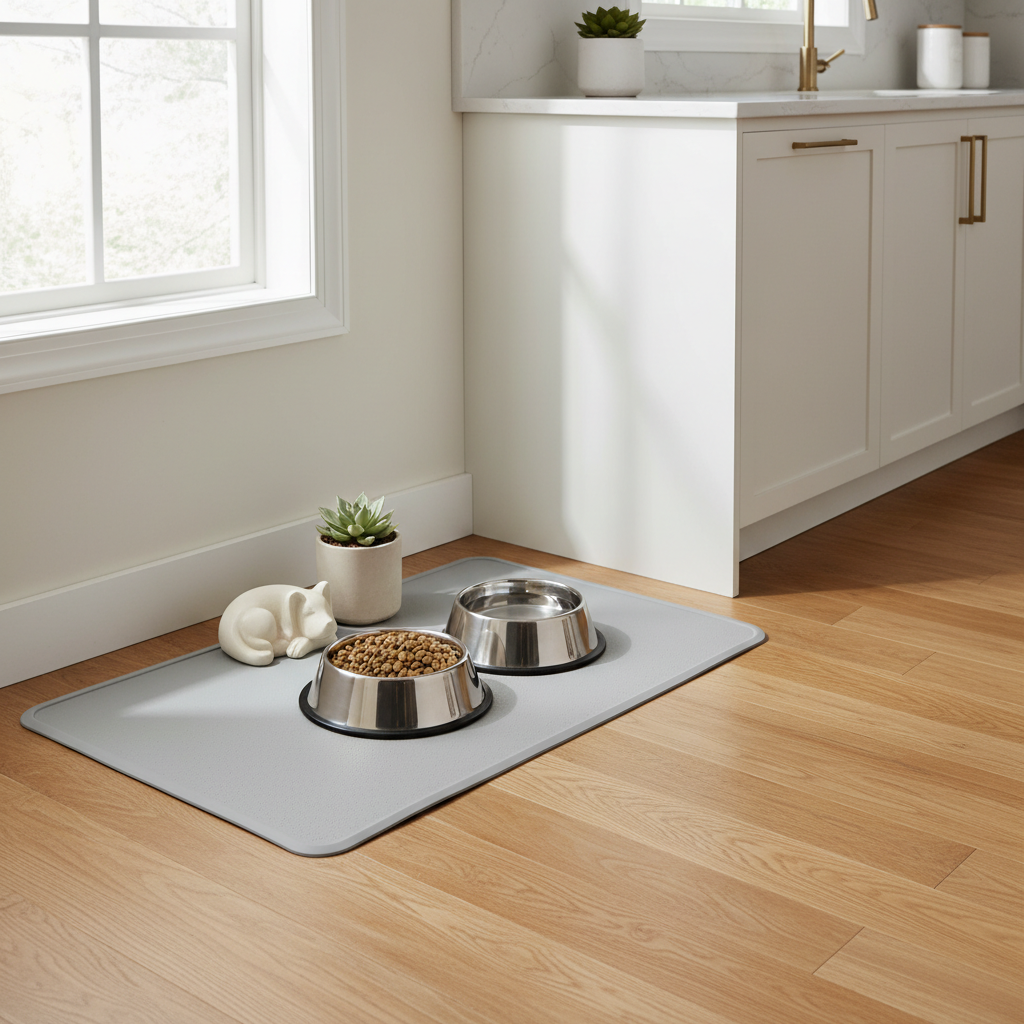
- Place it on a silicone lip mat (raised edge) to catch drips.
- Keep the station against a wall, not in the center of a walkway, fewer bumps.
Setup B: “Kibble confetti” fix
- Try a high-sided bowl or a bowl with an inward curve at the rim.
- If your dog gulps, swap to a slow feeder that’s easy to scrub.
- For carry-and-drop dogs, feed part of the meal as larger pieces if your diet allows, or use a feeder that discourages grabbing big mouthfuls, your vet can advise if you’re changing food format.
Setup C: “Bowl mover” fix
- Go heavier: stainless or ceramic, wide base, grippy ring.
- Add a mat with traction, and keep it clean, dusty mats slide.
- If your dog still tips bowls, consider a weighted stand with locked-in bowls.
Setup D: Multi-dog homes (mess + competition)
- Separate feeding spots, even 6–10 feet helps reduce rushing.
- Use slow feeders only where you can supervise, some dogs guard them.
- Pick bowls with similar heights so one dog doesn’t hover and crowd.
Materials and cleaning: what matters more than people think
Messy stations get gross fast, so cleaning convenience is part of performance.
- Stainless steel: durable, usually dishwasher-safe, good odor resistance. Many owners stick with it for a reason.
- Ceramic: heavy and stable, but chips can create rough edges, inspect regularly.
- Plastic: lightweight and cheap, but scratches can hold residue; if you use plastic, replace at the first sign of deep wear.
- Silicone mats: great for catching spills, but wash often, oils can build up.
According to FDA (U.S. Food and Drug Administration)... pet food handling should follow safe hygiene practices, including cleaning food-contact surfaces. You don’t need to overthink it, but you do need a routine.
Common mistakes that keep the mess going
- Buying a bigger bowl to “hold the chaos”: big open surface area can increase splashing, especially for water.
- Choosing a slow feeder with tight corners: if it’s hard to clean, it won’t stay clean.
- Ignoring the floor: slick tile plus a light bowl equals ice hockey. A grippy mat often does more than a “fancier” bowl.
- Changing everything at once: some dogs resist new bowl shapes, swap one element, then adjust.
When to loop in a professional
Mess is usually behavioral or equipment-related, but a few patterns deserve extra attention.
- Frequent vomiting, gagging, or repeated regurgitation after meals.
- Sudden change in eating style, especially in older dogs.
- Choking episodes, coughing while eating, or signs of pain.
- Extreme anxiety or guarding around feeding, especially in multi-dog homes.
In those situations, it’s reasonable to talk with a veterinarian or a qualified trainer. The goal is not just less mess, it’s a safer, calmer feeding routine.
Conclusion: a calmer feeding station beats constant cleanup
If your kitchen looks like a mini crime scene after every meal, you’re not “doing something wrong,” you probably just have a dog whose eating style doesn’t match a basic bowl. Start by naming the mess type, then choose the bowl that targets that exact failure point.
Two actions that usually pay off fast: pick a splash-proof water bowl if water is the issue, and pair any bowl with a grippy, raised-edge mat. Small changes, less daily irritation.
Key points to remember
- Water mess needs a water-specific design, not just a bigger dish.
- Heavy + non-slip solves a lot of sliding and tipping.
- Slow feeders help gulpers, but cleaning ease matters as much as shape.
- Mats are not optional on slick floors if you want consistent results.
FAQ
- What are the best dog bowls for messy eaters who splash water?
Look for a splash-proof water bowl with a floating disk or reduced opening, paired with a silicone mat. It targets the water surface motion that creates puddles. - Do slow feeder bowls reduce mess or only slow eating?
They often reduce scatter because dogs can’t scoop large mouthfuls as easily, but they won’t fix water drips. Choose a design you can clean well. - Is stainless steel better than ceramic for messy dogs?
Stainless is typically easier to maintain and harder to chip. Ceramic can be great for stability, but you should inspect for chips and rough spots. - How do I stop my dog from pushing the bowl across the floor?
Start with a wider, heavier bowl and add a non-slip mat. If that still fails, a stand with locked bowls can reduce movement. - Why does my dog take food out of the bowl and eat on the floor?
Some dogs prefer chewing away from the bowl, others feel crowded by bowl shape. Try a wider, lower bowl or a high-sided bowl plus a mat to contain the drop zone. - Are elevated feeders good for messy eaters?
Sometimes, especially for tall dogs or for reducing bowl movement, but height matters. If you’re changing feeding posture because of symptoms, ask a vet for guidance. - How often should I wash dog bowls if my dog is messy?
Many households do best washing food bowls daily and rinsing water bowls regularly, with deeper cleaning as needed. If you notice film, odor, or residue, increase frequency.
If you’re trying to build a cleaner station without overthinking it, start with one change you can keep up with, usually a splash-controlling water bowl or a slow feeder, then add a non-slip mat and adjust from there.