
How to trim cat claws at home gets much easier once you stop treating it like a wrestling match and start treating it like a routine your cat can predict. If you feel shaky, you’re not alone, most people worry about cutting too short, getting scratched, or breaking trust with their cat.
The payoff is real though, trimmed nails can mean fewer snagged carpets, fewer accidental scratches, and less “clicking” on hard floors. It also helps you notice issues early, like split nails or swelling around a toe.
This guide focuses on calm setup, safe technique, and what to do when your cat says “nope.” You’ll get a quick decision checklist, a simple step-by-step, and a few backup plans that work in real homes, not just perfect tutorial videos.
Why trimming feels scary (and what usually goes wrong)
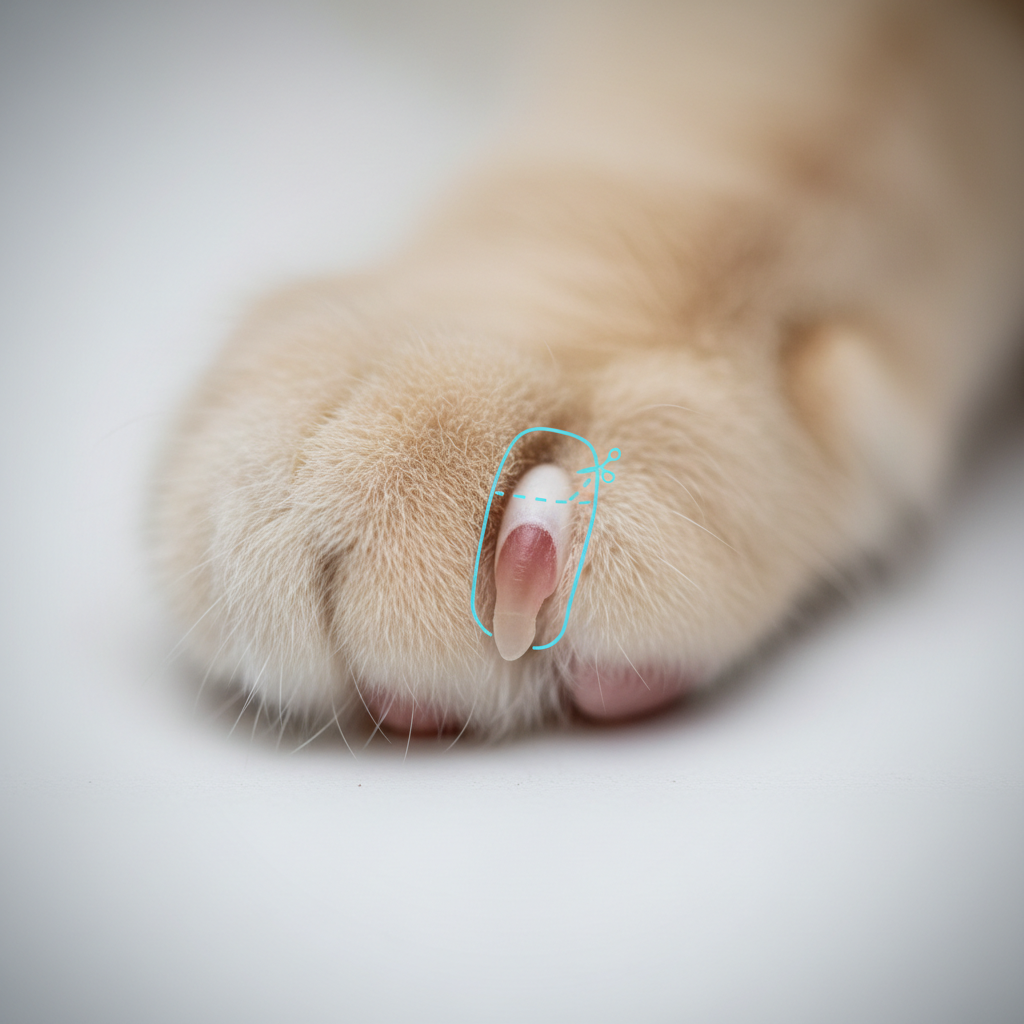
Most fear comes from one thing: the quick. The quick is the sensitive inner part of the nail that contains blood vessels and nerves, and nicking it can bleed and hurt. Dark nails make this trickier because the quick is harder to see.
Another common problem is rushing. People try to finish all paws in one go, the cat panics, and suddenly “nail trims” become a weekly drama. If you remember one idea, make it this: you’re building tolerance more than you’re removing nail length.
- Wiggly cat: poor restraint plan, wrong timing, or too much pressure on paws.
- Fear of bleeding: no plan for mistakes, no styptic on hand.
- Clippers crush the nail: dull tools or human nail clippers used on thick nails.
- Cat hates paw handling: no desensitization, only touching paws when it’s “time.”
Quick self-check: is DIY trimming a good idea for your cat?
Before you commit, do a fast reality check. Some cats tolerate home trims quickly, others need a slower training path, and a few are safer with a pro.
- Good DIY candidate: allows gentle petting, accepts treats, can be wrapped in a towel without panic.
- Proceed slowly: pulls paws away, but calms down fast and can be distracted with food.
- Consider professional help: hisses, bites, or you’ve been scratched trying, especially if the cat has pain, arthritis, or a history of trauma.
According to the American Veterinary Medical Association (AVMA), regular grooming is part of basic pet care, and if you’re unsure or your pet becomes stressed, it’s reasonable to ask your veterinarian or a groomer for guidance.
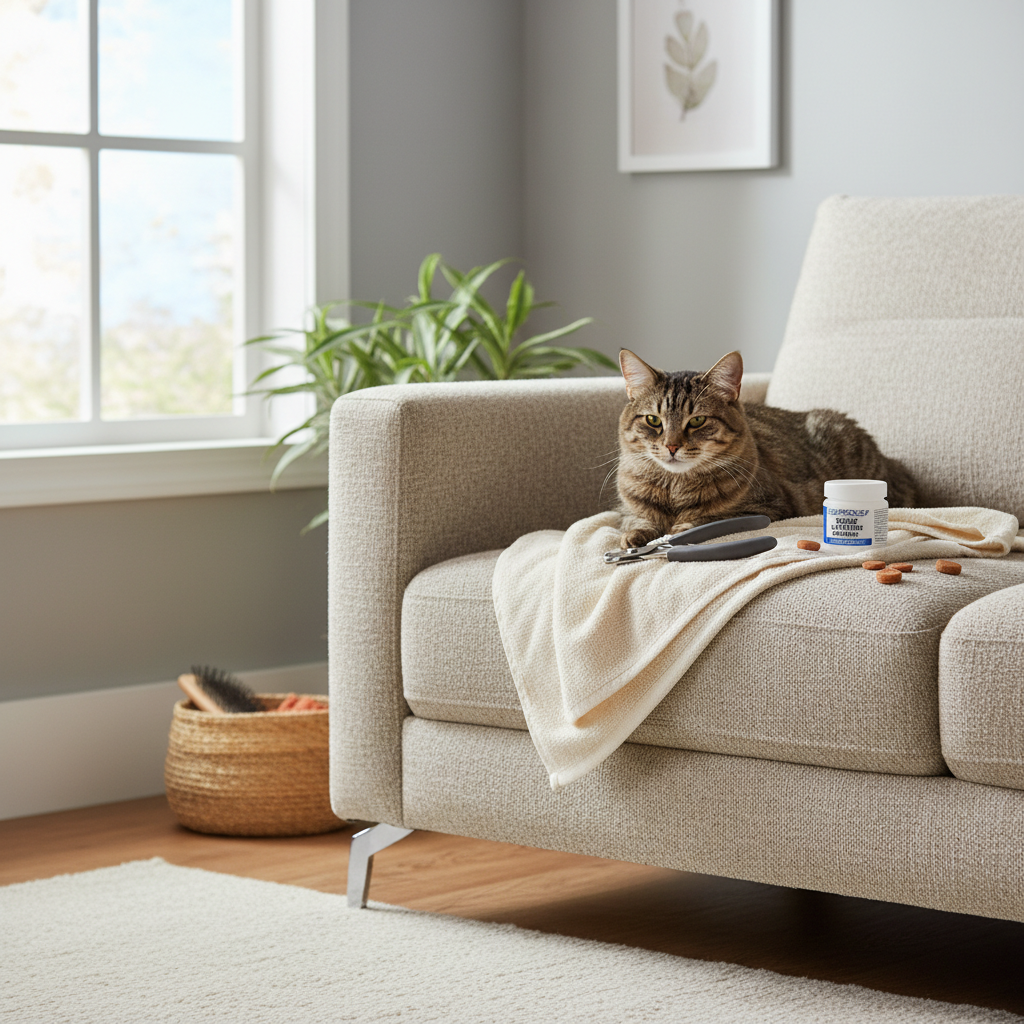
Tools that make trimming calmer (and safer)
Using the right gear reduces the odds of squeezing or splintering the nail, which is one reason cats start fighting trims.
- Cat nail clippers (scissor-style or small guillotine-style): pick a quality pair that feels stable in your hand.
- Styptic powder or styptic pencil: for stopping minor bleeding if you nick the quick.
- High-value treats: something your cat rarely gets, used only for nail work.
- Towel or small blanket: optional “purrito” wrap for cats that need gentle containment.
- Good light: a bright lamp helps you see the nail structure better.
What to buy vs. what to skip
| Item | Worth it? | Why |
|---|---|---|
| Sharp cat nail clippers | Yes | Cleaner cut, less nail crushing, faster trims |
| Human nail clippers | No (usually) | Often pinch or split curved cat nails |
| Styptic powder | Yes | Small mistake becomes a calm fix, not a panic moment |
| Electric grinder | Sometimes | Some cats hate the sound/vibration, but it can help for tiny trims |
How to trim cat claws at home: a low-stress step-by-step
This is the method that tends to work in many households: short sessions, small cuts, and predictable rewards. You can do one paw, or even two nails, and still count it as a win.
1) Pick the right moment
Trim when your cat is naturally calmer, after a meal, after play, or during a sleepy cuddle. Avoid the “zoomies” window, it almost always backfires.
2) Set the scene before you touch a paw
Put tools within reach, open the styptic, and have treats ready. If you need a towel wrap, lay it out first. The goal is zero fumbling.
3) Get a gentle hold, not a tight grip
Support your cat’s body against you or a stable surface. Many cats feel safer when their chest and hips are supported. If you squeeze paws hard, they pull harder.
4) Extend the claw and find the safe tip
Press lightly on the toe pad and top of the toe to extend the claw. On light nails, you usually see a pinkish quick; stay a few millimeters in front of it. On dark nails, trim only the very tip, you can always take more later.
5) Cut at a small angle, then stop
Aim for a quick, clean snip. Don’t “chew” the nail with repeated micro-cuts. Then release the paw and treat immediately, even if you only did one claw.
6) Repeat in short sets
- Easy cats: 1–2 paws per session often feels manageable.
- Worried cats: 1–3 nails, then done, and try again later the same day or tomorrow.
Key point: if your cat tenses, tail flicks, growls, or tries to mouth your hand, pause. Pushing through teaches your cat that resisting is necessary.
If your cat won’t cooperate: three realistic approaches
Some cats don’t “allow” trims at first, and forcing it can escalate fast. Try one of these approaches for a week or two and see which direction the cat goes.
Approach A: desensitization (best for long-term peace)
- Day 1–3: touch shoulder, then leg, then paw, treat, stop.
- Day 4–7: press toe gently to extend a claw, treat, stop.
- Next: add the sound of clippers cutting a dry spaghetti piece nearby, treat, stop.
Approach B: the “purrito” towel wrap (best for mild squirmers)
Wrap the body snugly while leaving one paw out, trim a couple nails, then rewrap for the next paw. Keep your cat’s head uncovered so breathing stays easy, and stop if your cat panics.
Approach C: two-person trim (best when you trust your helper)
One person offers treats and gentle body support, the other trims. This works better than one person trying to restrain and cut at the same time, which often increases stress.

Mistakes to avoid (these create “nail trim trauma” fast)
- Trying to finish at all costs: if you push through a meltdown, the next session gets harder.
- Cutting too much “to be done with it”: trim less than you think you need, especially with dark nails.
- Holding your cat down: many cats interpret this as threat and escalate to biting.
- Skipping rewards: treats are not a bribe here, they’re part of training.
- Ignoring pain signals: limping, flinching, or sudden aggression may mean discomfort; consider a vet check.
According to the American Association of Feline Practitioners (AAFP), low-stress handling and reading feline body language can reduce fear during care routines. If your cat shows strong stress signals, slowing down usually helps more than “getting it over with.”
What if you cut the quick? A calm damage-control plan
Even careful people slip sometimes. Most small quick nicks look scary because of blood, but they’re often manageable at home if bleeding is minor and your cat remains stable.
- Stay calm, your cat reacts to your tension.
- Apply styptic powder with gentle pressure for 10–30 seconds.
- Keep your cat on a clean surface for a few minutes, then end the session.
If bleeding does not stop, if the nail breaks high up, or your cat seems very painful, contacting a veterinarian is a safer move. According to the ASPCA, when you’re unsure about an injury or bleeding, it’s appropriate to call your vet for advice.
Conclusion: a simple plan you can actually stick with
Learning how to trim cat claws at home is less about bravery and more about repeatable, calm reps. Set up tools, trim just the tips, reward immediately, and stop while things still feel okay. The cat remembers that ending.
- Action step #1: Do a two-nail practice session today, then quit on purpose and treat.
- Action step #2: Put a reminder on your calendar for the next trim window, many cats do well every 2–4 weeks, but it can vary.
If your cat consistently panics or you keep hitting the quick, there’s no shame in outsourcing to a groomer or asking your vet team to demonstrate technique. You still “own” the routine, you just get a calmer starting point.
Key takeaways
- Trim small amounts, especially with dark nails.
- Short sessions beat long battles.
- Good light, sharp clippers, and styptic powder reduce risk.
- When stress spikes, stop and try again later.
FAQ
How often should I trim my cat’s claws at home?
Many cats need trims about every 2–4 weeks, but indoor activity level and scratching habits change the timeline. If nails snag on fabric or sound loud on floors, you’re probably due.
How do I trim black cat nails if I can’t see the quick?
Take only the sharp tip and re-check after each snip. In a bright light, you may see a subtle inner circle on the cut surface; if you notice a darker center, stop, you’re getting close.
What angle should I cut a cat’s claw?
A slight angle that follows the nail’s natural curve usually works, rather than cutting straight across. If you’re unsure, choose a smaller cut; shape matters less than avoiding the quick.
Is it okay to trim only the front claws?
Often, yes. Front claws cause most accidental scratches and snagging. Back claws can still get sharp or overgrown, so check them periodically even if you trim them less often.
My cat bites when I touch paws, what should I do?
Stop and switch to desensitization sessions where paw contact is brief and rewarded, with no clipping attempt. If biting escalates quickly, getting a vet or groomer to show low-stress positioning can save you weeks of frustration.
Can I use treats to keep my cat still during nail trims?
Yes, and it’s usually one of the most practical tools. Use high-value treats and deliver them right after each nail so your cat connects calm behavior with immediate payoff.
When should I ask a professional to trim my cat’s claws?
If your cat becomes highly stressed, you’re getting scratched, or your cat has medical issues like arthritis, a professional trim can be safer. Your vet can also check for nail bed problems or toe pain that makes trimming hard.
If you’re trying to make nail trims feel less tense, a simple routine helps: consistent timing, the same spot, the same rewards, and a “stop early” rule. If you’d rather not troubleshoot alone, asking a groomer or your veterinary clinic for a quick demo often turns this into a manageable home habit.