
Turtle tank filter for small aquariums is a tricky search because you need two things that often fight each other, strong biological filtration for messy turtles, and low flow that won’t stress a hatchling or turn a shallow setup into a whirlpool.
If you’ve tried a “small tank” fish filter and the water still smells, or you tried something stronger and your turtle now clings to the basking ramp like it’s a storm, you’re not doing anything wrong, you’re just bumping into turtle reality.
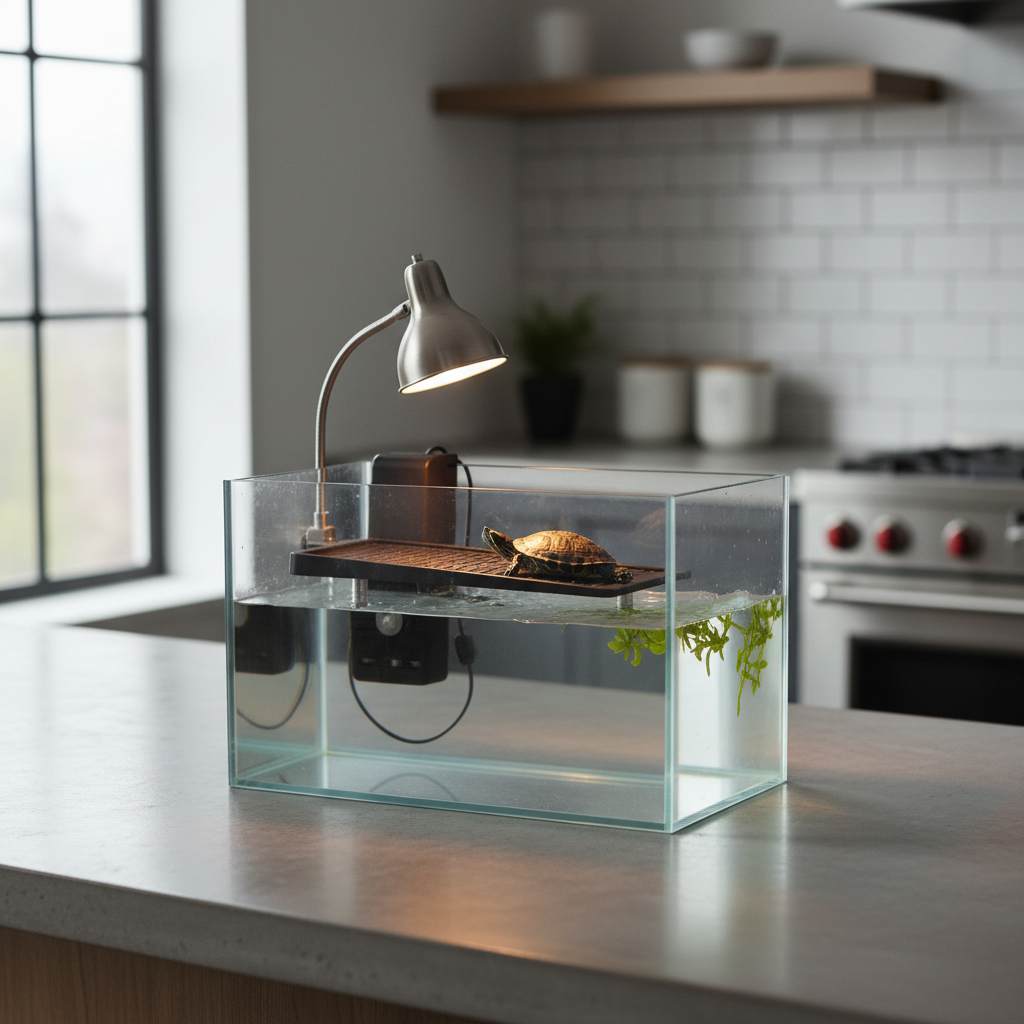
This guide helps you pick a filter that keeps water stable in a small aquarium without overpowering your turtle. I’ll break down why small tanks foul fast, how to spot “too much current,” and practical ways to baffle flow so you can use a real turtle-capable filter without creating chaos.
Why small aquariums get dirty fast with turtles (and why low flow matters)
Turtles produce more solid waste than most fish, plus uneaten food breaks down quickly. In a small volume of water, that waste spikes ammonia faster, and odors show up sooner.
Low flow matters for a different reason, behavior and stress. Many small tanks have limited swimming lanes and shallow depth, so even moderate output can push a turtle around, especially juveniles or weaker swimmers.
- Bioload mismatch: “10-gallon filter” ratings assume fish, not a turtle that eats pellets, shrimp, and greens.
- Oxygen vs. current: You want surface agitation for gas exchange, but not a jet stream across the tank.
- Basking area disruption: Strong flow can splash the dock, lower basking temps, and keep the platform wet.
According to the U.S. Food & Drug Administration (FDA), small turtles are associated with salmonella risk, so keeping the habitat cleaner and handling water safely is not just “nice,” it’s a hygiene issue too.
Quick self-check: is your filter too strong, too weak, or just aimed wrong?
Before buying anything, watch the tank for five minutes. You can usually diagnose the problem with a few simple cues.
- Flow too strong: turtle avoids open water, constantly rides the current, struggles to reach the basking area, or food gets pinned against one wall.
- Flow too weak: oily film on the surface, debris settling everywhere, smell returns quickly after a water change, cloudy water after feeding that lingers.
- Filter “okay” but positioned poorly: one corner stays stagnant, poop accumulates in dead zones, or output blasts straight across the shortest path.
A lot of small-aquarium wins come from flow control and placement, not raw power. But turtles still need enough media volume for beneficial bacteria, which is where many tiny filters fall short.
Best filter types for small turtle tanks when you need low flow
For a turtle tank filter for small aquariums, the best choice depends on how small “small” is, and whether you can fit equipment behind the tank or in a cabinet.
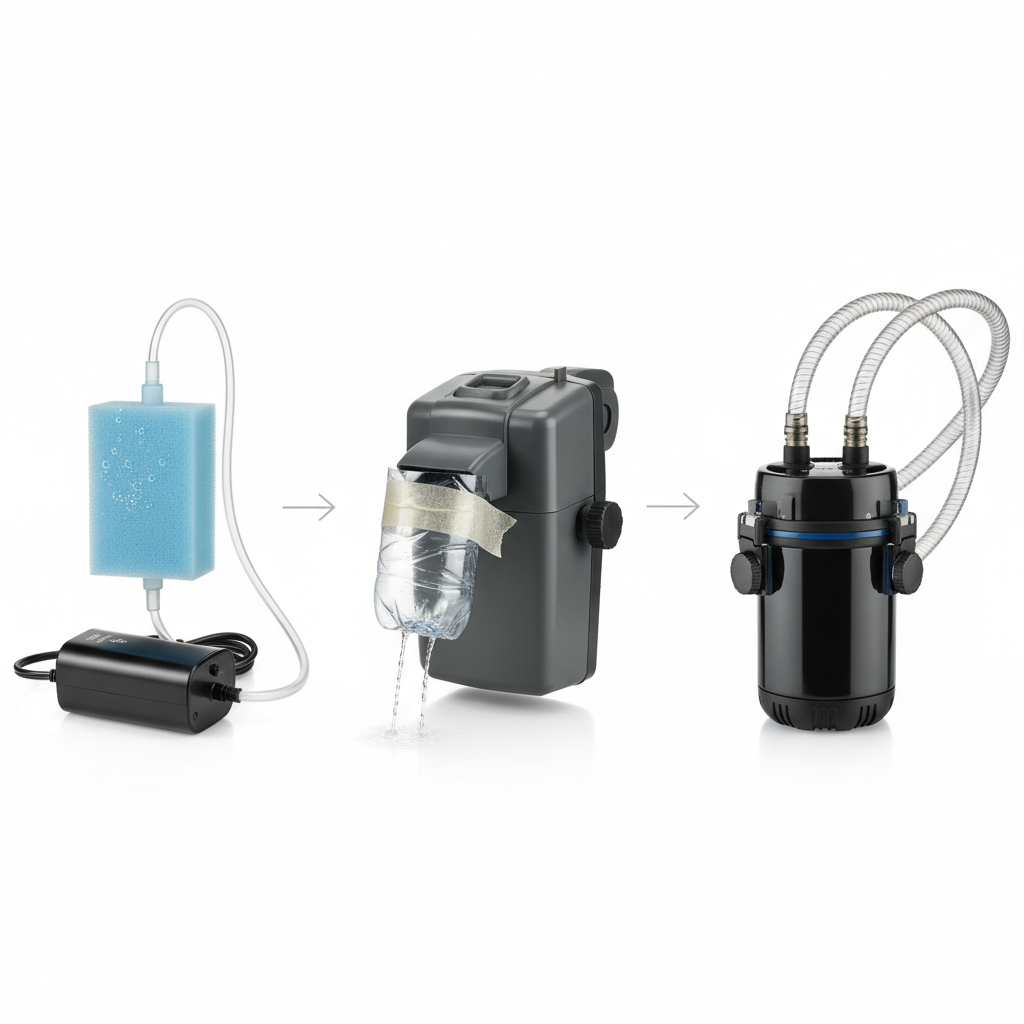
Sponge filters (gentlest flow, limited mechanical power)
Sponge filters are the lowest-flow option. They’re great for hatchlings, quarantine tubs, and very small setups where you mainly need biological filtration and mild circulation.
- Pros: very gentle, cheap, easy to clean, safe intake.
- Cons: can struggle with heavy solids unless you pre-clean debris often, needs an air pump.
Hang-on-back (HOB) filters with a baffle (common “small tank” solution)
A HOB can work if you choose one with adjustable flow and enough media space, then baffle the waterfall so it doesn’t slam the surface. Many people dislike the waterfall sound, but the bigger issue is turtles getting blasted in a shallow tank.
- Pros: easy access, easy media swaps, decent mechanical filtration.
- Cons: outflow can be harsh without a baffle, intake needs a guard to protect toes and reduce clogging.
Small canister filters (best cleaning potential, but you must tame the return)
In many cases, a compact canister gives you the media volume turtles benefit from, even on a smaller aquarium. The catch is that returns can be powerful, so you’ll want a spray bar, directional nozzle, or an inline valve to dial flow down.
- Pros: strong mechanical filtration, lots of bio media, cleaner look inside the tank.
- Cons: more parts, priming and hose routing, needs deliberate low-flow setup to avoid “river mode.”
How to size a low-flow filter for turtles (without relying on the box rating)
Filter packaging can be misleading because ratings usually assume fish stocking. With turtles, you’re planning around waste load and feeding habits.
- Use tank volume as a starting point, not the finish line: small tanks often need “oversized” filtration, then reduced output.
- Prioritize media capacity: more sponge/ceramic area usually beats a tiny cartridge that clogs in two days.
- Plan for maintenance rhythm: if you hate cleaning, pick a setup that tolerates longer intervals without turning nasty.
Practical sizing table (rule-of-thumb, adjust for your turtle and setup)
This isn’t a promise, it’s a realistic starting point for typical pet turtles in smaller aquariums.
| Tank size | Safer low-flow approach | What to watch |
|---|---|---|
| 5–10 gal | Large sponge filter + frequent debris removal | Cloudiness after feeding, fast ammonia rise |
| 10–20 gal | Adjustable HOB with baffle, or small canister turned down | Outflow turbulence, intake clogging from food |
| 20–30 gal | Compact canister + spray bar, plus pre-filter sponge | Dead spots behind decor, hose flow drop over time |
Step-by-step: getting “low flow” without sacrificing filtration
Most people try to solve low flow by buying a weaker filter. With turtles, that often backfires. It’s usually better to keep filtration capacity and soften the delivery.
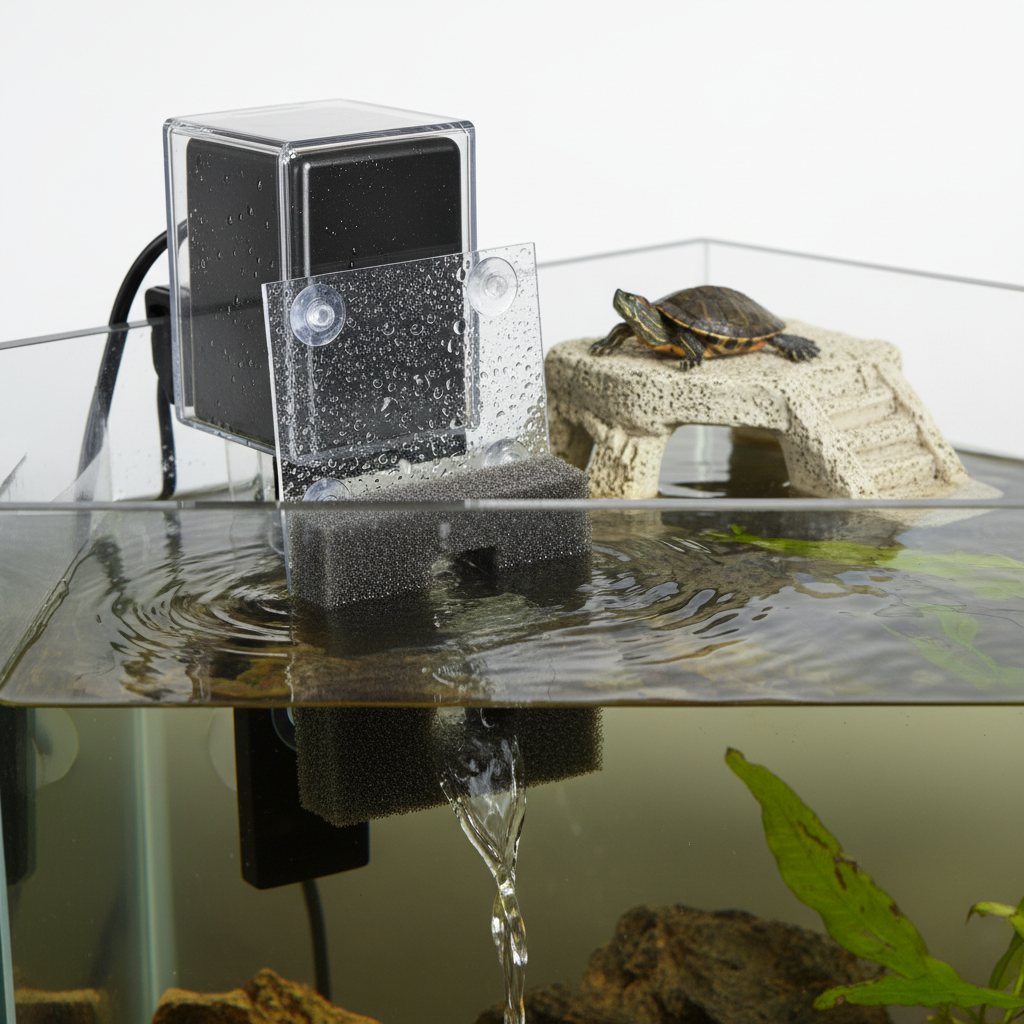
1) Add a pre-filter sponge to the intake
This is underrated. A pre-filter sponge catches big debris, protects your turtle, and reduces how fast the main media clogs.
- Choose a sponge that fits snugly on the intake tube.
- Rinse it in dechlorinated water during maintenance to keep beneficial bacteria.
2) Baffle the outflow (HOB) or diffuse the return (canister)
- HOB: use a sponge, plastic guard, or purpose-made baffle so water slides down instead of crashing.
- Canister: aim the nozzle toward glass, use a spray bar, or add a valve to lower output.
Don’t eliminate surface movement completely. You want gentle ripples to help oxygen exchange and reduce surface film.
3) Build a “calm zone” in the tank
Even with low flow, turtles like choice. You can create calmer water behind decor, plants (real or artificial), or a hardscape barrier.
- Point output along the long side of the tank, not straight across a short width.
- Keep the basking ramp area calmer so entry feels easy.
4) Tighten feeding and spot-cleaning
Say it out loud: filtration is not a substitute for removing solids. If you feed in-tank, pull uneaten food after 10–15 minutes when possible.
- Use a turkey baster or small siphon for quick poop pickups.
- Consider a separate feeding tub if your turtle tolerates it, less mess in the display tank.
Common mistakes that keep small turtle tanks cloudy
These show up constantly in small aquariums, even when the filter is “strong enough.”
- Over-cleaning media: scrubbing everything under tap water can crash beneficial bacteria and trigger recurring cloudiness. According to the U.S. Environmental Protection Agency (EPA), chlorine can affect microorganisms; in aquarium practice, many keepers avoid tap-water rinsing for bio media for this reason.
- Cartridge trap: replacing cartridges too often can reset bio filtration, swapping to reusable sponges and ceramic media often stabilizes things.
- Ignoring water conditioner: if you use tap water, a dechlorinator usually matters for both turtle comfort and bio filter stability.
- Too-small tank for the turtle’s size: sometimes low flow is the least of the issue, the animal has simply outgrown the setup.
When to get help (or change the whole plan)
If your turtle shows ongoing lethargy, persistent refusal to swim, swollen eyes, or unusual floating, water quality could be part of the picture, but health issues can be more complicated. In those cases, it’s smart to consult a qualified reptile veterinarian.
Also consider upgrading the habitat if you keep fighting the same loop: you lower flow so the turtle is comfortable, water quality drops, you do emergency cleanings, then repeat. A larger tank with diffused return often ends up calmer and cleaner at the same time.
Key takeaways (keep this short list handy)
- Don’t shop by “tank size” labels alone; turtles need more media capacity than fish.
- Low flow is usually a plumbing problem, fix it with baffles, spray bars, and aiming, not by under-filtering.
- Pre-filter sponges reduce clogging and calm the system down.
- Maintenance beats gadgets; spot-cleaning and sensible feeding prevent most “mystery cloudiness.”
Conclusion: a calm tank can still be a clean tank
A turtle tank filter for small aquariums works best when you separate “filtration strength” from “water movement.” Keep enough media and mechanical capture to handle turtle waste, then deliberately soften the outflow so your turtle can swim, rest, and bask without fighting the current.
If you want one action step today, add a pre-filter sponge and baffle the return, then watch behavior and water clarity for a week. It’s a small change that often makes a bigger difference than buying a brand-new filter.
FAQ
What is the best turtle tank filter for small aquariums with low flow?
For very small setups, a large sponge filter is often the gentlest option. For 10–20 gallons, an adjustable HOB with a baffle or a compact canister turned down tends to clean better while keeping current manageable.
Can I use a fish filter for a baby turtle in a 10-gallon tank?
Sometimes, but many fish filters clog fast under turtle waste. If you go this route, add a pre-filter sponge and be ready for more frequent cleaning, or you may end up with persistent odor and cloudiness.
How do I reduce filter flow without hurting water quality?
Diffuse the output rather than downsizing the filter. Baffles, spray bars, and aiming the return at glass can drop current while keeping media capacity and oxygen exchange intact.
Why does my small turtle tank smell even with a filter?
Usually it’s trapped solids, overfeeding, or insufficient mechanical capture. Smell can also show up when bio filtration is unstable, for example after replacing cartridges too aggressively or rinsing media under chlorinated tap water.
Do turtles need an air stone if I already have a filter?
Not always. If your filter creates gentle surface movement, that often supports gas exchange. In very calm tanks or with sponge filters, an air stone can help, but avoid blasting bubbles directly under where your turtle tries to rest.
How often should I clean a low-flow filter in a turtle tank?
It depends on feeding and tank size, but many small tanks need at least weekly pre-sponge rinsing and regular debris removal. Clean in stages so you don’t wipe out all beneficial bacteria at once.
Is strong current dangerous for turtles?
It can be stressful, especially for hatchlings or turtles with weaker swimming ability. If you see constant struggling or avoidance behavior, treat it as a sign to baffle flow and create calmer zones, and consider a larger habitat if the tank is simply too tight.
If you’re trying to keep a small setup clean without turning it into a wave pool, it may help to choose a filter with generous media capacity and then build in low-flow control from day one. That approach usually saves time, reduces odors, and keeps the turtle’s daily behavior looking more relaxed.