
Best kitten toys for play come down to two things most people miss, matching the toy to how kittens actually hunt, and matching it to your home setup so play stays safe and consistent. If your kitten seems “hyper,” bites hands, or sprints at midnight, it usually isn’t a personality flaw, it’s an unmet play need.
The tricky part is that kittens don’t just want “more toys.” They want the right type of play at the right time, plus variety so they don’t get bored by day three. That’s where people waste money on big multipacks, then wonder why the cat only likes the box.
This guide covers which toys tend to work in real homes, how to choose by age and temperament, what to avoid, and a simple rotation plan that fits a normal schedule. You’ll also get a quick comparison table to shop faster.
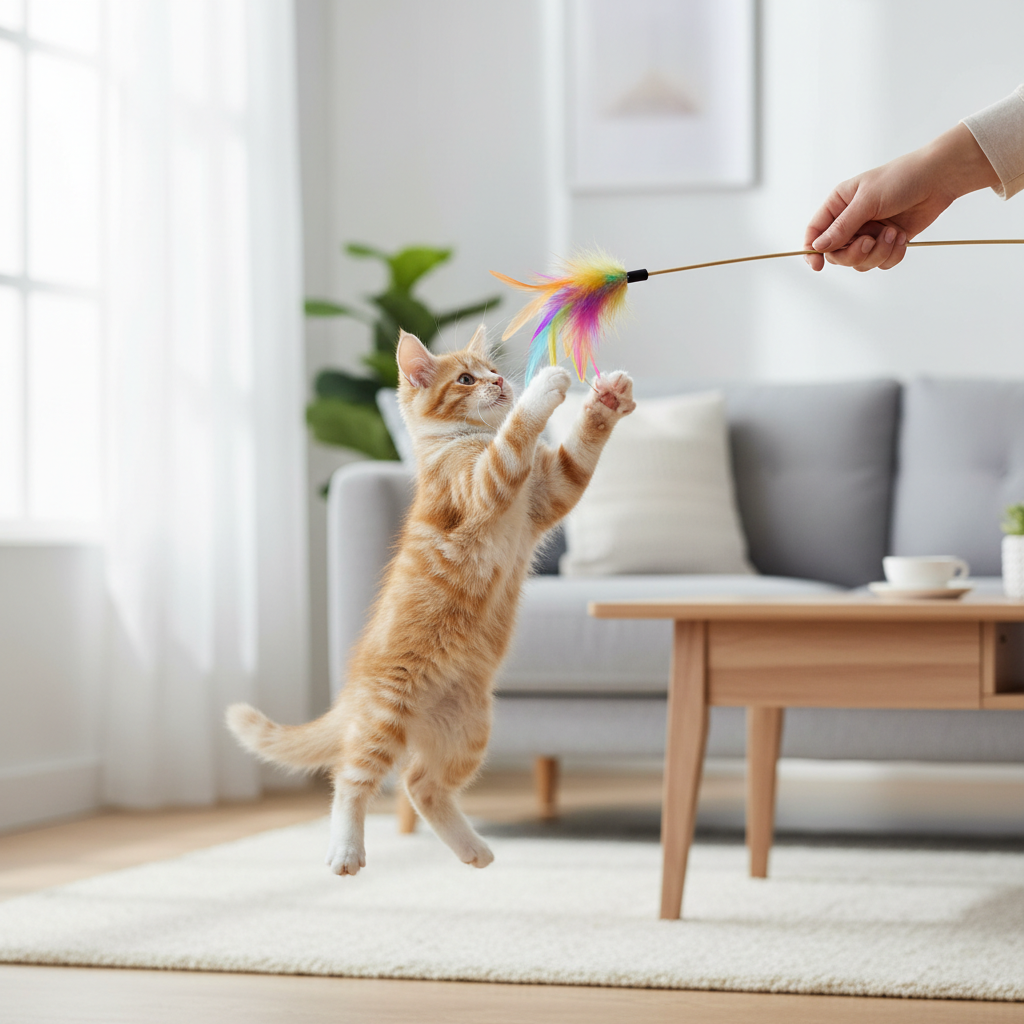
What “good play” looks like for kittens (so you buy smarter)
Kittens play like tiny hunters in training. A toy earns repeat attention when it lets them stalk, chase, pounce, and “capture” something, ideally with short bursts rather than nonstop action.
According to the American Association of Feline Practitioners (AAFP)... play that mimics predatory behavior can help channel normal feline instincts into appropriate outlets, which often matters for bitey or rough kittens.
- Interactive play (you + toy): best for bonding and burning energy fast.
- Solo play (cat-safe, self-directed): helpful when you’re working, but still needs supervision for certain designs.
- Enrichment (food puzzles, sniffing): slows them down mentally, great for “busy brain” kittens.
Key takeaway: the best kitten toys for play usually include at least one interactive wand, one kicker or soft wrestle toy, and one puzzle-style option, then you rotate them.
Quick comparison table: toy types that tend to work
If you want a fast shortlist, start here. Individual brands change year to year, but these categories stay reliable.
| Toy type | Best for | Why kittens like it | Watch-outs |
|---|---|---|---|
| Wand/teaser | High energy, bonding | Fast “prey” movement, chase + pounce | Put away after play, string can tangle |
| Small plush “prey” | Carry, gentle batting | Feels catchable, easy to “win” | Avoid loose eyes/parts |
| Kicker toy | Wrestling, bunny-kicks | Lets them grab + kick safely | Choose durable seams |
| Track ball toy | Independent play | Movement triggers chase instinct | Clean hair buildup, check stability |
| Crinkle tunnel | Shy kittens, ambush play | Hide, stalk, surprise pounce | Supervise chewing, avoid sharp wire ends |
| Puzzle feeder | Food-motivated, calmer evenings | “Work” for treats, mental burn | Use kitten-safe treat amounts |
Top picks by play style (what to buy first)
When people ask for the best kitten toys for play, they often mean “what will my kitten actually use.” In many homes, these are the safest bets to start with, then you personalize.
1) Interactive wand toys for daily energy dumps
If your kitten attacks ankles or hands, an interactive wand is usually the quickest fix because it redirects the chase drive onto something appropriate.
- Look for: sturdy handle, replaceable lure, short cord (less tangling), soft feather or fabric lure.
- Skip if possible: very long strings, tiny detachable pieces, cheap plastic clips that snap.
Play tip: move the lure like prey, small darts behind furniture edges, pauses, then short bursts. If you only wave it in the air, many kittens lose interest.
2) “Prey” plush toys for batting and carrying
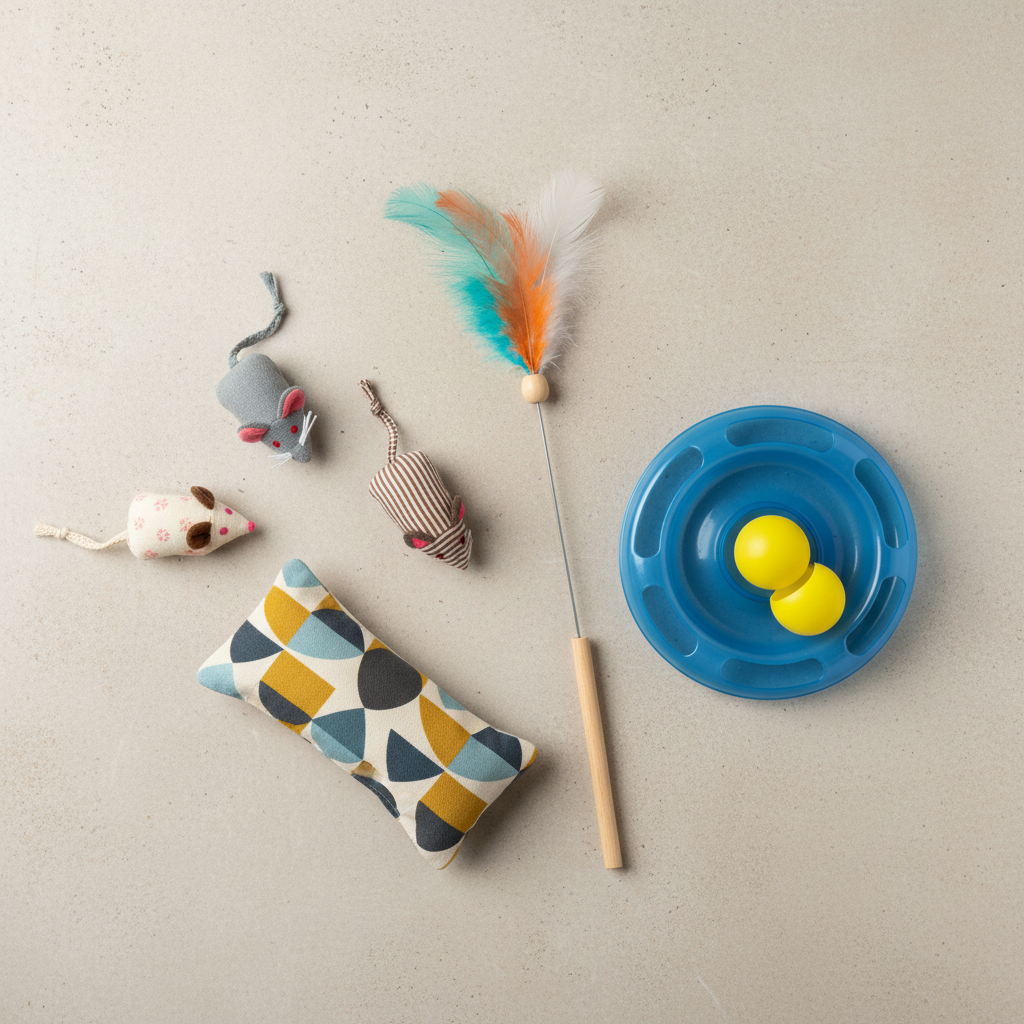
Small fabric mice, fish, or balls can be surprisingly effective because they let a kitten “win” quickly, which keeps confidence up, especially for timid kittens.
- Look for: stitched features, soft but dense filling, no glued-on eyes.
- Nice bonus: a bit of crinkle material for sound feedback.
3) Kicker toys for the “wrestler” kitten
Some kittens don’t just chase, they grab and bunny-kick. A longer kicker toy gives them a legal target, which can reduce rough play with your hands.
- Look for: about 8–12 inches long, tough fabric (canvas or denim-style), reinforced seams.
- Optional: catnip works for many adult cats, but kittens vary, and some don’t respond until older.
4) Tracks, balls, and simple rollers for independent play
These help when you’re on calls or cooking. They won’t replace interactive sessions, but they can take the edge off between playtimes.
- Look for: stable base, smooth edges, ball that can’t pop out easily.
- Home reality: if you have hard floors, choose quieter designs unless you enjoy 2 a.m. clacking.
5) Tunnels and paper-bag style hideouts (supervised)
Ambush play is real kitten joy. A crinkle tunnel or a sturdy paper-bag style hideout creates a “hunt zone” that makes your wand sessions instantly better.
- Look for: strong fabric, no exposed wire, wide openings.
- Avoid: thin plastic bags, or anything with handles that can snag.
How to choose toys by age, personality, and your home
The same toy can be a hit in one house and ignored in another. Before you buy a cart full of stuff, use these quick filters.
- 8–12 weeks: softer toys, shorter sessions, gentle wand play close to the ground, avoid overwhelming noise.
- 3–6 months: peak zoomies, more interactive play, add kickers and simple puzzles.
- Teething phase (varies): they may chew more, prioritize durable fabric and remove anything that sheds.
Personality tells you a lot:
- Shy kitten: tunnels, slow wand movement, toys they can “catch” easily.
- Bold kitten: faster wand patterns, jumping lures, sturdier kickers.
- Solo player: track balls and a rotation of small prey toys, plus short interactive bursts to keep bonding.
Home constraints matter too. If you have cords everywhere or a cramped space, prioritize toys you can control and put away, and keep tiny toys out of reach when unsupervised.
Safety and quality checklist (before you hand it over)
Not every “cat toy” sold online is built the same, and kittens test seams with teeth. When in doubt, go boring and sturdy.
- No loose strings that can wrap around legs or be swallowed.
- No small detachable parts like glued eyes, bells that fall off, or weak plastic clips.
- Check materials, avoid strong chemical odors, which can signal manufacturing residues.
- Size matters, if it can fit fully in the mouth, it’s a higher risk.
- Supervise new toys for the first few sessions, you’ll learn how your kitten tries to “solve” it.
According to the ASPCA... string, yarn, and similar items can be dangerous if swallowed, potentially causing intestinal issues, so it’s usually safer to treat these as supervised-only play items.
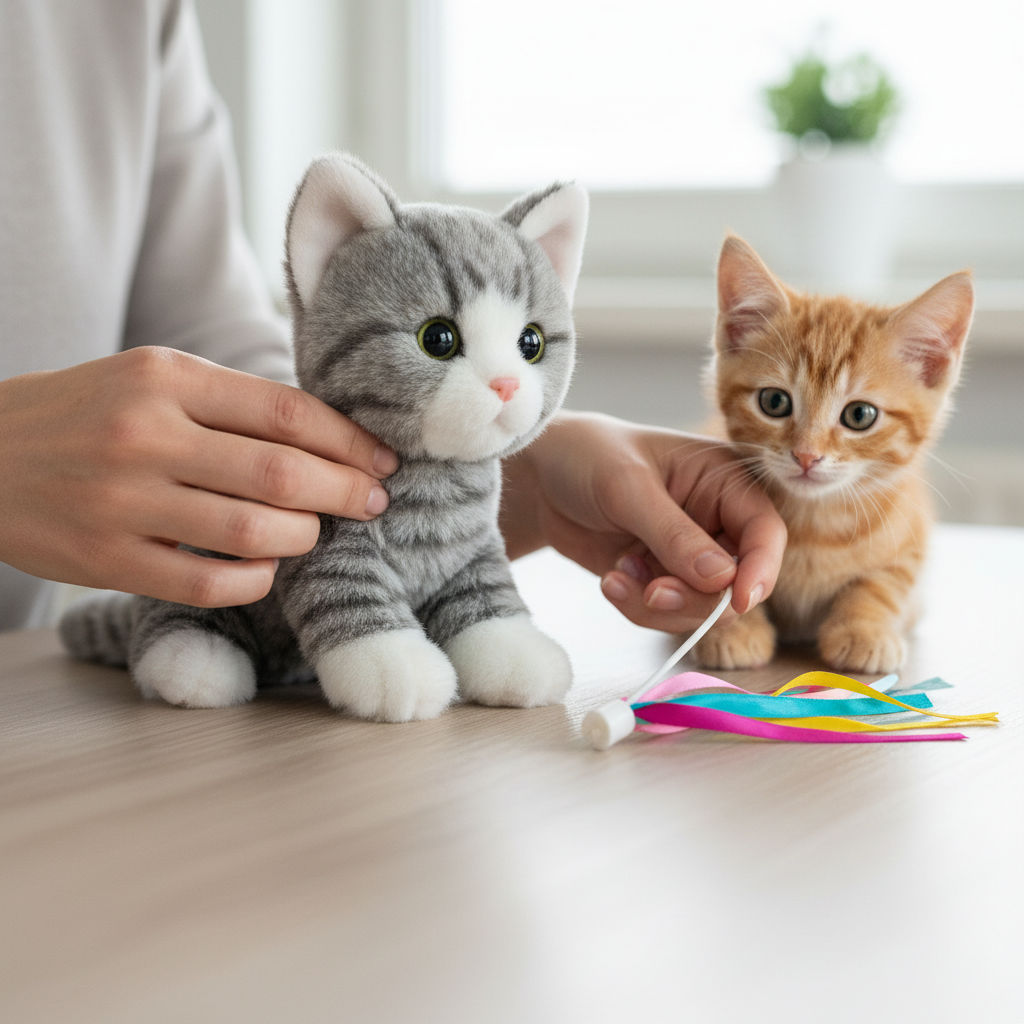
A simple play routine that actually sticks (10–15 minutes)
Buying the best kitten toys for play helps, but the routine is what changes behavior. Keep it short, repeatable, and a little predictable.
Do this once or twice daily
- 2 minutes: warm-up chase with a wand, low to the ground.
- 5–8 minutes: “hunt sequence” with pauses, hiding behind a chair, then a pounce.
- 1 minute: let them catch the toy and “win,” then slow down.
- Optional: offer a small meal or a few treats after play, many cats settle better after a hunt-eat-groom-rest rhythm.
If you only have one session, do it in the evening. A lot of nighttime chaos is just energy that never got an outlet.
Toy rotation, storage, and keeping interest past week one
Most kittens get bored because everything stays out all the time. Rotation is the low-effort trick that makes average toys feel new.
- Keep 3–5 toys out and store the rest in a closed bin.
- Swap every 3–4 days, or sooner if the kitten ignores a toy twice in a row.
- Refresh “old” toys by pairing them with a tunnel or a new wand pattern.
- Washable matters, choose toys you can wipe or wash, especially after teething chewing.
One more practical note: if you have multiple kittens, buy duplicates of the “top two” toys to reduce resource guarding and chaotic tug-of-war.
Common mistakes that make kittens play rough (and what to do instead)
- Using hands as toys: it seems cute until it doesn’t, use a kicker or wand to redirect.
- Laser-only play: lasers can be fun, but many cats need a physical “catch,” end with a plush prey toy to reduce frustration.
- Leaving wand toys out: cords can tangle, put them away between sessions.
- Overstimulation: if tail thrashes, ears flatten, or bites escalate, pause and switch to calmer enrichment.
If aggression spikes suddenly, or your kitten seems painful when playing, it may be worth checking with a veterinarian, since discomfort can change behavior.
Conclusion: a small kit beats a big pile
You don’t need 30 items to nail playtime. A wand toy for interactive sessions, a durable kicker for wrestling, a couple of catchable plush “prey” toys, and one independent option usually covers most households, then rotation keeps everything interesting.
If you want one action step today, pick a 10-minute evening play window and stick to it for a week, you’ll learn quickly which toy style your kitten prefers and which behaviors improve.
Key points to remember
- Match toys to hunting behavior, stalk, chase, pounce, catch.
- Prioritize safety, avoid loose strings and weak attachments.
- Rotate toys so “old” becomes exciting again.
- End with a win and, when appropriate, a small snack to help them settle.