
Senior cat water fountain filter replacement usually matters more than people expect, because older cats can be picky drinkers and their kidneys often benefit from steady hydration, when the water tastes “off” they may simply walk away.
If your fountain has started to smell, run slower, or look cloudy, the filter is a common culprit, but it’s not the only one, pump buildup and biofilm can mimic “bad filter” symptoms. The goal here is simple: help you figure out when a filter change is actually due, how to replace it without creating leaks or pump strain, and what to adjust for a senior cat who needs clean, easy-to-drink water.
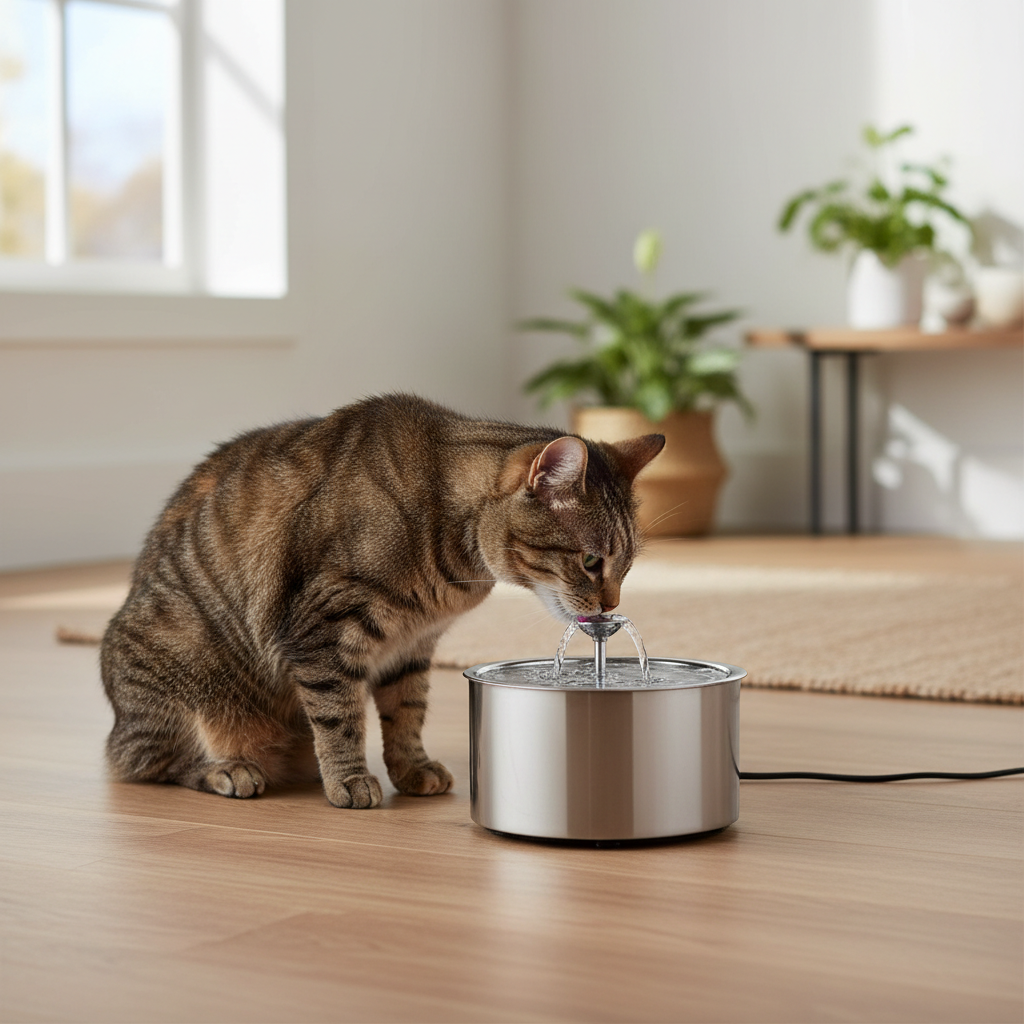
I’ll also flag a few senior-cat specifics, like why carbon taste can matter, what “safe enough” cleaning looks like, and when it’s worth asking your veterinarian, especially if drinking habits suddenly change.
Why filter changes matter more for senior cats
With younger cats, a slightly stale fountain sometimes slides by unnoticed. With seniors, small barriers can add up, a bit of odor, a weaker stream, or a slimy film can be enough to reduce drinking.
- Taste and smell sensitivity: activated carbon removes odors, once saturated it can release smells back into the water.
- Flow and accessibility: older cats may prefer a gentler stream, but a clogged filter can also choke flow and make the pump louder, both can discourage drinking.
- Biofilm risk: fountains create constant moisture, if cleaning slips, a slippery layer can form on plastic and inside tubing.
According to the American Veterinary Medical Association (AVMA), routine preventive care and monitoring changes in drinking and urination are important, especially as pets age. A fountain that stays clean makes it easier to notice real behavior changes rather than “the water got gross.”
Quick self-check: are you due for a senior cat water fountain filter replacement?
Before you order a box of filters, do this fast check. It prevents the common mistake of replacing filters while the pump and housing stay dirty, which keeps symptoms alive.
Signs the filter is likely overdue
- Water smells “pond-like” within a day or two of a refill
- Flow drops even after you top off the water level
- Filter looks brown/gray or feels slimy when rinsed
- Your cat sniffs and walks away, or drinks less than usual
Signs it might be pump or fountain buildup instead
- Filter is new but the stream still sputters
- Pump sounds louder than usual
- You see white crusty scale on parts (hard-water mineral buildup)
If drinking changes feel sudden or dramatic, don’t “wait for the next filter cycle,” check in with a veterinarian, reduced drinking can have many causes beyond water quality.
Replacement timing: a practical schedule (with a simple table)
Most brands suggest something like 2–4 weeks for carbon filters, but real-life timing depends on water hardness, number of pets, fountain size, and whether you pre-rinse filters. For senior cats, I usually lean toward the shorter end when you notice taste or odor issues.
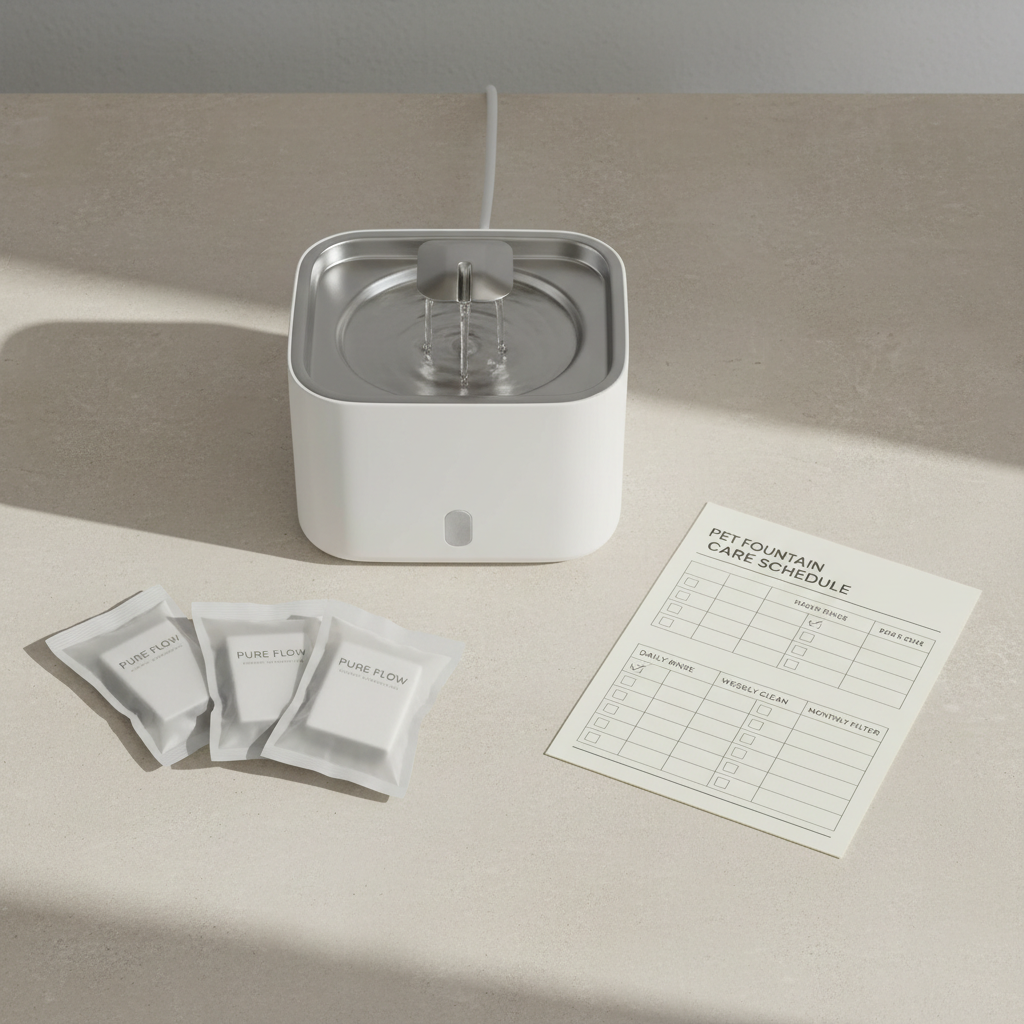
| Situation | Filter replacement cadence (typical) | What to watch for |
|---|---|---|
| 1 cat, soft/filtered tap water | Every 3–4 weeks | Any odor before week 3 suggests extra cleaning or pre-rinse needed |
| 1–2 cats, average tap water | Every 2–3 weeks | Flow drop, carbon smell, cloudy water |
| Hard water area, visible mineral scale | Every 2 weeks (sometimes sooner) | White crust on pump housing, sputtering stream |
| Multiple pets or dusty environment | Every 1–2 weeks | Hair and debris collecting around intake |
Key point: if your “schedule” feels perfect on paper but you still smell odor at day 10, trust the water, not the calendar. Senior cats rarely negotiate with a stale fountain.
Step-by-step: how to replace the filter without stressing the pump
This is the part people rush, then wonder why the fountain leaks or the flow turns weak. Take five minutes and do it cleanly.
1) Unplug, disassemble, and dump old water
- Unplug the fountain before your hands go near the pump.
- Pour out old water, rinse the basin to remove loose debris.
2) Remove the old filter and check its seat
- Take out the filter and look at the slot or tray it sits in.
- If you see slime or grit, wipe it away, otherwise the new filter gets contaminated fast.
3) Pre-rinse or soak the new filter (don’t skip this)
- Many carbon filters release black dust unless rinsed.
- Rinse under cool water until the runoff looks clear, some brands also recommend a short soak, follow packaging guidance when available.
4) Reassemble, refill, and prime the pump
- Fill to the recommended line, low water is a common reason pumps get noisy.
- After plugging in, confirm a steady stream within a minute or two.
If you’re doing senior cat water fountain filter replacement because your cat stopped drinking, offer a separate bowl of fresh water nearby while you test the fountain, it removes pressure from “fixing it instantly.”
Cleaning that actually supports the filter (and senior-cat safety)
A new filter can’t compensate for a dirty pump or a basin coated with biofilm. If you replace filters on schedule but still get odor, cleaning is the missing piece.
- Weekly: wash basin and lid with fragrance-free dish soap, rinse thoroughly.
- Every 2–4 weeks: open the pump housing, clear hair from the impeller area, scrub crevices with a small brush.
- Hard water: occasional descaling may help, many households use diluted vinegar and then rinse very well, but if you’re unsure about your fountain materials, check the manufacturer guidance.
According to the ASPCA, some household cleaners and essential oils can be harmful to pets. In practice, keeping it simple tends to be safer, mild soap, lots of rinsing, and avoiding strongly scented products around drinking water.
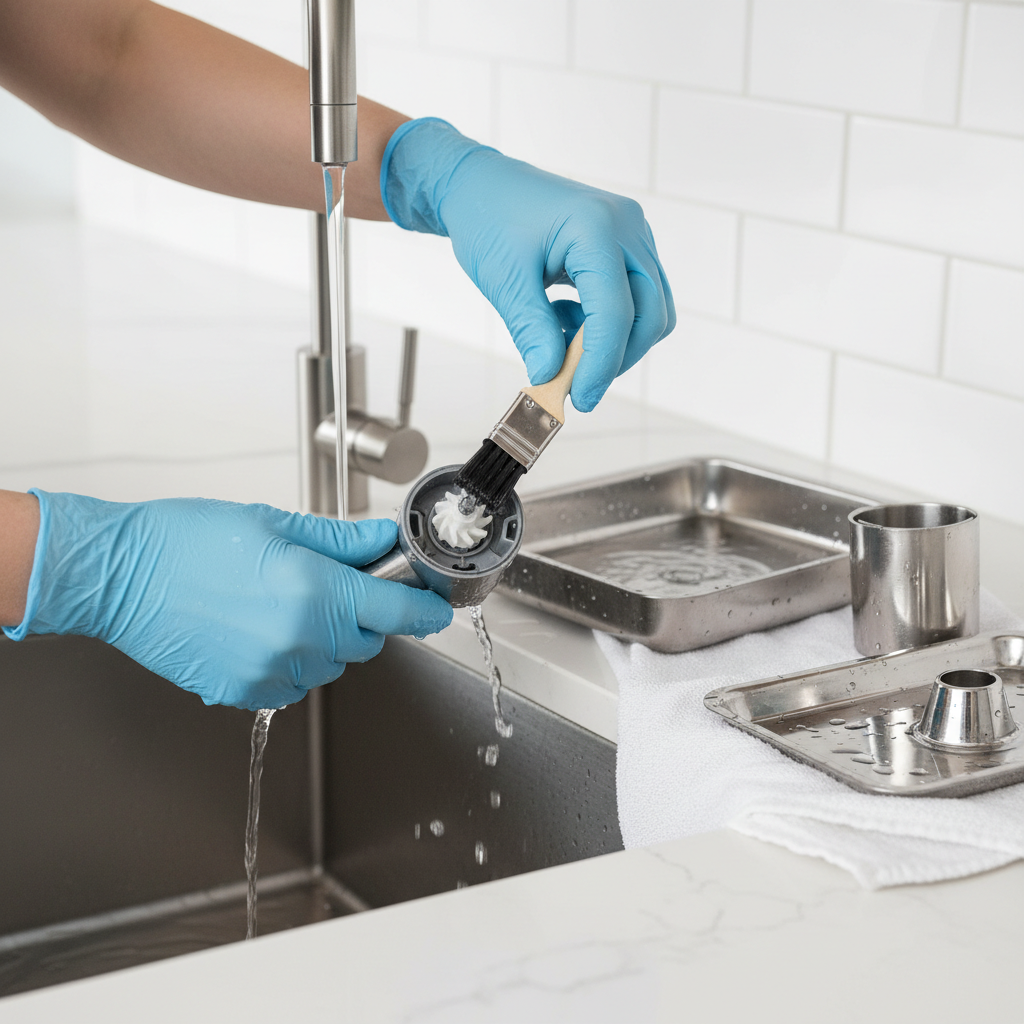
Senior-cat note: if your cat has kidney disease or other chronic issues, your vet may have preferences on water source and cleanliness routine, it’s worth asking at your next checkup, especially if you’re switching filter types.
Common mistakes that shorten filter life (and how to avoid them)
A lot of “my filter only lasts a week” complaints come down to a few predictable habits.
- Not pre-rinsing carbon: dust clogs pores and can add a charcoal taste.
- Running the fountain low: the pump works harder, pulls more debris, and the filter loads faster.
- Only swapping filters: gunk in the pump keeps recirculating and the new filter becomes the cleanup crew.
- Using the wrong filter: similar-looking filters can fit but not seal, bypassing filtration and reducing flow.
- Ignoring water hardness: minerals don’t “filter out” the same way, they build on surfaces and reduce performance.
If you’re troubleshooting, change one thing at a time, for example clean the pump today, replace the filter tomorrow. Otherwise you won’t know what fixed the issue.
When to ask for help (product support or your veterinarian)
Some problems are maintenance, some are design limits, and some are health-related. Knowing which is which saves time.
- Contact the manufacturer if you see persistent leaks, repeated pump failure, or you can’t match the correct replacement filter model.
- Consider a vet check if drinking drops for more than a day, your cat seems lethargic, or you notice vomiting, appetite changes, or changes in urination. These can be unrelated to the fountain, and senior cats deserve the cautious approach.
In many cases, senior cat water fountain filter replacement improves consistency, but it’s not a substitute for medical advice when behavior changes look significant.
Practical takeaway: a simple routine you can stick with
If you want the “low-drama” version, keep it boring and consistent, senior cats tend to reward routine.
- Pick a filter cadence you can remember, then adjust based on odor and flow.
- Clean the basin weekly, clean the pump monthly, more often in hard-water areas.
- Keep a spare filter on hand so you don’t stretch an overdue one.
Conclusion: A clean fountain is really a system, fresh filter, clean pump, and enough water in the basin. Once you dial those in, most people see fewer odor surprises, steadier flow, and a senior cat that drinks more willingly.
If you do one thing this week, make it a combined reset: deep-clean the pump, then replace the filter, and watch your cat’s drinking over the next few days. That feedback loop tells you more than any generic schedule.
FAQ
How often should I replace a filter in a cat fountain for a senior cat?
Many households land around 2–4 weeks, but seniors can be less tolerant of taste changes, so if odor or cloudiness shows up early, shorten the cycle and add pump cleaning.
My fountain filter looks clean, but the water still smells, what now?
Smell often comes from biofilm in the basin seams or inside the pump housing. Clean those parts first, then reassess, swapping filters without cleaning can keep the smell around.
Do I need to soak carbon filters before using them?
Rinsing is commonly recommended to remove carbon dust, some brands suggest a brief soak. If your cat seems put off right after a change, extra rinsing can help reduce “new filter” taste.
Can hard water make me replace filters more often?
Yes, hard water tends to create mineral scale that reduces flow and stresses pumps, even if the filter isn’t “dirty” in the usual sense. Descaling and more frequent cleaning often matter as much as filter swaps.
Is it safe to clean a pet fountain with vinegar?
Many people use diluted vinegar for mineral buildup, but materials vary, and residue taste can bother some cats. When in doubt, follow the manufacturer’s cleaning guidance and rinse extremely well.
My older cat stopped using the fountain after a filter change, why?
Sometimes carbon dust, a new plastic smell, or a changed flow pattern is enough to trigger avoidance. Try rinsing the filter again, confirm normal flow, and offer a bowl temporarily while your cat readjusts.
What’s the difference between filter replacement and pump maintenance?
Filter replacement improves water quality, pump maintenance restores consistent flow. If the stream is weak or noisy, the pump and impeller area usually need attention even if the filter is new.
If you’re trying to make senior cat water fountain filter replacement less of a guessing game, it can help to choose a fountain with easy-access pump parts and filters you can reorder without confusion, you’ll be more consistent, and your cat tends to notice the difference.