Puppy food topper for picky eaters can be a practical way to boost aroma and texture, but it works best when you pick the right type and use it with a simple plan instead of randomly “adding yummy stuff.”
If your puppy sniffs the bowl, walks away, then begs for your food five minutes later, you’re not alone. A lot of “picky eating” is really about routine, learning, and expectations, not just taste. Still, taste matters, and toppers can help you bridge the gap while you build better eating habits.
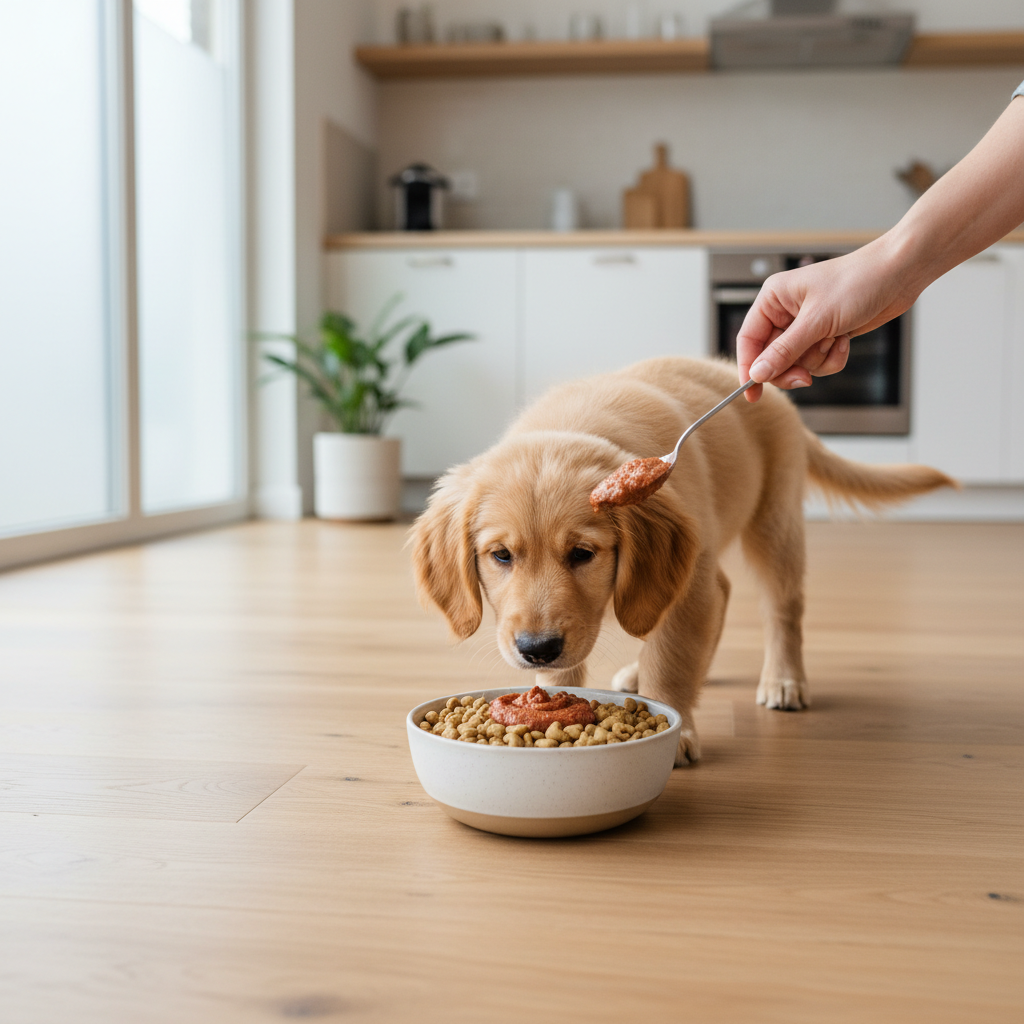
The goal is not to create a puppy who refuses anything unless it comes with “the good stuff.” The goal is consistent nutrition, calm mealtimes, and a topper strategy you can taper down over time.
Why some puppies act picky (and when it’s not about taste)
Puppies skip meals for different reasons, and the reason changes what you should do next. Taste boosters help in some cases, but they can backfire in others.
- Schedule and learning: free-feeding, too many treats, or offering new options after refusal teaches “hold out and you’ll get better food.”
- Stress and environment: moving homes, a new crate, loud kids, other pets hovering, or a busy feeding spot can reduce appetite.
- Teething and mouth discomfort: many puppies eat less or prefer softer textures for a stretch.
- Overfeeding: portion sizes may be too big, so the puppy simply isn’t hungry at mealtime.
- Digestive sensitivity: some pups avoid food if a prior meal caused nausea, loose stool, or gas.
According to the American Veterinary Medical Association (AVMA), appetite changes that are sudden or paired with symptoms like vomiting, diarrhea, lethargy, or weight loss deserve veterinary attention. In real life, that’s the line: “picky” plus other signs is different from “picky” by habit.
Quick self-check: is a topper the right move for your puppy?
Before you shop, take 60 seconds and be honest about what’s happening. This keeps you from masking a bigger issue with extra flavor.
- Energy looks normal (playful, curious, not unusually sleepy).
- Stool is mostly normal (no persistent diarrhea, blood, or repeated mucus).
- Weight is stable (or you have a plan with your vet if underweight).
- Mealtime routine is consistent (set times, limited grazing).
- No “red flags”: repeated vomiting, belly pain, dehydration, coughing after eating, or a sudden refusal that lasts more than a day in a young puppy.
If most of these are true, a puppy food topper for picky eaters is often a reasonable tool. If several are false, it’s smarter to fix the routine or talk to a veterinarian before adding extras.
Types of puppy-safe toppers (and what they actually do)
Think of toppers as a job, not a category. Some add aroma, some add moisture, and some add calories quickly, which may or may not be what your puppy needs.
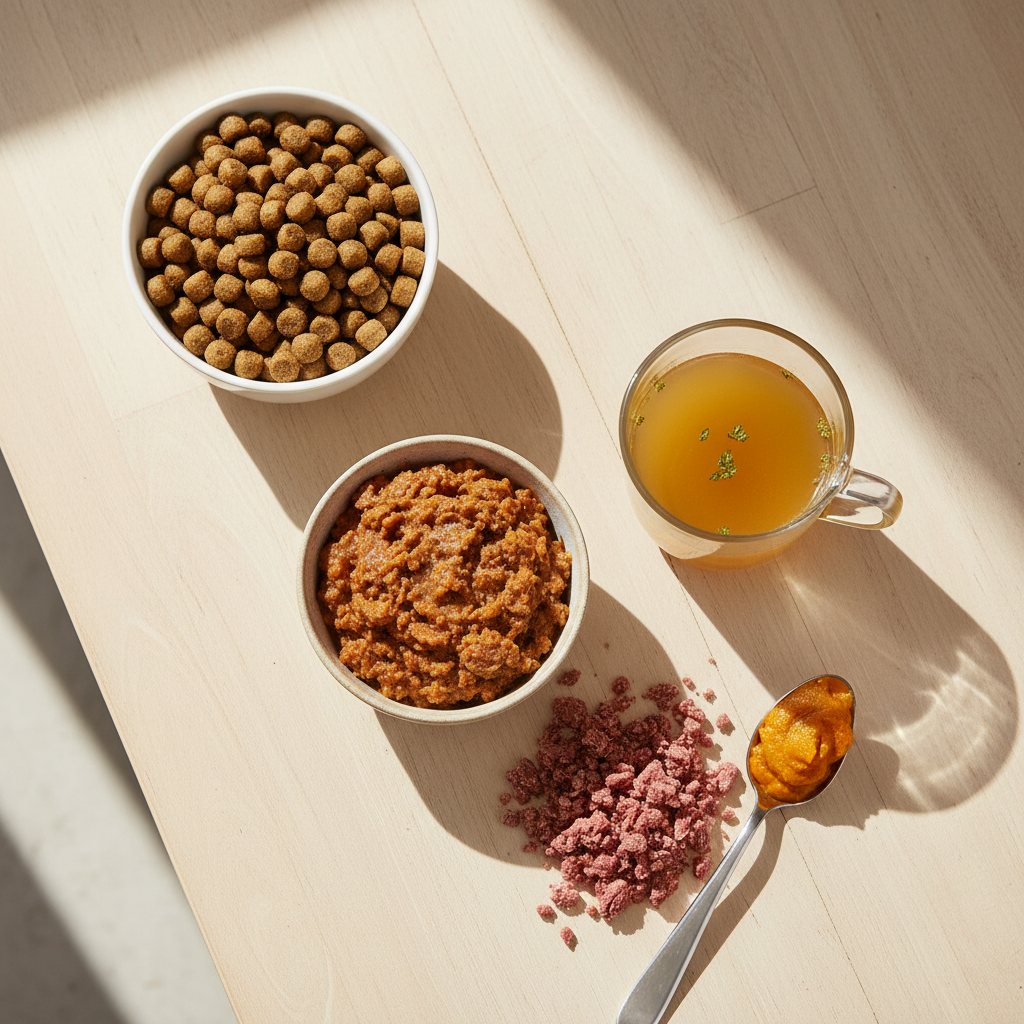
Moisture + aroma toppers (often the easiest win)
- Warm water mixed into kibble: boosts smell without changing nutrition.
- Dog-safe broth (no onion/garlic): adds scent and hydration, watch sodium.
- Goat milk for pets (if tolerated): palatable, but richer, so start tiny.
High-value protein toppers (use with a lighter hand)
- Wet puppy food from the same brand/line: usually easier on the stomach than random add-ins.
- Freeze-dried raw toppers (rehydrated): strong aroma, convenient, can be calorie-dense.
- Cooked lean meat (plain chicken/turkey): helpful short-term, but avoid seasoning and don’t let it crowd out complete puppy food.
Gentle “stool-friendly” toppers (for sensitive pups)
- Plain pumpkin (100% pumpkin puree): small amounts may help stool consistency.
- Veterinary probiotics: not a topper in the flavor sense, but sometimes appetite improves when digestion settles; ask your vet which strain/product fits.
How to choose a topper without unbalancing puppy nutrition
Puppies need specific levels of calcium, phosphorus, protein, and calories for growth. The risk with toppers is not one spoonful, it’s the slow creep where “extras” become 30–50% of the bowl.
According to the Association of American Feed Control Officials (AAFCO), complete and balanced pet foods are formulated to meet nutrient profiles for a life stage such as growth. So your topper should usually be a small accent, not the main diet, unless a veterinarian recommends otherwise.
- Look for “for growth” or “puppy” when using wet food as the topper, especially for large-breed puppies.
- Avoid toxic ingredients: onion, garlic, xylitol, grapes/raisins, chocolate, macadamia nuts.
- Keep it simple: fewer ingredients often means fewer surprises for sensitive stomachs.
- Mind calories: toppers can quietly push daily intake too high, leading to loose stool or fast weight gain.
Practical feeding plan: make toppers work (then gradually use less)
The most effective approach is a short routine you can repeat. It reduces bargaining at the bowl and helps you see what’s working.
Step-by-step plan for most picky puppies
- Set meal windows: put food down for 15–20 minutes, then pick it up. No grazing.
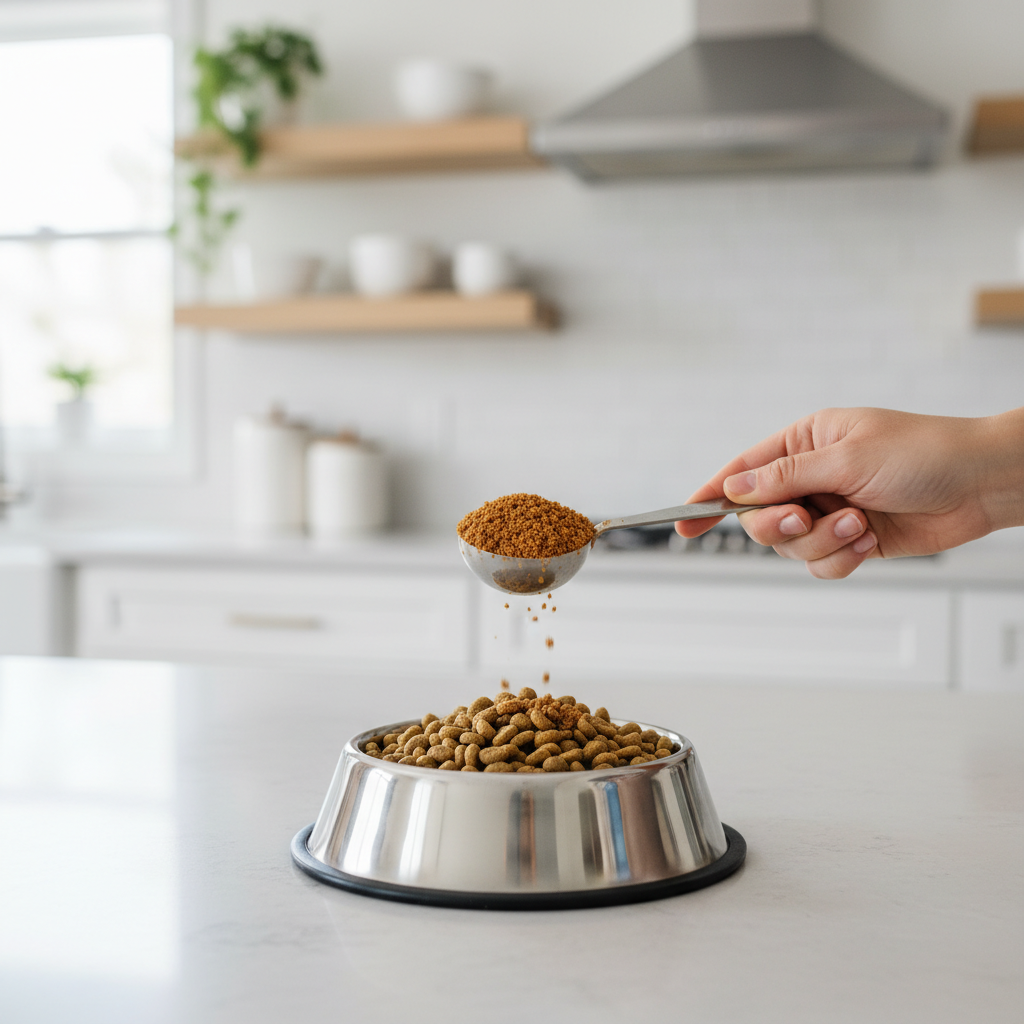
- Start with the smallest topper amount: think 1–2 teaspoons for small pups, 1 tablespoon for medium/large, then adjust slowly.
- Mix, don’t layer: if the topper sits on top, many puppies lick and leave kibble. Mixing teaches “the whole bowl tastes like this.”
- Warm it slightly: warm water or warmed wet food (not hot) increases aroma fast.
- Hold treats near mealtime: especially training treats, which can sabotage hunger.
How to taper (so you don’t get stuck forever)
- Days 1–3: use your chosen topper consistently, same amount.
- Days 4–7: reduce topper by about 25% if stools stay normal.
- Week 2: reduce again, or shift to lower-impact boosters like warm water.
If your puppy backslides, don’t escalate to something “fancier” right away. Often the better move is to return to the prior amount for a few days and tighten the routine.
Comparison table: common toppers for picky eaters
This is a practical snapshot, not a perfect rulebook. Your puppy’s age, breed size, and stomach sensitivity matter.
| Topper type | Best for | Watch-outs | Easy way to use |
|---|---|---|---|
| Warm water | Boosting aroma, picky-by-habit | Can soften kibble fast; serve promptly | Pour, wait 2 minutes, mix |
| Wet puppy food | Strong taste boost, transitioning foods | Calorie creep, stool changes if too much | Mix 10–15% into kibble |
| Dog-safe broth | Hydration + smell, low chewing effort | Onion/garlic risk, sodium | Use a small splash, mix well |
| Freeze-dried topper | Very picky pups, travel convenience | Rich, can upset sensitive stomachs | Crush and rehydrate, then mix |
| Plain pumpkin | Mild stomach support | Too much can loosen stool | Start with 1 tsp, mix in |
Common mistakes that make picky eating worse
A puppy food topper for picky eaters should solve a small problem, not create a bigger one. These are the patterns that tend to spiral.
- Rotating toppers daily: puppies learn to wait for novelty, and stomachs never settle.
- Using people food “just this once”: rich, salty, or seasoned foods can trigger GI upset, then appetite drops further.
- Feeding too many chews and treats: calories add up fast, especially with training.
- Switching diets too quickly: abrupt changes can cause diarrhea, which then makes owners add more toppers to “help,” and it loops.
- Overreacting to one skipped meal: many healthy puppies occasionally eat less, particularly during teething or after a big day.
When to talk to a vet or pet nutrition professional
Sometimes “picky” is the only visible symptom early on. If you feel uneasy, it’s okay to check in. You’re not being dramatic, you’re being careful.
- Puppy is very young (especially under 12–16 weeks) and refuses multiple meals.
- Any red flags: vomiting, diarrhea lasting more than a day, weakness, fever, pain, coughing/choking while eating.
- Weight gain stalls or body condition looks thin despite offering enough food.
- Repeated food intolerance after small diet changes.
According to the American Animal Hospital Association (AAHA), routine wellness visits are the right place to ask about growth, calories, and diet choices for your puppy’s breed size. If you’re considering a home-prepared topper regimen beyond “a little bit,” a veterinary nutritionist can help avoid nutrient gaps.
Key takeaways (keep this simple)
- Start with routine first: timed meals, fewer treats, consistent bowl setup.
- Pick one topper and stick with it for a week before changing.
- Use small amounts and mix in so your puppy eats the full meal.
- Taper down once appetite improves, warm water often becomes enough.
- Don’t ignore symptoms: “picky” plus illness signs should prompt a vet call.
Conclusion: a taste boost is helpful, but the habit matters more
Using a puppy food topper for picky eaters can turn stressful meals into steady wins, especially when you treat it like training wheels, not a forever requirement. Pick a simple option, measure it, mix it in, and give your puppy a predictable routine long enough to learn what mealtime looks like.
If you want one action today, do this: choose one gentle topper, use the smallest amount that works, and commit to timed meals for the next 7 days. Most owners see clearer patterns fast, which makes the next decision much easier.
FAQ
What is the best puppy food topper for picky eaters?
It depends on why your puppy refuses meals. Many puppies respond to warm water or a small amount of wet puppy food mixed in, because smell and texture change without adding lots of “extras.” If stools turn soft, scale back and simplify.
How much topper is too much for a puppy?
A common practical limit is keeping toppers as a small part of the meal rather than half the bowl. If appetite improves but stools loosen or your puppy gains weight too quickly, the topper amount is probably creeping up.
Can I use bone broth as a topper for my puppy?
Sometimes, yes, if it’s dog-safe and doesn’t contain onion or garlic. Sodium can also be an issue, so a small splash is usually enough. If your puppy has a sensitive stomach, introduce it slowly.
Should I mix the topper in or put it on top?
Mixing tends to work better for picky eaters because it prevents “licking the good part and quitting.” Layering can train your puppy to sort the bowl, which becomes a daily negotiation.
My puppy eats treats but not meals, what does that mean?
Often it means the puppy learned that treats arrive regardless of meals, or portion sizes are high enough that hunger never builds. Tightening treat calories and using timed meals usually clarifies whether it’s behavior or a health issue.
Can toppers cause diarrhea in puppies?
They can, especially rich toppers or sudden changes. Puppies have sensitive GI tracts, so introduce one new topper at a time, start small, and pause if stool quality drops for more than a day.
Do picky puppies grow out of it?
Some do, especially after teething or once a routine becomes consistent. But if a puppy is rewarded for refusing food, the habit can stick. A short, calm plan usually works better than constantly changing foods.
When should I worry if my puppy won’t eat?
If refusal is sudden, lasts more than a day in a young puppy, or comes with vomiting, diarrhea, lethargy, pain, or weight loss, contact your veterinarian. It’s safer to rule out illness than to keep “tempting” with richer foods.
If you’re trying to make meals easier without turning your kitchen into a short-order diner, consider choosing one simple topper that fits your puppy’s age and stomach sensitivity, then track stool and appetite for a week. If you’d rather have a more hands-off plan, your vet can suggest calorie targets and topper options that won’t crowd out balanced puppy nutrition.