guinea pig hide house grass edible products can be a great idea, but only when “edible” also means the materials, glue, and dyes are genuinely safe for daily chewing.
Most owners shop for a hideout to reduce stress and add enrichment, then realize their guinea pig treats it like a snack. That’s normal, cavies explore with their teeth, and a hide house often becomes part bed, part chew toy.
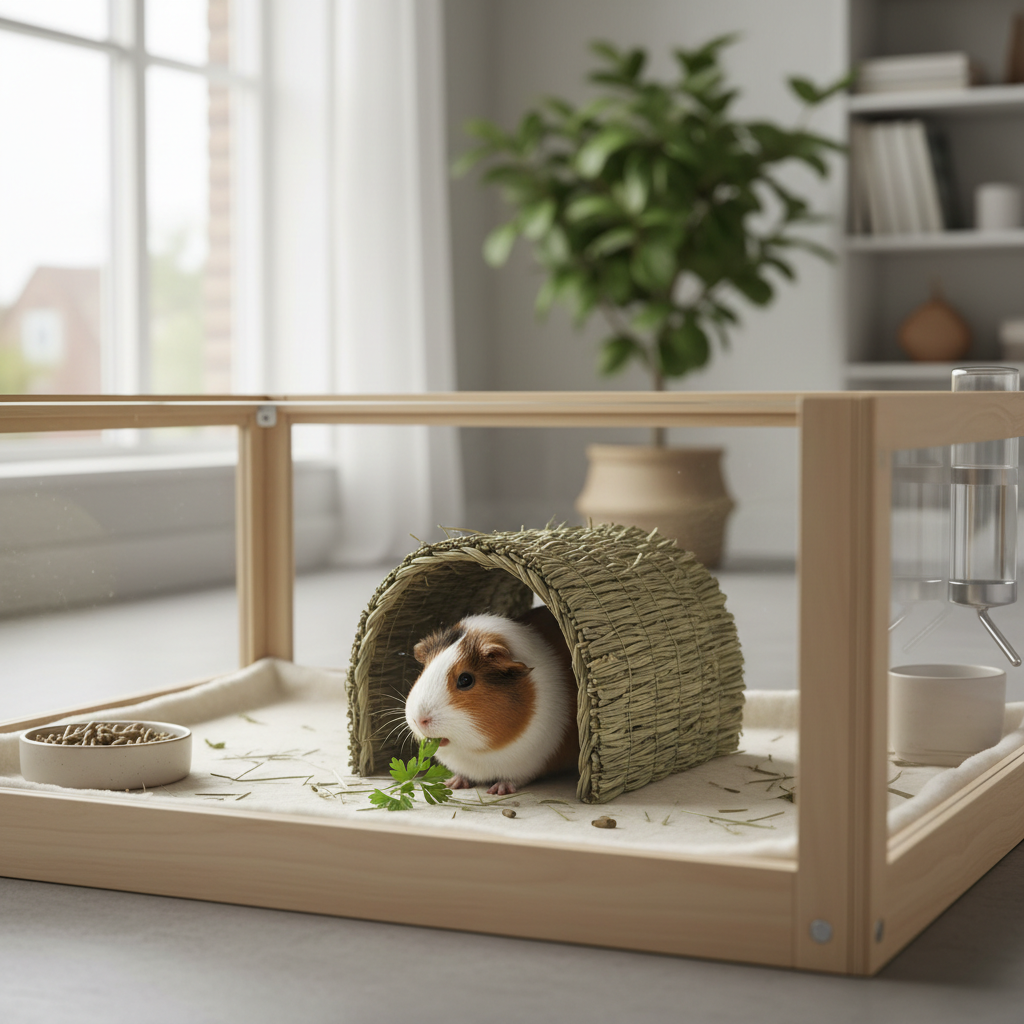
The tricky part is that “grass” can mean different fibers, and “edible” on a listing sometimes only refers to the outer weave, not the thread, frame, or coating. This guide helps you sort what’s typically low-risk, what’s questionable, and how to choose a hide that holds up without becoming a hazard.
What “edible grass hide house” usually means (and what it doesn’t)
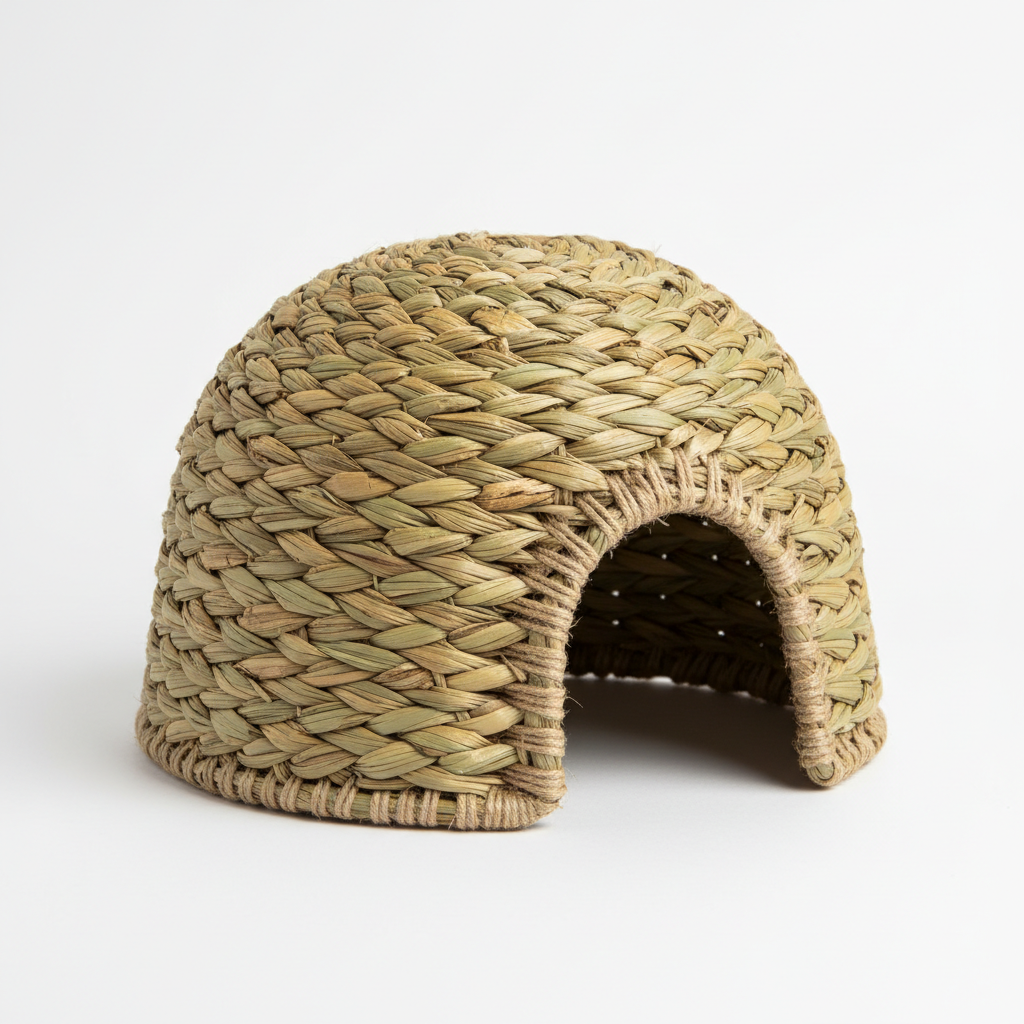
In pet retail, grass hideouts usually refer to woven plant fibers shaped into a hut, tunnel, or dome. Guinea pigs can nibble them, and that can be a positive outlet when the materials are simple.
- Common fibers: timothy hay blends, seagrass, water hyacinth, rattan, bamboo strips, sometimes straw.
- Common add-ons: cotton thread stitching, wooden frames, wire supports, metal clips, or dyed accents.
- What “edible” doesn’t guarantee: no chemical treatment, no dyes, no glue, no staples, and no mold.
According to the ASPCA Animal Poison Control, pet chews and toys should be selected with attention to possible toxic substances, choking hazards, and gastrointestinal blockage risks, especially for animals that chew frequently.
Safety first: the real risks to watch for
Most grass huts are “chewable,” but safety depends on what happens after chewing starts: strings loosen, pieces break, moisture builds, and sharp points can appear.
1) String and thread problems
Loose cotton thread can wrap around teeth or, in some cases, be swallowed and contribute to a blockage. It’s not the most common emergency, but it’s the kind you’d rather prevent than “wait and see.”
2) Mold and moisture
Grass products absorb urine and water fast. If your guinea pig pees in the hide (many do), the hut can hold dampness and grow mold or mildew. That becomes a respiratory and digestive risk rather than “natural enrichment.”
3) Dyes, coatings, and mystery “grass”
Bright colors look cute, but dyes and coatings are where product listings get vague. If the listing doesn’t clearly say non-toxic dye and the brand doesn’t explain materials, it’s reasonable to skip.
4) Sharp bits and metal parts
Some huts use wire to keep shape or come with metal clips. Once chewing exposes that structure, you can end up with pokes, mouth injury, or snagging.
Quick self-check: is your hide house still safe to use?
If you already own a guinea pig hide house grass edible style hut, you don’t need to toss it automatically. You do need to be honest about wear and hygiene.
- Pass: no exposed wire/staples, minimal loose threads, structure still stable, smells neutral, surface dry most of the day.
- Caution: loose weaving creating long strands, small chunks breaking off daily, persistent damp spots, strong urine odor that doesn’t air out.
- Replace now: visible mold, sharp points, exposed frame/wire, your guinea pig repeatedly gets stuck, or the hut collapses when stepped on.
If you’re unsure whether the chewing amount is “normal,” watch poop and appetite. A big drop in eating hay, fewer droppings, or lethargy is not a wait-and-scroll moment, it’s a call to a vet who sees exotics.
Materials guide: safer options vs. “maybe not”
There’s no single perfect material, but there are patterns: simple plant fibers and clean construction tend to be lower-risk than heavily decorated, strongly scented, or tightly glued items.
| Material / Feature | Why people like it | What to watch |
|---|---|---|
| Seagrass / water hyacinth weave | Holds shape, good chew texture | Can unravel into strands, can trap moisture |
| Timothy-hay based huts | Familiar food fiber, often softer | Crumbles faster, may get messy and damp |
| Undyed, uncoated natural fibers | Fewer unknown chemicals | Still needs frequent replacement |
| Dyed “rainbow” grass huts | Looks fun, photo-friendly | Dye source often unclear, can stain when wet |
| Wire-reinforced huts | Stays upright longer | Risk if chewing exposes wire |
| Glued-on decorations (flowers, patches) | Cute, themed cages | Glue ingestion risk, pieces can detach |
According to the RSPCA, rabbits and small herbivores benefit from safe gnawing materials and enrichment, but items should be checked regularly and replaced when damaged. Guinea pig care follows the same practical logic: if it’s breaking down in a risky way, swap it.
How to choose an edible grass hide house that actually works day to day
Shopping tips matter because a guinea pig hideout isn’t décor, it’s furniture. It needs to fit the animal, stay clean enough, and not become a constant hazard.
Look for these “green flags” in product listings
- Clear materials list (example: “seagrass + natural rattan + cotton thread,” not “natural grass”).
- No added fragrance and no “sweet smell” marketing.
- Minimal hardware: avoid staples, exposed metal, or unclear internal supports.
- Size info with interior opening measurements, especially for bigger pigs.
- Plain, undyed if you want the lowest-drama option.
Pick the right shape for your cage habits
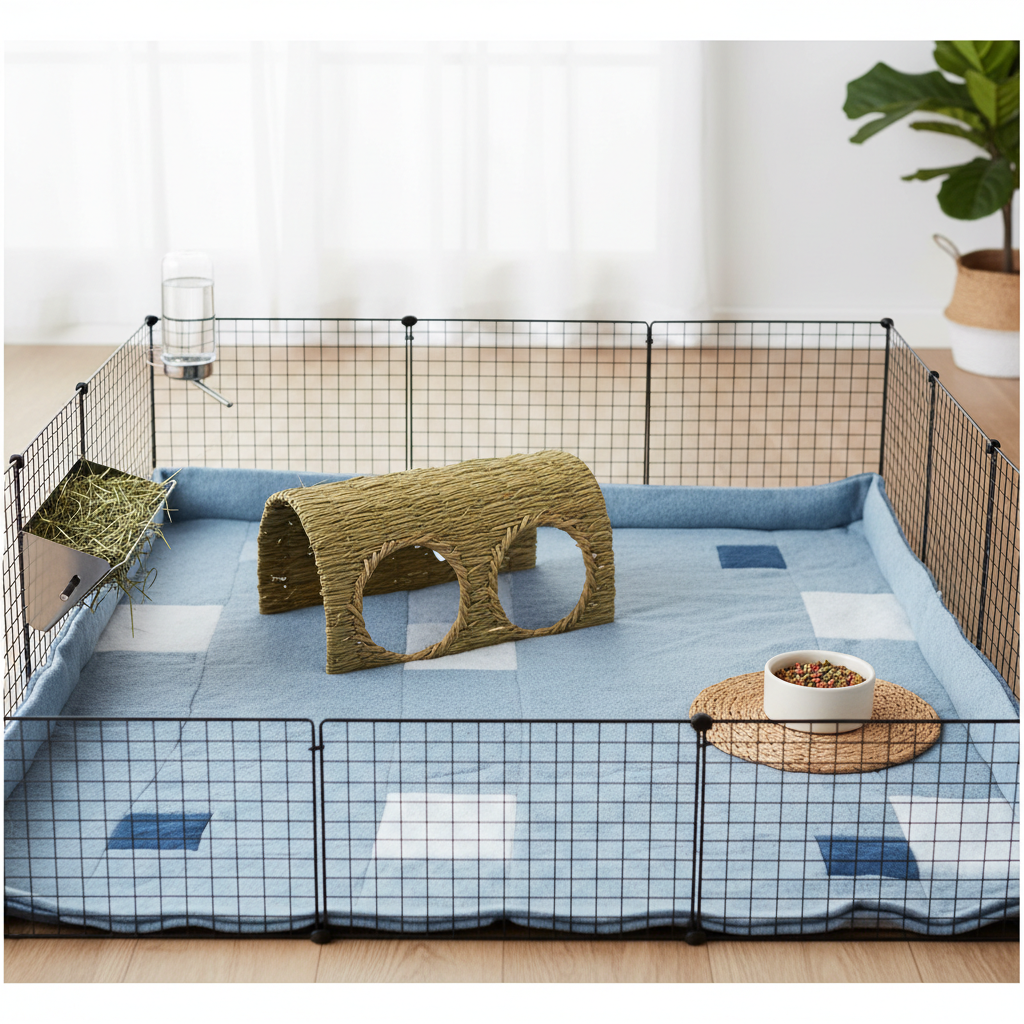
- Tunnel style: often stays drier because airflow is better, also less “toilet corner” behavior.
- Dome/hut style: feels secure, but many guinea pigs choose one corner to pee in, plan for faster replacement.
- Two exits: helps avoid squabbles if you have more than one guinea pig.
Practical setup and maintenance (so it stays safe longer)
A guinea pig hide house grass edible hut usually fails from moisture and wear, not from the first chew. Your setup can buy you time and reduce risk.
- Place it away from the main “bathroom corner”, guinea pigs often pick one spot, so don’t make the hide that spot.
- Use an absorbent pad under it and swap the pad frequently, even if the hide looks fine.
- Rotate hides if you have two, one can air out while the other is in use.
- Do fast weekly inspections: run your fingers along seams for sharp points and feel for dampness underneath.
- Replace on a schedule if your pig is a heavy chewer, many households find a “monthly-ish” rhythm, but it varies a lot.
Key point: if the hut stays damp, it’s not “natural,” it’s a hygiene problem. Dry matters more than cute.
Common mistakes that make “edible” hides unsafe
These are the patterns that usually cause trouble, even with decent products.
- Trying to wash and re-use a woven grass hut: it often stays wet inside the weave and can warp or mildew.
- Leaving loose strings because “they’ll chew them off anyway”: sometimes they swallow them, sometimes they snag.
- Buying for looks, not cage reality: a tiny opening or single-exit hut can stress pigs out, then they chew more aggressively.
- Assuming “all-natural” equals safe: untreated plant fiber is a good start, but construction still matters.
When to stop DIY and ask a professional
If you suspect your guinea pig swallowed a large piece, thread, or something coated, it’s smart to get guidance early. Blockages can worsen quickly in small herbivores, and “acting normal” can change fast.
- Call an exotics veterinarian if you see reduced appetite, fewer droppings, bloating, or obvious pain signs.
- If there’s mouth bleeding, broken teeth, or facial swelling, treat it as urgent.
- If you have product safety concerns (chemical smell, dye transfer), you can also reach out to the brand and consider reporting to U.S. Consumer Product Safety Commission (CPSC) if you believe there’s a broader hazard.
According to the American Veterinary Medical Association (AVMA), establishing a relationship with a veterinarian for your pet supports earlier intervention when health changes show up, which is especially relevant for small animals that hide illness.
Conclusion: the “safe enough” standard for grass edible hides
A guinea pig hide house grass edible choice can be a solid enrichment piece when it’s undyed, simply built, and treated as a replaceable item, not a permanent fixture. Aim for clean materials, low hardware, and a setup that keeps it dry, then check it often and retire it before it turns into a stringy, damp mess.
If you want one immediate next step, inspect your current hide today and remove it if you find loose strands, sharp points, or persistent moisture. If you’re buying new, choose plain materials and a two-exit design, your guinea pig will usually tell you “yes” within a day.
FAQ
Are grass hide houses safe for guinea pigs to eat?
Many are chew-safe in small amounts, but “safe” depends on construction and hygiene. Natural fibers are typically less concerning than dyed or glued decorations, and any hide that stays damp becomes a problem faster.
What grass is best for an edible guinea pig hide house?
Listings often use “grass” loosely, but undyed seagrass or hay-based options are common. The bigger factor is whether the brand clearly states materials and avoids wire supports, staples, and heavy dye.
How long should a chewable grass hut last?
It varies with the pig and cage moisture. Light chewers might use one for weeks, heavy chewers can shred a hut quickly. Replace when strands loosen, sharp edges appear, or odor and dampness persist.
Can I clean a woven grass hide house?
Spot-cleaning and airing out can help briefly, but washing usually soaks the weave and makes drying difficult. If it’s urine-soaked, replacement is often the safer call.
My guinea pig is eating a lot of the hut—should I stop using it?
Not always, some chewing is normal. But if you see big chunks missing, long strands forming, or any appetite/poop changes, remove the hut and consider asking an exotics vet for advice.
Is a wooden hide safer than a grass hide?
Sometimes, because wood can be sturdier and less stringy, but it depends on finishes and glues. Unfinished, pet-safe wood with smooth edges is usually the safer direction than painted or laminated pieces.
Do I still need a separate chew toy if the hide is edible?
Usually yes. A hide can take some chewing, but offering dedicated chew items and unlimited hay often spreads out the behavior and helps the hide last longer.
If you’re trying to balance “my guinea pig needs a hide” with “my guinea pig eats everything,” a simple approach is to keep one sturdy primary hide and rotate in a chewable grass option as a bonus, that way you get enrichment without relying on one hut to do every job.